
Editor's Review
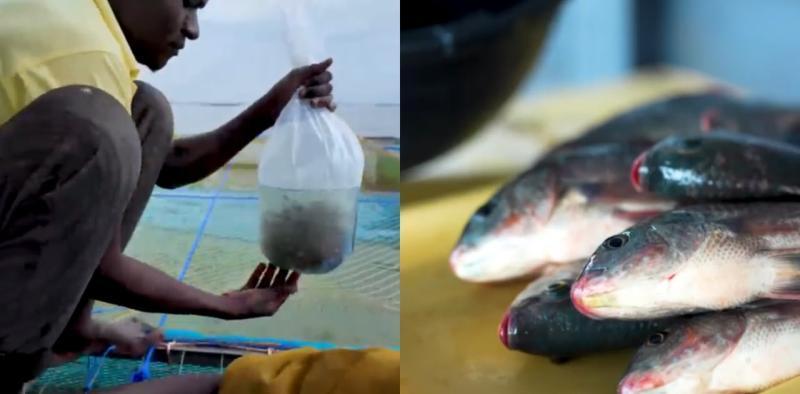
Dunga Beach is witnessing a major shift in its fishing economy as cage fish farming gains ground among young people, investors and local traders.
Dunga Beach is witnessing a major shift in its fishing economy as cage fish farming gains ground among young people, investors and local traders.
The number of fish cages in the area has increased from about 10 to nearly 250, creating new opportunities for employment and business.
The growth of the sector is also helping address declining catches from traditional fishing, which had left the community with fewer fish.
Victor Ochieng, a cage fish farmer at Dunga Beach, said the increasing participation of youths and investors has had a noticeable impact on the local economy.
“We have realized and noticed that a lot of youth and even investors are moving towards cage fish farming. The community is the people; the impact of cage fish farming is evident. It has transformed the economy of Dunga beach," he stated.
Read More
Ochieng explained that the expansion of cage farming has created jobs while improving the availability and affordability of fish in the area.
The growing production has also expanded the market, with buyers travelling from as far as Nairobi to purchase fish from Dunga.
Although the cost of fingerlings remains a challenge for farmers, they can now access them at lower prices through the Lake Basin Development Authority (LBDA) and AquaRech, under a national government partnership with local stakeholders.
The increase in fish production has also benefited traders whose businesses depend on a steady supply of fish.
Pamela Omolo, a fish trader at Dunga Beach, said cage farming has helped her business grow after years when declining wild catches made fish scarce.
"The challenge we had was that there were few fish. But through cage farming, I have seen our businesses grow, especially my business," she stated.

Omolo said the increased supply has also raised the workload in her business, forcing her to employ more workers to meet demand from customers.
"Previously, I had only one employee, but now I have two because the workload has increased; there are many fish, and when customers come, they do not complain," she added.
Omolo said continued fish production could help the community improve food availability and household incomes while giving traders a larger customer base and better opportunities to support their families.
Elsewhere, traders, boda boda riders and residents along the Muhoroni-Mamboleo Road have welcomed the ongoing transformation of the route.
The road had remained in poor condition for more than two decades, with potholes and dust affecting boda boda operators, motorists, traders and other residents.
The ongoing road works have raised hopes that improved transport will attract investment, create employment and make it easier for residents to access essential services.
Duke Gesora, a boda boda rider and resident of Mamboleo, said he moved to the area in 2014 and found the road already in poor condition.
He said the state of the road had significantly affected boda boda operators and other residents who depended on it for their daily activities.
"This road has been in poor condition for more than 20 years. I came here in 2014 and found the road in a bad state, and it has greatly affected people such as us in the boda boda business," he said.
Duke said the poor condition of the road also affected the number of customers visiting the area.
He noted that dust from the road discouraged people from travelling to Mamboleo, while motorists were also deterred by the numerous potholes.
"We used to lose customers because of the dust coming from this road. Many people were afraid of the dust. Those who owned cars were also afraid to come to Mamboleo because of the potholes that were all over the road," he added
Duke expressed optimism that completion of the road would bring significant benefits to residents and businesses.
He said investors had started returning to the area and that increased investment would create development opportunities and jobs, particularly for young people.
"We believe that once this road is completed, we will benefit greatly. Investors have started coming back. They will bring development, and we will get jobs. Young people will also get employment," he further said.