
Editor's Review
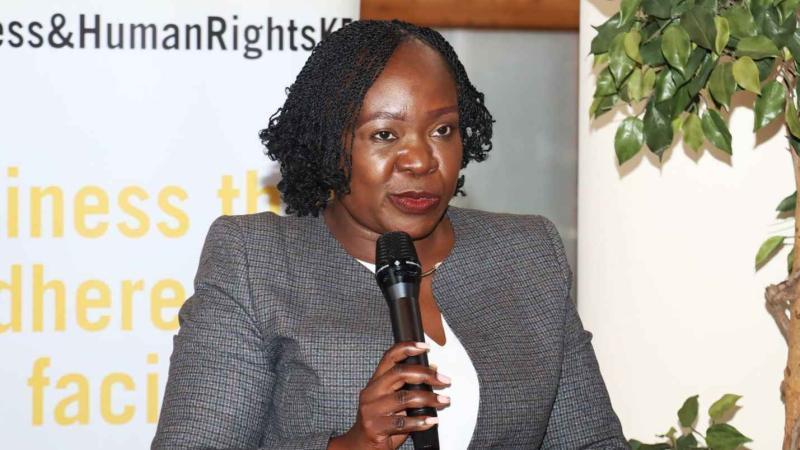
KNCHR Chairperson Claris Ogangah has proposed banning protests near Parliament, State House and Judiciary buildings.
The Kenya National Commission on Human Rights (KNCHR) Chairperson Claris Ogangah has proposed banning protests near Parliament, State House and Judiciary buildings.
Speaking on Thursday, August 27, during the Katiba at 16 symposium at KICC, Ogangah said Kenya should establish legislation governing where and when demonstrations can be held.
The KNCHR Chairperson argued that protests in Kenya have recently been infiltrated by criminals.
“Having seen how protests are done in Kenya, it is very important that we go ahead and provide legislation to provide the parameters within which people can demonstrate,” she stated.
Ogangah noted that Kenya would not be the first country to introduce restrictions on the location of demonstrations, saying similar measures exist in other jurisdictions.
Read More

“Kenya will not be the first country to do this. It is done globally; if you look in other jurisdictions, they provide parameters of where you can demonstrate, which building you can never approach if you have demonstrations, and the period during which you can demonstrate,” the KNCHR Chairperson said.
Ogangah cited Parliament, Judiciary and State House as examples of locations that should be restricted during protests.
“If you look at international best practices, places like Parliament, Judiciary and State House buildings are considered national security, and citizens are not allowed to protest around those areas,” she said.
Further, the KNCHR Chairperson said the proposal should be subjected to a wider public conversation on how to regulate protests.
Notably, the Kenyan Parliament was breached during the June 25, 2024 anti-government protests.
Thousands of protestors took to the streets to demonstrate against the Finance Bill 2024.
The demos ruffled the entire government, forcing President William Ruto to decline to sign the controversial bill.
The Head of State also disbanded his entire Cabinet before forming a broad-based government that included politicians from the ODM Party.
-1775578532-md.jpg)

 (1)-1793163963-md.jpg)


-1775578532-sm.jpg)


 (1)-1793163963-sm.jpg)