Editor's Review
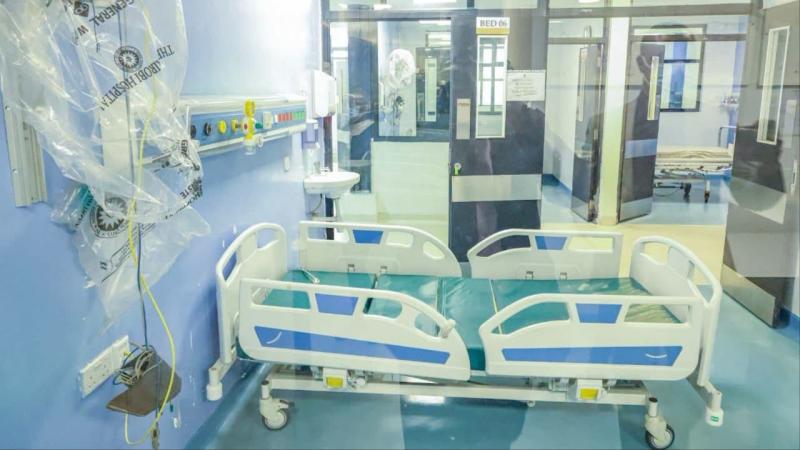
MTRH has issued an update on an individual undergoing precautionary monitoring after reportedly coming into contact with a suspected Ebola case aboard an aircraft.
Moi Teaching and Referral Hospital (MTRH) has issued an update on an individual undergoing precautionary monitoring after reportedly coming into contact with a suspected Ebola case aboard an aircraft 20 days ago.
In a statement on Thursday, October 22, the hospital said the individual had shown no symptoms of the disease and had tested negative for the virus.
"MTRH wishes to inform the public that one person is currently under quarantine for precautionary monitoring following reported contact with a suspected Ebola case aboard an aircraft 20 days ago," the statement read.
MTRH said the individual remained asymptomatic, with no signs commonly associated with Ebola, and was awaiting completion of the monitoring period.
It also confirmed that other identified contacts had been followed up.
Read More
"The individual remains asymptomatic, with no fever, bleeding, vomiting or diarrhoea, and has tested negative for Ebola Virus Disease (EVD). The individual is being monitored in accordance with World Health Organization (WHO) and Ministry of Health protocols and is awaiting completion of the 21-day monitoring period before being cleared for release. All identified contacts have also been appropriately followed up," the statement added.
MTRH further assured patients and members of the public that the monitoring exercise had not affected its operations, adding that medical services continued as usual.
"MTRH reassures the public that all Hospital services continue uninterrupted. The Hospital remains fully operational and vigilant, with no disruption to patient care and other essential services. There is no cause for panic," the statement further read.
MTRH also highlighted its preparedness to respond to any potential Ebola threat, citing the role of its multidisciplinary Rapid Response Team and ongoing training for frontline health workers.
"MTRH has a well-trained multidisciplinary Rapid Response Team and continues to conduct simulation exercises, departmental training and refresher sessions for frontline staff to ensure a timely, coordinated and effective response should the need arise," the statement noted.

In addition to strengthening its internal preparedness, MTRH said it was stepping up public awareness campaigns to help communities recognise Ebola symptoms, understand preventive measures and seek medical attention promptly when necessary.
The hospital said its sensitisation efforts targeted different groups, including communities linked to cross-border movement and long-distance truck drivers, who may require specific awareness and referral support.
"In addition, MTRH is intensifying public and community sensitization through triage areas, media engagements, religious and community leaders, and other local stakeholders.
"Particular attention is being given to communities associated with cross-border movement, including long-distance truck drivers, to promote awareness of EVD signs and symptoms, prevention measures, early reporting and appropriate referral," the statement concluded.
Meanwhile, France has reported the first documented human infection with Shamonda virus, a pathogen previously detected only in animals, after an immunocompromised patient died from the infection.
In a statement, the World Health Organization (WHO) Director-General Tedros Ghebreyesus expressed condolences to the patient's family and said the individual's weakened immune system increased their vulnerability to the infection and severe illness.
"The patient was immunocompromised, which made them more vulnerable to infection and severe disease, and unfortunately died. My heartfelt condolences to their loved ones," he wrote.
Ghebreyesus said further research was necessary to establish a clearer understanding of how the virus spreads.
"Shamonda virus primarily affects animals such as cattle, sheep, goats and horses. The virus is thought to spread between animals by the bites of a midge, which is a small fly-like insect. Further studies are needed to fully understand transmission," he added.
According to Ghebreyesus, the patient had been in an area where the virus was circulating among animals and where Culicoides midges were also present.
"The French patient was in an area where the Shamonda virus was circulating in animals and where Culicoides midges were also present," he further said.
Ghebreyesus confirmed that the organisation was in contact with French officials as investigations continued.
"WHO is in contact with French authorities who are collecting information to better understand the source of infection in the first human patient, possible routes of transmission and any potential risk to public health," he concluded.
 (1)-1792734232-md.jpg)
-1792731844-md.jpg)



 (1)-1792734232-sm.jpg)
-1792731844-sm.jpg)