Editor's Review
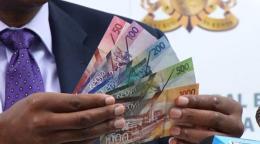
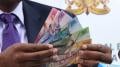
The government has disbursed Ksh1.69 billion to 423,520 households under the Cash Transfer for Orphans and Vulnerable Children (CT-OVC) Programme, as part of its ongoing Inua Jamii initiative.
The government has disbursed Ksh1.69 billion to 423,520 households under the Cash Transfer for Orphans and Vulnerable Children (CT-OVC) Programme, as part of its ongoing Inua Jamii initiative.
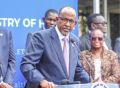
In a statement on Wednesday, November 11, State Department for Children Services Principal Secretary Carren Ageng'o said the funds are meant to facilitate payments for the September-October 2026 cycle.
Join our WhatsApp Channel for the latest news updates.
"The Ministry of Gender, Culture and Children Services, through the State Department for Children Services, has disbursed a total of Ksh1,694,080,000 to 423,520 Cash Transfer for Orphans and Vulnerable Children (CT-OVC) Programme households under the Inua Jamii initiative," the statement read.
Ageng'o further clarified the amount each household would receive and when beneficiaries could begin accessing the funds through the government's contracted payment service provider.
Read More
"This disbursement covers the September-October 2026 payment, and each beneficiary household is receiving a sum of Ksh4,000. Payment will commence on Wednesday, 11th November 2026 through the contracted Payment Service Provider," the statement added.
Ageng'o explained that the CT-OVC Programme was designed to support vulnerable children by ensuring they remained within family and community settings while accessing essential services, including education and healthcare.
"The CT-OVC Programme aims to encourage fostering and retention of orphans and vulnerable children within their families and communities, while promoting their human capital development.
"Specifically, the programme supports increased enrollment and transition in education, improved health and nutrition outcomes, enhanced household food security, and better child protection," the statement concluded.

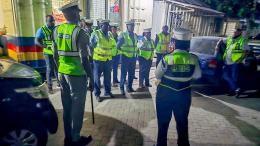
Meanwhile, the government has processed 96,566 records of village elders for monthly payments of Ksh3,000, as it continues implementing a nationwide programme targeting 106,000 village elders.
In an update on Wednesday, November 11, the Ministry of Interior said a nationwide exercise had been conducted to identify eligible village elders and establish a register to facilitate the monthly payments.
"The Ministry undertook a nationwide data collection exercise to establish a register of eligible elders, with the verified records submitted for payment processing through M-Pesa’s Tunza Vijiji wallet.
"However, some records were returned for reconciliation due to discrepancies in names, national identity card numbers and telephone details," the ministry said.
Interior Cabinet Secretary Kipchumba Murkomen said verification was ongoing and that eligible elders whose records had not been processed would receive their payments in arrears.
"The verification is ongoing and the eligible elders whose records are outstanding would receive their payments in arrears," he told Parliament, assuring those affected that the reconciliation exercise would facilitate the processing of pending payments.
The recognised village elders are also expected to take up leadership responsibilities within existing Nyumba Kumi clusters in their respective villages.
"The recognised village elders are also expected to serve as chairpersons of existing Nyumba Kumi clusters in their respective villages, strengthening communication between residents, local administrators and security officers," the ministry added.
Their responsibilities include supporting community mobilisation, promoting peace, identifying local concerns and facilitating the implementation of government programmes.
Beyond the monthly facilitation, the ministry said the programme also provides additional support to equip the elders with the necessary resources and skills to perform their duties.
"These measures include smartphones, governance training, official uniforms and identity badges, as well as enrolment in the Social Health Authority (SHA) medical scheme," the ministry further said.