Editor's Review
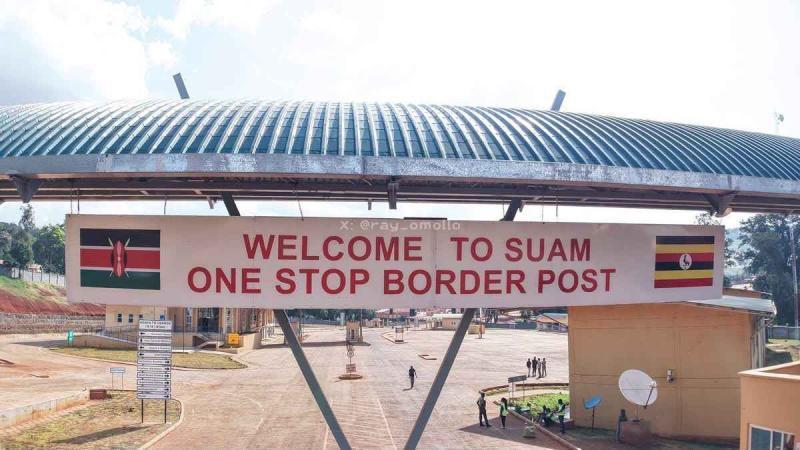
The government has introduced new measures aimed at improving service delivery at Kenya’s border points, with travellers, traders and other users set to benefit from clearer service standards.
The government has introduced new measures aimed at improving service delivery at Kenya’s border points, with travellers, traders and other users set to benefit from clearer service standards.
In an update on Thursday, November 12, the Ministry of Interior said the measures were introduced through three joint service charters covering the country’s land, air and maritime borders.
Join our WhatsApp Channel for the latest news updates.
Announcing the initiative, the Ministry of Interior said the new framework would establish common service commitments among government agencies operating at the country's Points of Entry and Exit.
"Travellers, traders and other users of Kenya’s border points are set to benefit from clearer service standards following the launch of three joint service charters covering the country’s land, air and maritime borders," the update read.
Read More
Under the new charters, agencies will be required to observe specific timelines when handling complaints, inquiries and correspondence, while ensuring emergency situations receive immediate attention.
"Under the commitments, complaints and inquiries are to be handled within five days, verbal correspondence within 24 hours and written correspondence within five days.
"The charters also provide for immediate emergency response, including medical evacuation, and expedited facilitation of VIPs and diplomats, subject to the required clearances," the ministry added.
The government also outlined measures to ensure frontline officers understand and consistently implement the new service standards across the different border points.
"To support consistent service delivery, participating agencies are expected to undertake quarterly staff capacity-building, display the charters at their respective Points of Entry and Exit, and sensitise frontline officers and stakeholders on the published standards," the update further read.
The implementation process will also involve monitoring the performance of participating agencies and identifying areas requiring improvement, with members of the public and other stakeholders expected to report instances of poor service.
"The implementation framework also provides for monitoring agency performance, addressing service gaps and using feedback from stakeholders to improve delivery. Non-compliance and poor service are to be reported to the Border Management Secretariat," the ministry noted.

According to the ministry, the initiative seeks to address challenges associated with having multiple government agencies handling different processes at the same border point.
"The initiative seeks to address the fragmented experience that can arise when multiple agencies serve the same border point. For travellers and traders, government services should be seamless, regardless of which institution is responsible for a particular process," the update concluded.
Meanwhile, the government has processed 96,566 records of village elders for monthly payments of Ksh3,000, as it continues implementing a nationwide programme targeting 106,000 village elders.
In an update on Wednesday, November 11, the Ministry of Interior said a nationwide exercise had been conducted to identify eligible village elders and establish a register to facilitate the monthly payments.
"The Ministry undertook a nationwide data collection exercise to establish a register of eligible elders, with the verified records submitted for payment processing through M-Pesa’s Tunza Vijiji wallet.
"However, some records were returned for reconciliation due to discrepancies in names, national identity card numbers and telephone details," the ministry said.
Interior Cabinet Secretary Kipchumba Murkomen said verification was ongoing and that eligible elders whose records had not been processed would receive their payments in arrears.
"The verification is ongoing and the eligible elders whose records are outstanding would receive their payments in arrears," he told Parliament, assuring those affected that the reconciliation exercise would facilitate the processing of pending payments.
The recognised village elders are also expected to take up leadership responsibilities within existing Nyumba Kumi clusters in their respective villages.
"The recognised village elders are also expected to serve as chairpersons of existing Nyumba Kumi clusters in their respective villages, strengthening communication between residents, local administrators and security officers," the ministry added.
Their responsibilities include supporting community mobilisation, promoting peace, identifying local concerns and facilitating the implementation of government programmes.
Beyond the monthly facilitation, the ministry said the programme also provides additional support to equip the elders with the necessary resources and skills to perform their duties.
"These measures include smartphones, governance training, official uniforms and identity badges, as well as enrolment in the Social Health Authority (SHA) medical scheme," the ministry further said.