Editor's Review
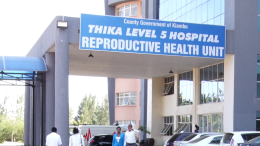
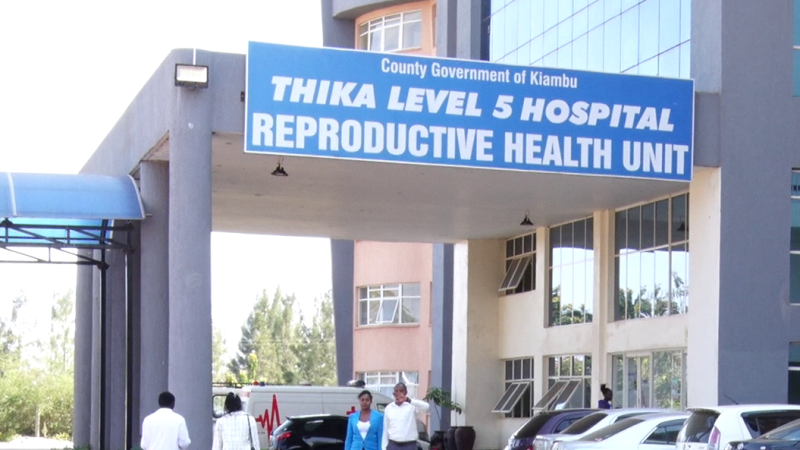
The Senate has initiated an investigation into the deaths of five babies born prematurely at Thika Level 5 Hospital.
The Senate has initiated an investigation into the deaths of five babies born prematurely at Thika Level 5 Hospital, with lawmakers questioning the medical management, referral arrangements and events surrounding their transfer to Kenyatta National Hospital (KNH).
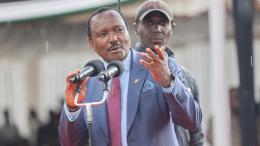
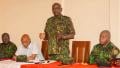
The Senate Standing Committee on Health, chaired by Uasin Gishu Senator Jackson Mandago, on Thursday, November 12, questioned officials from the Kiambu County Department of Health and the management of Thika Level 5 Hospital over the incident.
Join our WhatsApp Channel for the latest news updates.
During the meeting, Kiambu Health County Executive Committee Member Dr. Elias Maina provided details of the mother's condition before delivery, explaining that she had received counselling on available delivery options and the risks associated with premature birth.
He told senators that the mother progressed to the second stage of labour, with an urge to push recorded at 10:40 a.m.
Read More
Medical records presented to the lawmakers indicated that all five babies were delivered within 11 minutes, with their birth weights ranging from 630g to 800g.
The first baby, a boy weighing 630g, was born at 10:45 a.m. and recorded Apgar scores of 8, 8 and 10. A second baby, a girl weighing 715g, followed at 10:50 a.m., with scores of 8, 8 and 9.
The third baby, a girl weighing 720g, was delivered breech at 10:52 a.m. and recorded scores of 7, 8 and 9.
The fourth, weighing 800g, was born at 10:54 a.m., while the fifth, weighing 660g, was delivered at 10:56 a.m. Both recorded Apgar scores of 4, 5 and 6.
Maina told the committee that the fourth and fifth babies experienced breathing difficulties immediately after delivery, requiring resuscitation using bag-and-mask ventilation in the labour ward.
He added that the medical team wrapped all five newborns in plastic film and cotton clothing before moving them to the hospital's Newborn Unit (NBU).

The committee also heard details of the mother's condition following delivery. Maina said she received preventive medication to minimise the risk of postpartum haemorrhage, in line with national medical guidelines.
Her estimated blood loss was 200ml, while her blood pressure stood at 123/63 and pulse rate at 95, indicating that her vital signs remained stable.
At 3:20 p.m., she received one unit of blood and one unit of fresh frozen plasma. According to the county health official, her condition remained stable until she was transferred to Kenyatta National Hospital.
Addressing the decision to transfer the babies to KNH, Dr. Maina explained that Thika Level 5 Hospital did not have a Neonatal Intensive Care Unit (NICU), which was necessary to provide the specialised support required by the extremely premature newborns.
He noted that the babies, whose weights ranged between 600g and 800g, needed continuous manual ventilation using bag-and-mask equipment during transportation.
Maina also told senators that Thika Level 5 Hospital had previously managed premature newborns weighing as little as 530g at birth who survived.
However, he cautioned against comparing individual cases, explaining that survival depends on several medical considerations.
Maina observed that each additional week of pregnancy improves a baby's chances of survival while lowering the likelihood of long-term neurodevelopmental complications.
He further highlighted the dangers associated with extremely low birth weight, particularly for babies weighing below 1,000g, describing it as a significant contributor to neonatal deaths and serious health complications.
"On behalf of the entire team, we extend our deepest condolences to the family," Maina said, expressing sympathy to the affected family.
Elsewhere, the Kenyatta National Hospital (KNH) has etched its name in global medical history books after performing two pioneering nerve reconstruction surgeries.
In a statement issued on Tuesday, November 10, KNH said one of the surgeries was on the world's youngest known recipient of Targeted Sensory Reinnervation (TSR), a four-year-old boy.
The boy, who hails from Kirinyaga County, lost his left hand in a chaff-cutter accident while playing with another child. The surgery lasted for five and a half hours.
"Following an unsuccessful attempt to reattach the hand and subsequent amputation, he was identified as a suitable candidate for TSR," the statement read.
KNH explained that TSR is a specialised procedure that redirects sensory nerves to create the potential for patients to perceive sensations such as pressure, vibration, heat and cold through appropriately integrated prosthetic limbs.
It added that its transhumeral variant applies the technique to patients with above-elbow amputations, and the TSR may also help address complications such as painful neuromas and phantom limb sensations.
The second surgery was a transhumeral variant on a patient who was the third in the world to undergo it.
The 43-year-old man had lost limbs through traumatic injuries, marking a significant advancement in microsurgery and reconstructive care.
He underwent the five-hour Transhumeral TSR procedure on October 30. KNH confirmed that both procedures were covered by the Social Health Authority (SHA).
SHA also covered post-operative care and clinical monitoring for both patients, who have since been discharged and are recuperating at home, with continued clinical follow-up and rehabilitation.