
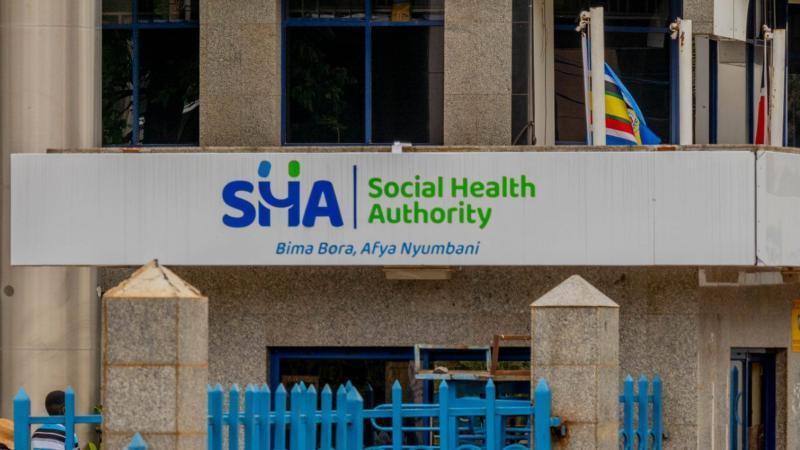
Editor's Review
SHA has announced changes to the approval of cancer treatment services, seeking to ensure patients receive services in line with national cancer treatment guidelines.
The Social Health Authority (SHA) has announced changes to the approval of cancer treatment services, seeking to ensure patients receive services in line with national cancer treatment guidelines.
In a statement on Friday, November 20, the authority said the adjustments were intended to address inconsistencies in the pricing of cancer treatment across hospitals, which had previously resulted in patients paying different amounts for similar services.
Join our WhatsApp Channel for the latest news updates.
"The Social Health Authority (SHA) wishes to inform the public that recent changes to cancer treatment approvals were introduced to improve access to quality cancer care, align treatment with the National Cancer Treatment Guidelines, and standardise the pricing and reimbursement of cancer medicines and services," the statement read.
SHA clarified that the changes would not affect the legally approved cancer treatment benefit available to patients, which remains capped at Ksh800,000.
Read More
"In line with the provision of Legal Notice No. 56 of 2025 and Legal Notice No. 78 of 2026, please note the legally approved cancer benefit of Ksh800,000 for patients remains unchanged," the statement added.
According to SHA, previously, healthcare facilities applied varying charges for similar cancer treatment procedures, creating disparities in the amount patients were required to pay.
The inconsistent pricing had, in some instances, resulted in patients exhausting their allocated benefits before completing their prescribed treatment.
SHA said the revised approval system would address the problem by introducing standardised rates and making better use of the available oncology allocation.
"The revised system aims to ensure patients receive appropriate treatment at standardised rates while maximising the enhanced oncology benefit of Ksh800,000, comprising Ksh400,000 under SHIF and Ksh400,000 under ECCIF," the statement further read.
SHA advised patients that access to the oncology benefit would depend on compliance with the applicable treatment guidelines, approved tariffs and eligibility conditions.
It cautioned that services falling outside the approved benefits package would not automatically qualify for reimbursement, meaning patients could be required to meet additional costs for certain treatments or services.

SHA further directed hospitals to communicate any charges for services not covered under SHA before proceeding with the provision of such services.
"Patients are advised that access to the oncology benefit is subject to the applicable treatment guidelines, approved tariffs and eligibility requirements. Treatments and services outside the approved benefits package are not automatically covered.
"Where additional costs arise for services not covered by SHA, the hospital is required to explain these costs clearly to the patient before the services are provided," the statement concluded.
This comes a day after President William Ruto highlighted the growth in health insurance registration under SHA, saying the new system has registered significantly more Kenyans than the defunct National Hospital Insurance Fund (NHIF).
He said the expansion was intended to protect families from the financial burden of serious illnesses.
"A serious illness can wipe out years of savings and productive effort. For too many Kenyans and their families, falling ill has meant borrowing from friends, selling their livestock, disposing of land, or abandoning treatment altogether. A medical emergency could turn a family that was getting ahead into one struggling to survive," he said.
Ruto said the healthcare reforms were designed to ensure that medical expenses were increasingly covered through shared financing arrangements instead of placing the entire burden on individuals and their families.
"That is the burden we set out to lift through our healthcare reforms: to ensure that the cost of treatment is increasingly met through a system of shared health financing, rather than falling entirely on individuals and families," he added.
Ruto said 33.7 million Kenyans had registered with SHA, compared with approximately 8 million people who were registered under NHIF.
"Today, 33.7 million Kenyans are registered with the Social Health Authority, compared with approximately 8 million registered under the National Hospital Insurance Fund in 2022," he further said.
Ruto further pointed to cancer treatment, dialysis and kidney transplants as examples of expensive medical services being accessed by patients under SHA.
He said thousands of patients were receiving cancer treatment and dialysis through the scheme, while dozens had already undergone kidney transplants.
"Across the country, 53,465 patients are receiving cancer treatment, 24,468 are receiving dialysis, and 89 have already undergone kidney transplants, all under SHA. These are among the most expensive forms of medical care, often beyond the financial reach of ordinary households," he stated.
 (1)-1791175033-md.jpg)

 (1)-1791175033-sm.jpg)