Editor's Review
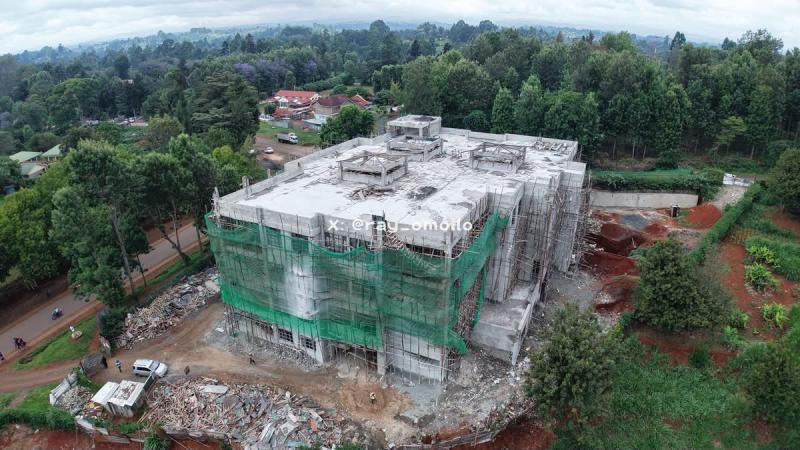
Construction of the Othaya Modern Market in Nyeri County has entered its final stage, with the three-storey facility reaching structural completion.
Construction of the Othaya Modern Market in Nyeri County has entered its final stage, with the three-storey facility reaching structural completion as finishing works continue ahead of its anticipated opening.
In a statement on Saturday, November 21, Interior Principal Secretary Raymond Omollo said the project, launched in April 2025 by President William Ruto, is expected to transform trading activities in Othaya by providing modern facilities for traders, farmers and other businesses in the area.
Join our WhatsApp Channel for the latest news updates.
"Othaya occupies a distinguished place in Kenya's political history as the birthplace of the country's third President, the late H.E. Mwai Kibaki, one of the nation's most visionary leaders.
"It is therefore unacceptable that a town of such historical and economic significance should continue to serve its people through dilapidated trading facilities," he wrote.
Read More

Omollo explained that the ongoing market construction was part of efforts to improve the town's commercial infrastructure and reinforce its role in the region's agricultural economy.
"The ongoing construction of the Othaya Modern Market is a deliberate investment to change this reality, modernise local commerce and strengthen the town's position as a key trading centre in a region renowned for tea and coffee production," he added.

Once completed, the facility will accommodate approximately 1,000 traders and provide an integrated trading environment with dedicated sections for fresh produce, meat and vegetables.
The market will also feature cold rooms, bulk storage facilities, shops, a food court, a kitchen, a SACCO office and an ICT hub. Additional amenities will include a children's play area, meeting rooms and prayer rooms.
Omollo said the investment was expected to improve the agricultural supply chain while addressing challenges that have affected farmers and small-scale traders.
"The facility will improve trading conditions, strengthen agricultural value chains, minimise post-harvest losses and create better opportunities for farmers and small-scale traders," the statement further read.

Beyond improving commercial activities, the project has also created employment opportunities for residents while offering interns an opportunity to gain practical experience during its implementation.
"The project is also generating local employment and providing practical experience to interns, extending its benefits to skills development," the statement concluded.

Elsewhere, the Rodi Kopany Economic Stimulus Programme (ESP) Market in Homa Bay County is nearing commissioning, with final landscaping underway ahead of its official opening.
In a statement on Tuesday, November 17, Omollo highlighted the strategic importance of the market, noting that its location connects traders and customers from several neighbouring towns.
"Rodi Kopany's position as a busy junction town brings together traders and customers from Homa Bay, Oyugis, Ndhiwa and Rongo, making it an important centre of commercial activity," he wrote.
Omollo said the construction of the market had reached completion, with the remaining work focused on preparing the facility for commissioning.
"The completed Rodi Kopany Economic Stimulus Programme (ESP) Market, now undergoing final landscaping ahead of commissioning, is set to give this activity a modern, well-organised space," he added.
According to Omollo, the facility is expected to accommodate hundreds of small-scale traders, providing an alternative to informal open-air stalls while offering better working conditions.
"The facility will provide hundreds of small-scale traders with a secure, all-weather trading environment, replacing the limitations of informal open-air stalls with better conditions for business," he further said.
According to Omollo, among the key facilities are fish-processing kilns and cold storage infrastructure intended to support traders dealing in fish from Lake Victoria by improving preservation and handling.
He explained that the market would also have water and sanitation infrastructure to support its daily operations.
"Fish-processing kilns and cold storage facilities will support the preservation and handling of fish from Lake Victoria, helping traders reduce post-harvest losses and improve the value of their products.
"A 96,000-litre water storage tank, internal plumbing, a septic system and modern ablution blocks will provide essential services for a cleaner and more functional marketplace," he noted.
-1791696120-md.jpg)

-1795327124-md.jpg)


-1791696120-sm.jpg)

-1795327124-sm.jpg)