Editor's Review
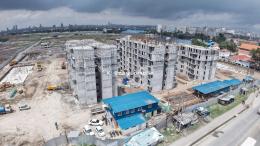
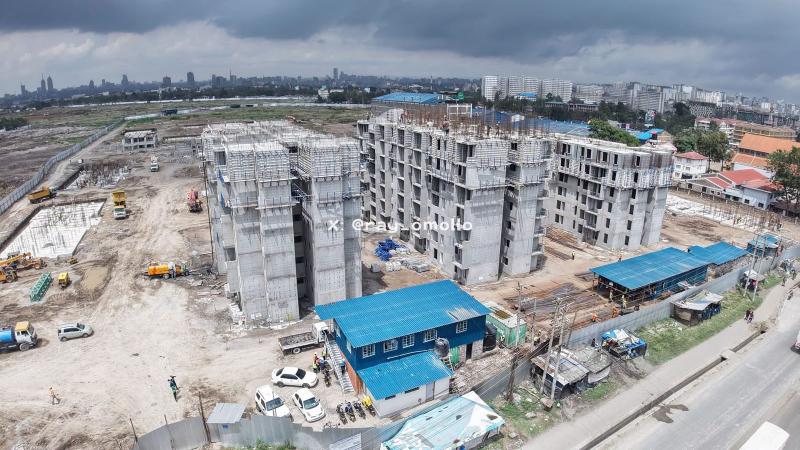
The government has unveiled plans to transform Nairobi’s Makongeni Estate through an affordable housing project that will deliver 5,369 residential units across 27 high-rise blocks.
The government has unveiled plans to transform Nairobi’s Makongeni Estate through an affordable housing project that will deliver 5,369 residential units across 27 high-rise blocks.
In a statement on Monday, November 23, Interior Principal Secretary Raymond Omollo highlighted the history of Makongeni Estate and the transformation underway through the housing project.
Join our WhatsApp Channel for the latest news updates.
"Established in the early 1920s as one of Nairobi's first planned residential settlements for African railway workers, Makongeni Estate in Eastlands has undergone more than a century of transformation, from segregated colonial-era quarters to a densely populated, informal settlement," he wrote.

Read More
Omollo noted that the ongoing construction was part of the government's efforts to improve housing conditions and provide modern infrastructure in the neighbourhood.
"Today, the Government's Slum Eradication and Urban Renewal Programme is giving this historic neighbourhood a new lease of life through the ongoing construction of the Makongeni Affordable Housing Project," he added.

According to Omollo, the development is being implemented simultaneously under Phases 1A and 1B, with the two phases expected to deliver a combined 5,369 residential units.
Phase 1A comprises eight twin blocks with a total of 2,258 units, while Phase 1B consists of 19 blocks with 3,111 units.

Beyond residential accommodation, the project will incorporate several community facilities intended to support residents and improve the overall living environment.
Omollo said the development would include recreational, social and health facilities alongside supporting infrastructure.
"Together, they will provide modern community facilities, including day-care and early childhood development centres, clubhouses, a community centre, swimming pool, basketball court, sanatorium, parking and landscaped green spaces," he further said.

Omollo also linked the housing development to its broader public safety and security agenda, noting that planned settlements could help address challenges associated with overcrowded informal neighbourhoods.
"For the State Department for Internal Security and National Administration, decent housing is also an investment in public safety.
"Replacing congested informal settlements with planned neighbourhoods, proper access roads, adequate lighting and organised public spaces helps address conditions that often facilitate insecurity and crime," he explained.

Elsewhere, the government is constructing an additional 15,000 affordable housing units in Kibera as part of the ongoing redevelopment of Soweto East.
In a statement on Friday, November 20, the Ministry of Interior said the transformation of Kibera had gained momentum over the past four years under the Bottom-Up Economic Transformation Agenda (BETA).
Omollo said the redevelopment was being implemented in phases to improve living conditions and expand access to decent housing for residents.
"Through the phased redevelopment of Soweto East, the Government is extending the promise of Usawa ni Sawa, ensuring that every city dweller has an opportunity to live with dignity while contributing to the country's progress," he wrote.
The project began with Zone A, which delivered 822 apartments spread across 21 blocks. The second phase, Zone B, subsequently delivered 4,054 social housing units housed in 18 high-rise blocks.
Zone B also incorporated supporting social amenities, including a primary school, a health centre and commercial facilities to serve the growing residential community.
With Zone B nearing completion, the Government was preparing to embark on Phase II, which will cover Zones C and D.
Construction preparations were underway on an 8.1-hectare parcel of land, where the planned development was expected to accommodate 15,000 additional housing units.
"The new development will also incorporate retail centres, ECD facilities, health clinics and upgraded sewer infrastructure," he added.
Omollo noted that the project went beyond providing residential units, with the planned facilities expected to improve access to essential services and support the development of a more organised urban settlement.
It also linked the affordable housing programme to the Government's broader security agenda, arguing that improved living conditions could help address some of the vulnerabilities associated with informal settlements.
"Decent housing is also a foundation for lasting security. The State Department for Internal Security and National Administration recognises that safer communities begin with dignified living conditions, where families have secure homes, children have better environments to grow and residents are less exposed to the vulnerabilities associated with overcrowded informal settlements," he further said.
According to Omollo, the redevelopment was gradually reshaping Kibera into a modern residential community as the Government advanced its affordable housing programme.
"As the transformation gathers pace, the Kibera of old is steadily giving way to a new vision of inclusive urban living. Mbele Pamoja," he stated.