Editor's Review
President William Ruto has allocated Ksh100 million to fund research into illicit drug networks, recurring fires in informal markets, climate-related conflicts and emerging technology threats.
President William Ruto has allocated Ksh100 million to fund research into illicit drug networks, recurring fires in informal markets, climate-related conflicts and emerging technology threats.
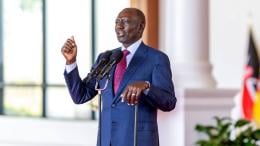
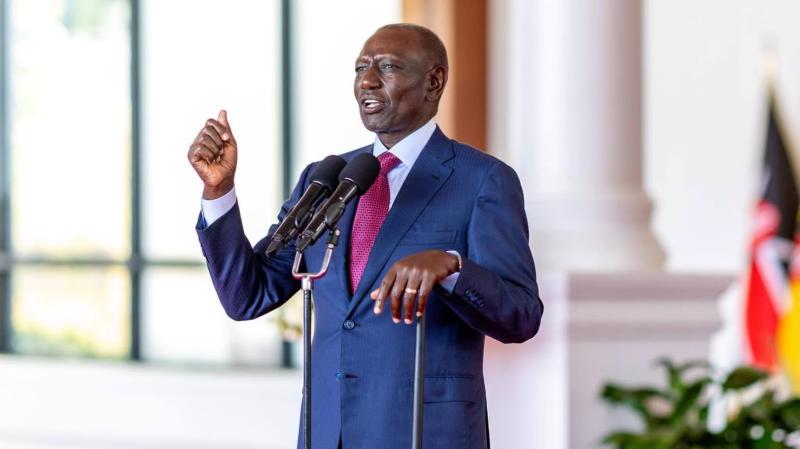
Speaking during an address to the National Defence University-Kenya (NDU-K), Ruto said the institution must align its research with the country’s security priorities and develop solutions that address emerging challenges.
Join our WhatsApp Channel for the latest news updates.
"I expect the National Defence University-Kenya to align its research with our national priorities and lead the development of home-grown solutions to emerging security challenges," he said.
Ruto said the university should move beyond academic qualifications and focus on producing research that directly contributes to protecting the country and its citizens.
Read More
"As Chancellor, I do not want this university to be a factory of degrees and certificates. I want it to be an intellectual powerhouse that generates practical solutions to our most pressing defence and security challenges. Its success must be measured not simply by the number of graduates it produces, but by how much safer and more secure our nation becomes because of its work," he added.
Ruto assigned the university four specific research undertakings, beginning with the drug economy and national security, directing it to work with the National Authority for the Campaign Against Alcohol and Drug Abuse, the National Intelligence Service and the Ministry of Interior to conduct a comprehensive study into the political economy of illicit alcohol and narcotics.
The study is expected to examine how drug networks operate, their financing mechanisms, links to organised crime and their role in sustaining substance abuse across the country.
"We must understand how these networks operate, how they are financed, how they sustain organised crime and how they perpetuate substance abuse. The findings must inform a coordinated, evidence-based, whole-of-government response," he further said.
The second undertaking will focus on climate security and conflict, with the President pointing to recurring clashes in the North Rift, Tana River and northern Kenya, which he said are increasingly influenced by climate change, resource scarcity and population displacement, beyond historical and cultural differences.
He tasked the university with establishing a Centre for Climate, Peace and Security and developing Kenya’s first Climate Security Early Warning Model to help anticipate and prevent conflicts linked to climate pressures.
"I therefore task the university to establish a Centre for Climate, Peace and Security and develop Kenya’s first Climate Security Early Warning Model to strengthen our capacity to anticipate, prevent and respond to climate-induced conflicts," he noted.

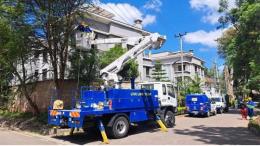
The third research priority will investigate recurring fires in Gikomba and other informal markets, which have repeatedly destroyed traders’ goods, businesses and livelihoods, leaving many struggling to recover from losses.
Ruto said the university should establish the causes of the fires through scientific investigations, including whether they result from accidents, inadequate safety infrastructure or deliberate economic sabotage.
"The findings must inform policy and interventions to protect the lives, livelihoods and investments of traders in the informal economy, a sector that accounts for more than 80 per cent of employment in Kenya," he stated.
The fourth undertaking will focus on artificial intelligence, cybersecurity and national sovereignty, with Ruto calling for greater local capacity to develop, deploy and govern emerging technologies instead of relying heavily on foreign-developed systems.
He directed the university’s College of Defence Technology, working with relevant stakeholders, to develop a National Defence AI and Cyber Resilience Strategy to protect critical infrastructure, strengthen technological capabilities and safeguard Kenya’s national sovereignty.
"I direct the university’s College of Defence Technology, working with relevant stakeholders, to develop a National Defence AI and Cyber Resilience Strategy to safeguard our critical infrastructure, strengthen our technological capabilities and protect our national sovereignty," he said.
To finance the four research programmes, Ruto said he had directed the National Treasury and the Ministry of Defence to set aside Ksh100 million under the National Research Fund.
"To support these four research undertakings, I have directed the National Treasury and the Ministry of Defence to allocate KSh100 million under the National Research Fund," he further said.
This comes a day after Ruto announced three key adjustments to the Hustler Fund.
Speaking on Tuesday, November 24, he said his government made a Ksh5 billion capital injection into the Fund, declaring that the financial boost would grant Kenyans more access to credit facilities on the platform.
"I would like to announce that we have increased money for the Hustler Fund. We are putting another so that those borrowing from that platform can have access to greater facilities," he stated.
Ruto announced that his administration had approved loan limit increases for 1.5 million Kenyans who regularly borrow from the Hustler Fund.
He confirmed that the beneficiaries will be allowed to access the bridge loan, where individuals can access credit of up to Ksh150,000.
Ruto instructed the Micro, Small and Medium Enterprises (MSMEs) Development Principal Secretary, Susan Mang'eni, to oversee the inception of a new product that targets women in business groups.
"I have instructed the PS that, for women who are individuals and those who are in groups, I direct the Hustler Fund team to design a product. The product will enable funds to be disbursed to groups, after which it can be loaned to its members," he added.