Editor's Review
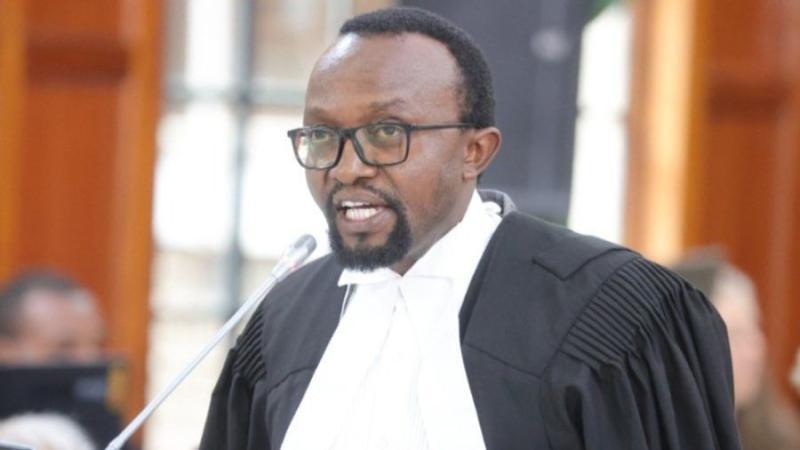
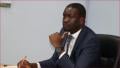
NCIC has summoned lawyer Ndegwa Njiru over remarks he made against President William Ruto during a public rally in Mwala, Machakos County.
The National Cohesion and Integration Commission (NCIC) has summoned lawyer Ndegwa Njiru over remarks he made against President William Ruto during a public rally in Mwala, Machakos County.
In a notice on Thursday, November 26, the commission said it was investigating utterances made by Njiru during the rally held on November 22, 2026, citing concerns that the remarks could violate laws governing hate speech, national cohesion and public order.
Join our WhatsApp Channel for the latest news updates.
NCIC said its preliminary assessment considered the nature of the remarks, their context, public dissemination, subsequent public reactions and the prevailing political and ethnic dynamics in the country.
According to the commission, Njiru, while addressing the rally, criticised Ruto's leadership and questioned his suitability to remain in office, while also discussing Wiper leader Kalonzo Musyoka's leadership credentials.
Read More
He accused Ruto of killing young people, corruption, stealing public resources and selling Safaricom, before calling for his removal from office.
NCIC further expressed concern that the remarks, directed at the President as a symbol of national unity, could trigger a breach of peace, escalate political and ethnic hostilities and undermine national cohesion and harmonious coexistence.
"Pursuant thereto, you are hereby summoned, in accordance with Section 27-29 of the National Cohesion and Integration Act appear before the Commission at its offices situated on the 17th Floor, Britam Tower, Upper Hill, Nairobi on Thursday 3rd December 2026 at 11:00AM for an opportunity to respond to the Summons," the notice read.
NCIC said Njiru would be given an opportunity to respond to the summons, present evidence and make representations for consideration during the hearing, adding that the proceedings could also involve conciliation where appropriate.
"At the hearing, you will be afforded an opportunity to respond to the Summons, adduce evidence and make any representations you wish the Commission to consider. The hearing may also include conciliation where appropriate. The hearing shall constitute your opportunity to be heard before the Commission makes its determination on the material before it," the notice added.
NCIC warned that failure to attend the hearing in person could result in legal action, including arrest warrants and criminal or contempt proceedings.
"Take notice that failure to appear in person at the aforementioned place, date, and time, will lead to warrants of arrest being issued for your arrest and production before the Commission and/or the institution of criminal and/or contempt proceedings against you," the statement concluded.

This comes a week after NCIC issued administrative findings against Kajiado Governor Joseph Ole Lenku over remarks he made during a public political forum in Kajiado County on August 22.
In a statement on Friday, November 20, the commission noted that although the remarks were made in the context of political party nominations and community representation, they promoted exclusion and portrayed individuals and political structures with differing positions as adversaries.
"The Commission found that, although the remarks were made in the context of political party nominations and the representation of the Maa community, they promoted political exclusion, portrayed dissenting party structures as adversaries and threatened adverse social consequences for those who chose other political paths.
"The remarks fell below the constitutional standard of responsible leadership and posed a risk to peaceful coexistence in Kajiado County, a cosmopolitan county of diverse communities," the statement read.
NCIC said the inquiry followed a video recording of the political forum in which Ole Lenku addressed the position of the Maasai community in party leadership and nomination processes, particularly regarding positions considered to belong to the Maa community in Kajiado and Narok counties.
During the forum, the governor reportedly referred to political parties that did not grant Maasai representatives senior positions as "adui wetu" (our enemies).
He also warned those who opted for alternative political paths that they would "utajipata taabani" (find themselves in difficulty).
Ole Lenku appeared before the Commission on September 17, 2026, accompanied by his legal representatives and county officials, where he affirmed the factual accuracy of the remarks as presented to him.
His lawyers argued that the statements were made in his capacity as an elected governor and spokesperson of the Maa community, addressing political positioning, nomination criteria, historical injustices, land dispossession and marginalisation.
The legal team maintained that the governor was discussing political affiliations rather than targeting any ethnic community, arguing that the expressions used did not amount to threats or incitement.
Following its assessment, the Commission issued a Notice of Remedial Conciliation proposing corrective, preventive and restorative measures to address the concerns raised by the remarks.
"The Commission has issued a Notice of Remedial Conciliation proposing corrective, preventive and restorative measures. The Respondent must state in writing, within seven days of the determination, whether he accepts the terms or proposes variations," the statement added.
Among the proposed measures, the NCIC wants Ole Lenku to issue a public statement affirming that political negotiations and advocacy for community representation should be conducted through dialogue, inclusivity and respect for the rule of law.
The governor is also expected to reassure members of the public that Kajiado remains a peaceful and welcoming county where residents can exercise their political rights and make political choices without fear of discrimination or intimidation.
Additionally, the Commission wants him to provide a written commitment against using language that portrays political opponents, party members or resident communities as enemies or exposes them to social and political threats.
NCIC further directed the governor to formally communicate his position on the proposed measures within the stipulated period.
"Within seven days of the determination, the Respondent must indicate in writing, on the prescribed notice, whether he accepts the terms, rejects them or accepts them subject to proposed variations," the statement noted.

-1795754097-md.jpg)
-1795754097-sm.jpg)