
Editor's Review
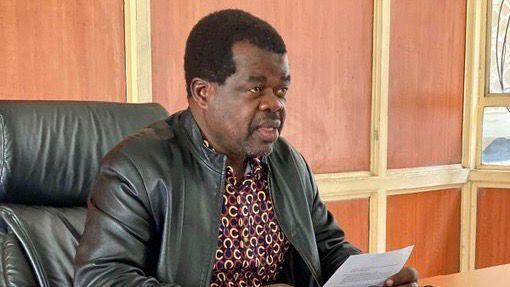
Busia Senator Okiyah Omatatah has raised concerns over the sharp increase in research licensing fees imposed by the National Commission for Science, Technology and Innovation (NACOSTI).
Busia Senator Okiyah Omatatah has raised concerns over the sharp increase in research licensing fees imposed by the National Commission for Science, Technology and Innovation (NACOSTI).
In a statement dated Wednesday, November 25, Omatatah said the revised fees, which took effect on October 1, 2026, had raised concerns among students, researchers and institutions over affordability, transparency and access to academic research, particularly for learners from financially disadvantaged backgrounds.
Join our WhatsApp Channel for the latest news updates.
The senator asked the Standing Committee on Education to explain the circumstances surrounding the fee increase and establish whether the review complied with the relevant legal and procedural requirements.
"The substantial upward revision of research licensing fees across all academic levels has raised concerns among students, researchers and institutions regarding affordability, transparency, compliance with legal and procedural requirements, stakeholder engagement, the basis for the new charges, and the potential impact on access to academic research, particularly for learners from financially disadvantaged backgrounds and those who had already commenced research processes under the previous fee structure," the statement read.
Read More
Omatatah wants the committee to clarify the legal and regulatory framework underpinning the revised research licensing fees, including whether all statutory requirements relating to approval, publication, commencement and scrutiny of statutory instruments were followed before the new rates came into force.
He also wants the government to explain the stakeholder engagement and public participation processes undertaken before the fee review, including consultations with universities, student bodies, researchers and other affected parties.
Omatatah asked the committee to establish whether the consultations complied with Articles 10 and 47 of the Constitution, which provide for public participation and fair administrative action, respectively, and whether concerns raised during the engagement process were considered and incorporated into the final decision.
The senator further wants NACOSTI to disclose the financial, operational and policy considerations that informed the revised charges, including the cost analyses conducted, projected revenue implications and expected benefits to research regulation and administration.

The committee is also expected to address the anticipated impact of the new fees on students and researchers, particularly those from low-income and marginalised backgrounds, and outline measures to prevent the charges from creating disproportionate barriers to academic research.
Omatatah further wants clarification on how students who had already commenced research preparations before the new fee structure was introduced will be treated.
"The anticipated impact of the revised fees on students and researchers, particularly those from low-income and marginalized backgrounds, including available mitigation measures to prevent the new rates from creating disproportionate barriers to academic research, and the treatment of students who had commenced research preparations prior to the implementation of the new fee structure," the statement added.
This comes days after Omtatah called on Kenyans to look beyond President William Ruto’s removal from office, arguing that meaningful political change must involve transforming the country’s governance system.
In a statement on Monday, November 23, he argued that changing the person occupying State House would not necessarily translate into meaningful change if the existing political and governance structures remained intact.
"Kenya must avoid the trap of replacing one president with another while retaining the same system of impunity, corruption, economic exclusion and institutional capture," he wrote.
Omatatah maintained that the focus of political change should be on establishing accountable leadership and ensuring that government operates within the principles and provisions of the Constitution.
"The real objective should be to replace bad leadership with good leadership, bad governance with constitutional governance, and a predatory political order with a government that serves the people," he added.
Omtatah further distinguished between changing the country's leadership and undertaking broader reforms that would fundamentally transform how Kenya was governed.
He argued that Kenyans should demand accountability and a presidency that serves the public interest rather than concentrating solely on securing a change of leadership.
"That is the difference between merely changing a president and changing a country. A country should not merely demand a different president. It should demand a better presidency," he further said.
Omatatah also cautioned against the possibility of a new political leadership reproducing the same practices associated with the administration it replaced.
He warned that without institutional reforms, a change of government could simply create an opportunity for a different group of political leaders to benefit from State capture.
"Otherwise, we risk replacing one clique of looters that is benefitting from State capture with a new one that equally wants to benefit from the same vice. Kenya deserves better leadership, better institutions and a better political order," he concluded.


-1795754097-md.jpg)



-1795754097-sm.jpg)