
Editor's Review
Kenyan businesses remain optimistic about their growth prospects over the next 12 months despite heightened global risks, geopolitical tensions and continued pressure from high operating costs.
Kenyan businesses remain optimistic about their growth prospects over the next 12 months despite heightened global risks, geopolitical tensions and continued pressure from high operating costs.
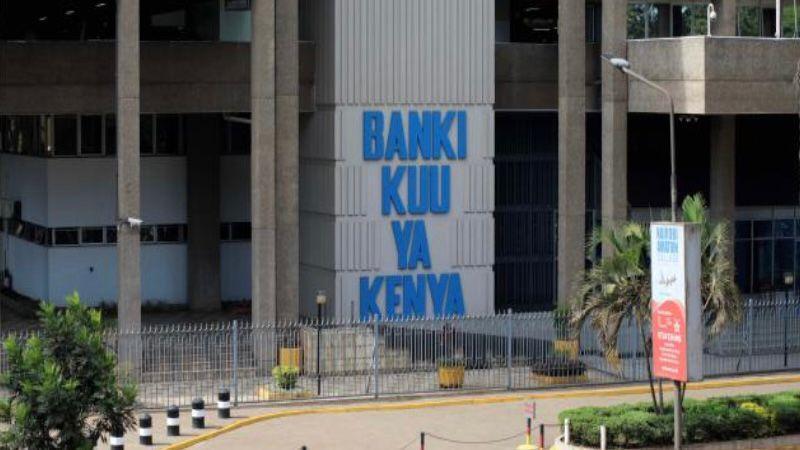
In its July 2026 Chief Executive Officers’ (CEOs) Survey, which assessed business confidence, current and expected activity, financing conditions, technology adoption and the factors likely to influence firms’ expansion, Central Bank of Kenya (CBK) said the positive outlook had persisted despite the risks facing businesses and the global economy.
"Despite heightened global risks, firms remained optimistic about Kenya’s growth prospects over the next 12 months.
"Respondents reported mixed business activity in 2026Q2 relative to 2026Q1, while activity is expected to remain broadly stable in 2026Q3," the report read.
According to CBK, the improved outlook at company level was attributed to stronger demand, business expansion, market diversification, new products and improved efficiency, although firms continued to face significant operating challenges.
Read More
"Company level growth prospects improved, supported by higher demand and orders, business expansion and market diversification, new product development, operational efficiency, government support, favourable weather conditions, and adoption of technology and innovation.
"However, growth continues to be constrained by subdued demand, high operating costs, tax refund delays, financing constraints, raw-material shortages, supply-chain disruptions, and global uncertainty," the report added.
The report also showed that most businesses expect their respective sectors to perform better over the coming year, with opportunities in agriculture, financial services, ICT, tourism, manufacturing, healthcare, retail and construction supporting the outlook.
"Most respondents expect sectoral growth to strengthen over the next 12 months, supported by sector specific opportunities and favourable seasonal factors," the report further read.
Meanwhile, CBK noted that agriculture could benefit from favourable weather, government support and strong export demand, while financial services are expected to gain from stable demand, operational improvements, new products and fintech expansion.
ICT growth is expected to remain supported by digitisation, technological advances and artificial intelligence investments.
Tourism businesses also anticipate stronger activity from peak-season demand, conferencing and holiday travel, while manufacturing firms expect stronger external demand and new market opportunities.
At the same time, businesses remain concerned about the performance of the global economy, with most CEOs expecting worldwide growth to weaken over the next 12 months.
"Most respondents expect global economic growth to weaken over the next 12 months, reflecting geopolitical tensions, particularly conflicts in the Middle East, higher energy prices, inflationary pressures, subdued global demand, and disruptions to trade and supply chains," the report indicated.

CBK said elevated debt levels and continued geopolitical uncertainty could further constrain global growth, although technological investments and resilient demand could provide support.
"Elevated debt levels and persistent geopolitical uncertainty are also expected to constrain global growth. However, AI and technological investments, resilient demand, opportunities in emerging markets, and a faster resolution of the geopolitical conflicts could support global growth," the report explained.
According to CBK, for the third quarter, CEOs expect activity to remain broadly stable, with some businesses anticipating improvement because of seasonal demand, agricultural harvests, tourism bookings, marketing activities and increased production.
"A larger proportion of respondents reported expectations of stability in business activity in 2026Q3. On balance, relative to the May 2026 survey, most firms expect improved business activity in 2026Q3, supported by higher demand and growth in sales, and increased production volumes supported by seasonal factors, such as increased hotel bookings during the peak tourism season, ongoing agricultural harvests; strong demand in some sectors following commencement of production seasons; marketing efforts; business expansion and capacity increases; and pick-up in activity following government budget releases," the report noted.
The survey also showed that many firms have room to increase production if demand rises unexpectedly, with most businesses operating below or near full capacity.
"Majority of firms reported operating below or near capacity, and therefore able to meet an unexpected increase in demand or sales," the report showed.
This comes a day after President William Ruto held talks with representatives of traders and stakeholders in the consolidated cargo sector following concerns over taxation, clearance and handling of consolidated imports.
In a statement on Wednesday, September 2, the Ministry of Investments, Trade and Industry said Ruto's intervention followed disagreements between traders and the Kenya Revenue Authority (KRA) over the applicable benchmark for consolidated cargo.
Following the consultations, the government and traders reached an agreement to resolve the outstanding issues while strengthening compliance, transparency and accountability in the consolidated cargo sector.
Accordingly, KRA will reduce the applicable benchmark for general consolidated cargo from Ksh2.5 million to Ksh2 million.
"The existing rates for ready-made garments, footwear and fabrics will remain unchanged, while the newly negotiated rates for air cargo will remain in effect," the statement read.
According to the ministry, the government will also remove the Advance Cargo Declaration requirement to streamline cargo clearance and facilitate legitimate trade.
Under the agreement, KRA will develop and publish an exclusion list of goods that will not qualify for clearance under the general consolidated cargo framework.
The exclusion list will be informed by the value and nature of the goods, applicable specific tax rates, excisable goods and other relevant customs and revenue considerations.
"This will provide traders and consolidators with certainty on which goods qualify for consolidation and ensure that the new framework is applied consistently and transparently," the statement added.
The ministry said all cargo consolidators will be vetted and registered afresh by KRA and will be required to submit a comprehensive list of the individual traders and importers whose goods they consolidate.
"The deadline for the completion of registration and vetting, and submission of the required trader disclosures, shall be 15 October 2026," the statement further read.
The ministry said the government will also facilitate the establishment and operation of designated de-consolidation centres in Nairobi and Mombasa.