
Editor's Review
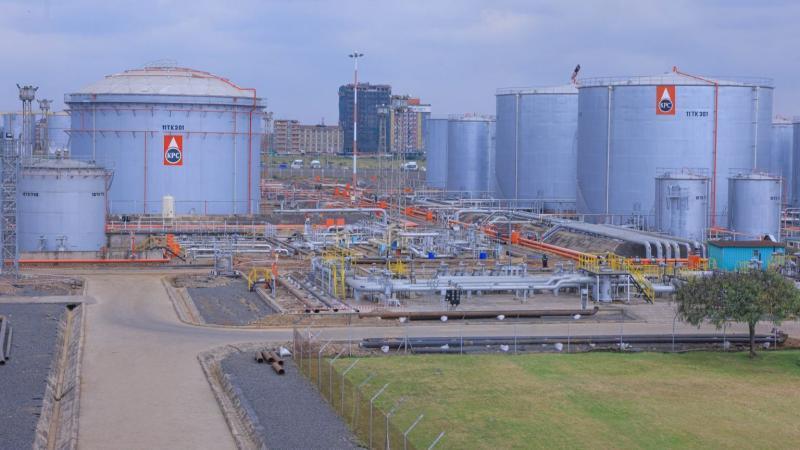
Kenya Pipeline Company PLC (KPC) has reported a profit after tax of Ksh11.6 billion for the financial year ended June 30, 2026.
Kenya Pipeline Company PLC (KPC) has reported a profit after tax of Ksh11.6 billion for the financial year ended June 30, following a 9 per cent increase in total revenue to Ksh42.98 billion.
According to the company’s audited financial results for the 2025/2026 financial year, total revenue rose from Ksh39.50 billion recorded in the previous financial year, supported by growth in local and transit petroleum volumes.
The company’s profit before tax increased by 8 per cent to Ksh17.54 billion, compared to Ksh16.1 billion reported in the previous financial year.
KPC’s transport revenue, which forms the bulk of its income, increased to Ksh41.82 billion from Ksh38.59 billion in the previous year.
The company attributed the revenue growth to a 7 per cent increase in local and transit volumes, reflecting higher throughput across its petroleum transportation network.
Read More
However, direct costs rose by 8 per cent to Ksh9.16 billion, driven by increased maintenance and electricity expenses.
Operating expenses stood at Ksh8.86 billion, while earnings before interest, taxes, depreciation and amortisation (EBITDA) amounted to Ksh24.95 billion.
Depreciation and amortisation expenses totalled Ksh7.74 billion, leaving earnings before interest and tax at Ksh17.21 billion.
After accounting for net interest income of Ksh327.36 million and an income tax expense of Ksh5.95 billion, the company recorded a profit after tax of Ksh11.58 billion.
The company also reported an increase in total assets, which grew by 6 per cent to Ksh149.3 billion as of June 30, 2026.
The growth was mainly attributed to a 30 per cent increase in current assets and a 3 per cent rise in property, plant and equipment, supported by capital projects aimed at enhancing operational efficiency.
Current assets increased to approximately Ksh30.1 billion, largely due to a 74 per cent year-on-year rise in cash balances.
The company attributed the improvement to stronger collections, higher throughput and enhanced debt-recovery strategies.
KPC’s cash and cash equivalents rose by 84 per cent to Ksh20.54 billion at the end of the financial year, compared to Ksh11.14 billion at the beginning of the year.

Cash generated from operating activities amounted to Ksh17.39 billion, while net cash outflows from investing and financing activities stood at Ksh4.48 billion and Ksh3.50 billion, respectively.
Meanwhile, KPC reduced its borrowings by 83 per cent to approximately Ksh442.86 million, a development attributed to accelerated debt repayment.
Other non-current liabilities increased by 14 per cent to Ksh23.42 billion, reflecting higher provisions for asset retirement obligations and lease liabilities.
Shareholders’ equity rose by 11 per cent to Ksh119.33 billion.
"As we enter our first full financial year as a listed public company, KPC priorities are clear: to consolidate the gains of the privatisation transaction, to embed world-class governance and investor relations practices, and to continue investing in the safety, capacity, and resilience of our regional pipeline and storage infrastructure," the company said.
This comes a day after the Kenya Revenue Authority (KRA) announced it collected Ksh90.053 billion in customs revenue in September 2026.
In a statement on Monday, October 12, the authority said the amount exceeded its treasury target by Ksh965 million.
KRA also noted that the revenue marked a 5.8 percent increase from the Ksh85.146 billion collected in September 2025.
"Kenya Revenue Authority (KRA) Customs and Border Control Department collected Ksh90.053 billion in September 2026, exceeding its Treasury target by KES 965 million and sustaining its strong revenue performance in the 2026/2027 Financial Year.
"The collection surpassed the target of KES 89.088 billion, translating to a performance rate of 101.1 percent. It also represented a 5.8 percent growth compared to the Ksh85.146 billion collected in September 2025," the statement read.
KRA attributed the growth to non-oil revenue collections, which reached Ksh57.199 billion against a target of Ksh55.422 billion, exceeding the target by Ksh1.778 billion.
According to the taxman, the growth in non-oil revenue was supported by a 25.6 per cent rise in the overall value of imports, while bulk cargo volumes grew by 49.2 per cent.
"The growth in non-oil revenue was driven by a 25.6 per cent increase in the overall value of imports, with bulk cargo growing by 49.2 per cent. The increase in bulk cargo was mainly attributed to imports of fertilizers, iron and steel, palm oil and its fractions, and rice, among other commodities," the statement added.
KRA also reported an 8.1 per cent increase in imported motor vehicles and an 8.2 per cent rise in twenty-foot equivalent units (TEUs) handled for containerized cargo.







 (1)-1791959267-sm.jpg)