
Editor's Review
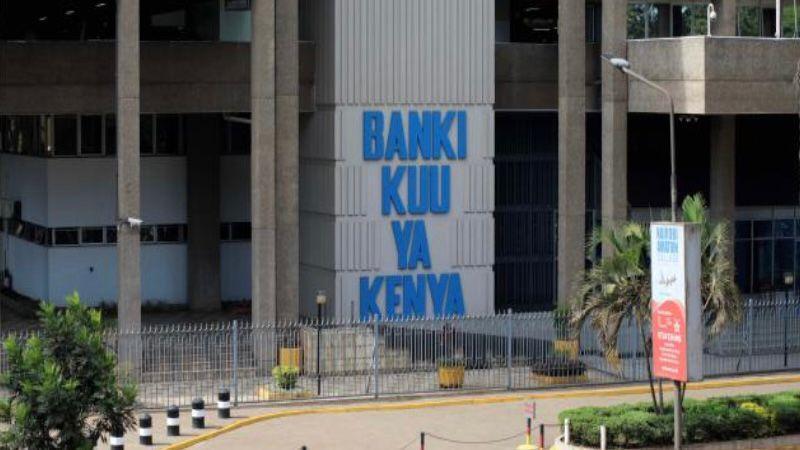
The Central Bank of Kenya (CBK) has announced the transfer of all assets and liabilities of Access Bank (Kenya) Plc to National Bank of Kenya Limited (NBK).
The Central Bank of Kenya (CBK) has announced the transfer of all assets and liabilities of Access Bank (Kenya) Plc to National Bank of Kenya Limited (NBK).
In a statement on Wednesday, September 23, the bank said the transaction received approval from CBK on August 17, 2026, before receiving approval from the Cabinet Secretary for the National Treasury and Economic Planning on September 21.
"This follows the approval by CBK on August 17, 2026, under Section 13 (4) of the Banking Act and approval by the Cabinet Secretary for the National Treasury and Economic Planning on September 21, 2026, pursuant to Section 9 (1) of the Banking Act," the statement read.
CBK stated that the transfer would only take effect after the parties complete the transaction in line with the agreed terms.
"The transfer shall take effect upon completion of the transaction in accordance with the terms of the Business and Assets Transfer Agreement between the parties," the statement added.
Read More
According to CBK, NBK was incorporated in 1968 as a wholly owned Government entity, with the objective of helping Kenyans access credit and supporting control of the economy after independence.
In September 2019, KCB Group Plc acquired 100 percent of NBK's shareholding. Access Bank PLC later acquired 100 percent of NBK's issued share capital from KCB Group Plc in May 2025.
Access Bank PLC entered the Kenyan market in February 2020 after acquiring 100 percent of the issued share capital of Transnational Bank Plc, which was subsequently renamed Access Bank (Kenya) Plc.
Transnational Bank had commenced operations in December 1985.
Access Bank PLC was incorporated in February 1989 and is among the largest banking groups in Nigeria. It operates as a wholly owned subsidiary of Access Holdings PLC and has subsidiaries across several African countries.

Its African operations include Botswana, Cameroon, the Democratic Republic of Congo, Gambia, Ghana, Guinea, Kenya, Mozambique, Nigeria, Rwanda, Sierra Leone, South Africa and Zambia.
The group also has a subsidiary in the United Kingdom, representative offices in China, India and Lebanon, and a branch in the United Arab Emirates.
CBK said the transaction was expected to support stability and resilience within Kenya's banking industry while strengthening competition.
"CBK welcomes this transaction as it will ensure continued stability and enhance resilience of the Kenyan banking sector and promote competition," the statement added.
Elsewhere, CBK has revealed that the volume of mobile money transactions fell by 30 percent in 2025.
In the 2025 Bank Supervision report released on Tuesday, September 22, the bank said mobile money transaction volumes declined from 309.3 million in 2024 to 217.6 million in 2025.
CBK also noted that transaction value fell by 4 percent, from Ksh753.5 billion to Ksh722.5 billion.
"The volume of transactions declined by 30 percent, from 309.3 million in 2024 to 217.6 million in 2025, while the total value of transactions fell more modestly by 4 percent, from Ksh 753.5 billion to Ksh 722.5 billion," read part of the report.
According to CBK, mobile money transaction volumes reached their lowest point in February 2025, marking the weakest level since April 2023.
The Central Bank attributed the decrease in mobile money transactions to shifting usage patterns.
CBK highlighted that users have reduced the frequency of low-value transactions and instead make fewer high-value transactions.
"The decline in cash-in and cash-out transactions largely reflects shifting usage patterns rather than reduced relevance of mobile money.
"There was reduced frequency of low-value transactions, while users increasingly consolidated transfers into fewer, higher-value payments," the report added.
The banking regulator also pointed to the growing adoption of alternative digital payment channels, including merchant payments and mobile banking platforms
"The growing adoption of alternative digital payment channels, including merchant payments and mobile banking platforms, has reduced reliance on agent-based cash conversion, signaling a gradual transition toward a more digitized payments ecosystem," the report further read.