
Editor's Review
The report also raised concern over the debt levels of the country, including the reliance on domestic borrowing, which was noted to be crowding out the private sector.
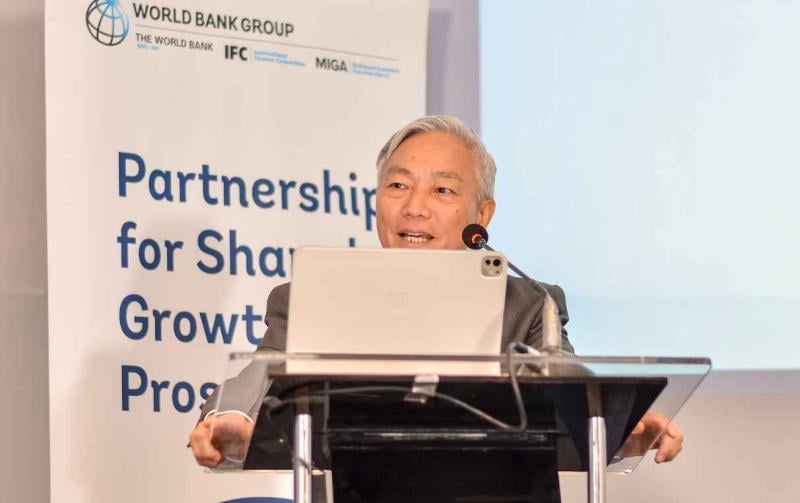
The World Bank has revised its 2026 economic growth forecast for Kenya by 0.3 percentage points owing to stronger economic performance in the first half of the year.
In its Kenya Economic Update report released on Wednesday, November 4, 2026, the expected Gross Domestic Product (GDP) for 2026 was put at 4.6%, up from the 4.3% that was forecast in its July 2026 update.
Join our WhatsApp Channel for the latest news updates.
According to the report, stronger growth in industry and services offset a slowdown in agricultural activity, helping the economy record a better performance than previously anticipated.
"Agricultural growth slowed to 4.2 per cent in H1 2026 from 4.7 per cent in H1 2025 (year-on-year), reflecting below-average short rains that weighed on crop production," read the report in part.
Read More
"By contrast, industrial growth accelerated to 4.9 per cent from 4.3 per cent, supported by stronger construction activity (+6.3 per cent from +5.9 per cent), particularly in cement and galvanised sheet industries and improved manufacturing performance (+3.3 per cent from +2.1 per cent), driven by food and beverages production and vehicle assembly."
Despite the improved outlook for 2026, the lender projects growth to decline slightly in 2027.
The report projects Kenya's economy to expand by 4.4% in 2027. Notably, the country will be headed to the polls next year, and the report notes that political uncertainty poses a risk to the economy.
Specifically, risks of violence during and after the election period could impact investor confidence and the private sector in general.
"Election-related uncertainty, including the risk of violence and post-election disruptions, could weaken investor confidence, delay private investment decisions, reduce private and foreign investment inflows, disrupt tourism and trade, and weigh on economic growth," read the report in part.
"Prolonged political contestation could slow progress in addressing Kenya's underlying structural challenges."

At the same time, the international lender warned that the expected El Niño conditions could pose a risk to Kenya's economic growth, particularly through their impact on agriculture.
World Bank explained that irregular rainfall could affect crop production, damage roads and other infrastructure, and cause fluctuations in food prices.
In cases of excess rains, flooding could also disrupt transportation and supply chains for food.
Cumulatively, these disruptions could push up the costs of food items and lower incomes for households that depend on agriculture.
"The policy and institutional focus should be on sustained preparedness and longer-term resilience. Immediate priorities include maintaining early warning communication; continually clearing urban drainage; inspecting vulnerable roads and bridges; protecting critical power, water, and health infrastructure; and pre-positioning agricultural and veterinary support in high-risk regions.
"Emergency financing, county response systems, and shock-responsive social protection can be readied for rapid activation," the World Bank advised.
However, this growth is projected to accelerate to 4.8% in 2028.
Meanwhile, the report also raised concern over the debt levels of the country, including the reliance on domestic borrowing, which was noted to be crowding out the private sector.

As of June 2026, the World Bank highlighted that Kenya's public debt remained elevated at 69.9% of GDP.
Meanwhile at the same time domestic borrowing accounted for 56.2% of the total debt. Currently, Kenya's outstanding debt stands at Ksh13.01 trillion.
The multilateral also pointed to the high cost of servicing public debt, with interest payments equivalent to 5.8% of GDP.
This has continued to limit the government's resources available for development spending and other public services, while Kenya remains at high risk of debt distress.
As a result, the World Bank recommended that the government enforce fiscal rules, adopt realistic budget estimates, limit supplementary budgets, strengthen expenditure controls, prioritise high-return spending, and improve debt management and oversight of contingent liabilities.
"Fiscal adjustment needs to be credible and growth-friendly, protecting priority spending while improving the efficiency and transparency of public expenditure. At the same time, reducing the costs and uncertainty facing firms will require lower infrastructure and logistics costs, more predictable and transparent administration, and improved access to finance," the report added.
"Across these priorities, stronger governance and accountability are critical to successful implementation, particularly in revenue administration, procurement and public investment, and at key interfaces between government and businesses."


-1768823097-md.jpg)

-1793771398-sm.jpg)