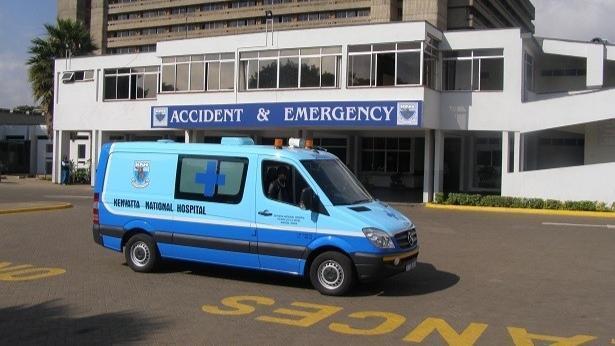
Editor's Review
Kenyatta National Hospital (KNH) has responded to a media report concerning a bullet recovered from a patient during treatment at the hospital.
Kenyatta National Hospital (KNH) has responded to a media report concerning a bullet recovered from a patient during treatment at the hospital.
In a statement on Sunday, August 9, the hospital said the bullet was retained and preserved as part of the relevant medical and evidentiary records, contrary to claims that the recovered item was missing.
"The Hospital wishes to clarify that the bullet/projectile recovered during medical management was retained and preserved as part of the relevant medical and evidentiary records," the statement read.
KNH explained that recovered items are handled through established procedures and transferred to investigating officers through the appropriate judicial and investigative process.
"In accordance with established procedures, such recovered items are handed over to investigating officers through the appropriate judicial and investigative process for further handling and forensic examination," the statement added.
Read More

This comes days after KNH explained the reasons behind the recent removal of several trees within its grounds following public concern over the exercise and its impact on marabou storks that had nested there.
In a statement on Sunday, August 2, the hospital said the affected African acacia trees had exceeded 30 years of age and had significantly deteriorated, creating serious safety risks due to falling branches and weakened structures.
"The affected African acacia trees, which were over 30 years old, had become aged and decayed, resulting in the frequent falling of branches and posing a significant safety risk.
"In the past, falling trees and branches have damaged steam pipes, fallen onto parked vehicles, created safety hazards and, regrettably, resulted in the death of some of the birds nesting in the trees," the statement read.
KNH said the decision to remove the trees followed a technical assessment and was carried out ahead of the expected rainy season to prevent potential accidents.
"Following a technical assessment and in anticipation of the rainy season, the hospital undertook the removal of the hazardous trees as a necessary preventive safety measure," the statement added.
KNH noted that the exercise was aimed at safeguarding everyone within the hospital compound while also protecting the marabou storks from the dangers posed by the weakened trees.
"The exercise was intended to protect not only patients, staff, visitors and hospital property, but also the marabou storks from the dangers posed by the deteriorating trees," the statement further read.
KNH further said it is collaborating with relevant government agencies to ensure the welfare of the affected birds, including facilitating their safe relocation where necessary.
"We are working closely with the relevant government agencies to ensure the welfare of the affected marabou storks and to facilitate appropriate measures, including their safe relocation where necessary," the statement noted.