The Kenol-Makutano Water Supply and Sewerage Project is awaiting official commissioning after its completion and final inspections.
In a statement on Wednesday, August 12, Interior Principal Secretary Raymond Omollo said the project, implemented by the Athi Water Works Development Agency (AWWDA), is expected to address sanitation challenges associated with rapid urban growth while providing infrastructure to support future expansion.
"Executed by the Athi Water Works Development Agency (AWWDA), the project is complete, having undergone final inspections and structural handover to the local utility provider, and is now awaiting official commissioning," the statement read.
Omollo said construction of the project was completed in October 2024 and that it consists of an extensive sewer network designed to serve Kenol Municipality.
"The project, whose construction was completed in October 2024, features a gravity-fed network comprising approximately 31.5 kilometres of sewer reticulation and trunk mains serving Kenol Municipality," the statement added.
Read More

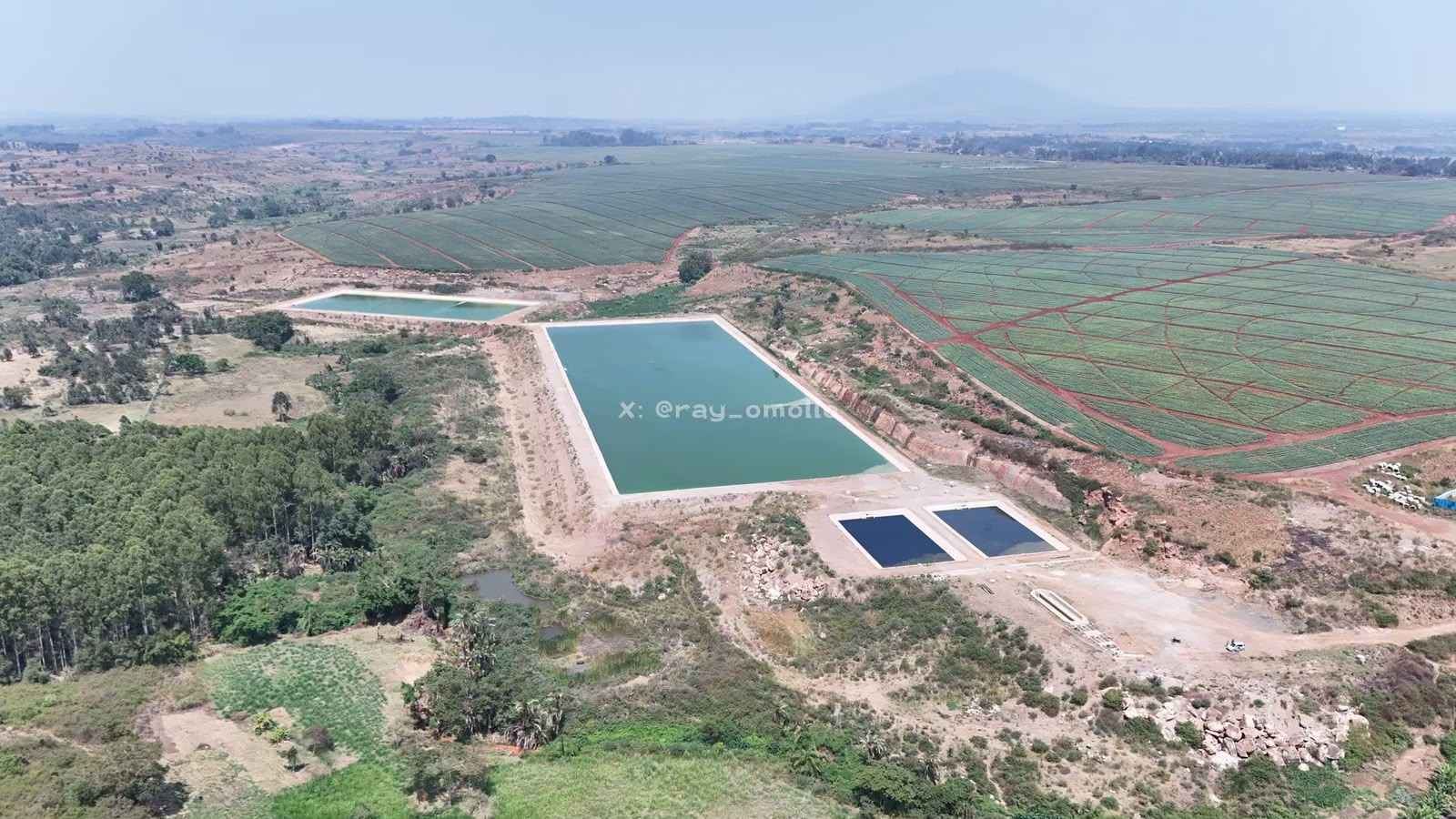
According to Omollo, wastewater from the sewer network will be directed to a treatment facility constructed at Nanga in Gatanga Constituency, where it will undergo treatment before disposal.
"It channels wastewater to a modern 15-acre treatment facility at Nanga in Gatanga Constituency, with a treatment capacity of 3,000 cubic metres per day," the statement further read.

Omollo said the project will benefit several urban centres and settlements in the area by providing safer and more efficient sanitation services while reducing reliance on septic and exhaust-tank systems.
"The project will provide safe and efficient sanitation services to Kenol, Makutano, Kabati, Gatanga, Wempa, Mariira, Karimamwaro and Wangu, eliminating dependence on septic and exhaust-tank systems while creating the infrastructure needed to support future urban expansion, investment and improved public health," the statement concluded.

Meanwhile, the government is upgrading the historic Mau Mau Road Lot 2 corridor, transforming routes that were once used by Mau Mau freedom fighters into modern roads.
In a statement on Tuesday, August 11, Omollo said the 154-kilometre project is being implemented by the Kenya National Highways Authority (KeNHA).
The Ministry of Interior stated that the project is upgrading the corridor to modern road standards and opening up previously difficult-to-access areas.
According to Omollo, the route covers several communities in Murang’a County before extending northwards towards the Nyeri County border.
"Beginning at Mairi near the Kiambu–Murang'a border, the route passes through Kinyona, Karinga and Mununga before extending northwards through Ichichi, Thuthu, Wanjerere, Kagongo, Mioro and Kiamuturi, terminating at Kairo on the Nyeri County border," he added.
Omollo said construction works are advancing across several sections of the project, with significant portions already reaching the top upgrade layer.
"Construction is progressing well, with a combined 38 kilometres across the Ichichi, Kiruri, Wanjerere and Mioro sections at the top upgrade layer.
"Works are now advancing to the cement-stabilised gravel sub-base, followed by graded crushed stone before the final Asphalt Concrete (AC) surfacing," Omollo noted.
Omollo said the improved road is expected to support economic activity in the region, particularly in areas where tea farming is a major source of income.
The government further noted that farmers involved in dairy and horticulture will benefit from improved access to major highways and markets, creating opportunities for increased trade and investment.
"The project is unlocking the economic potential of one of Kenya's premier tea-growing regions. Reliable all-weather access now enables green leaf collection vehicles serving KTDA factories such as Mununga and Ikumbi to move efficiently, reducing post-harvest losses and lowering transport costs.
"Dairy and horticultural farmers are equally benefiting from faster, safer access to the Thika–Kenol–Marua Highway and other key markets, stimulating trade, increasing household incomes and attracting new investment into the region," Omollo stated.
Beyond transport and economic benefits, Omollo said the upgraded corridor is also expected to improve security and access to essential public services in remote areas.
"The project is also strengthening security and public safety. Better road access enhances emergency response, supports more effective security patrols and brings remote communities closer to essential government services," he concluded.