Editor's Review
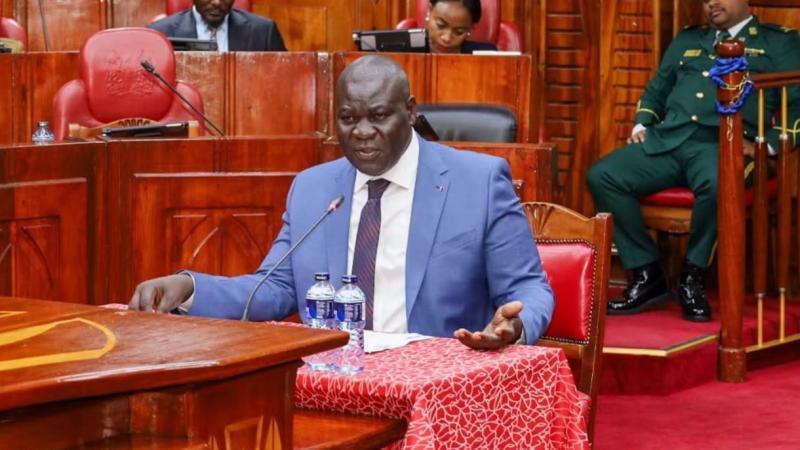
The National Assembly has approved the appointment of Duncan Ojwang Oburu as the new chairperson of the Independent Policing Oversight Authority (IPOA).
The National Assembly has approved the appointment of Duncan Ojwang Oburu as the new chairperson of the Independent Policing Oversight Authority (IPOA).
Ojwang's approval on Wednesday, August 19, came after he appeared before the National Assembly Departmental Committee on Administration and Internal Security for vetting.
He succeeds Justice Ahmed Issack Hassan, who left the position after being appointed to the Court of Appeal.
During his vetting, Ojwang assured lawmakers that he would uphold IPOA’s independence and ensure the authority remains focused on protecting the rights of Kenyans and holding police officers accountable.
"I believe I am courageous. I speak truth. Trust me with that responsibility. We will speak truth to power," he told the committee.
Read More
Ojwang said IPOA’s mandate places it at the centre of protecting citizens and ensuring police officers exercise their powers in accordance with the Constitution and the law.
"IPOA is the eye of Kenyans because Kenyans are the sovereign of this country," he stated, adding that the authority should remain independent whenever it investigates police misconduct, examines police operations or handles complaints of abuse.
Ojwang further said IPOA must work with the National Police Service without compromising its oversight responsibilities.
He distinguished cooperation from subordination, arguing that the authority should not receive instructions from police commanders when conducting investigations or other oversight functions.
Ojwang told the committee, chaired by Narok West MP Gabriel Tongoyo, that IPOA needed to maintain functional independence while cooperating with the police in areas where collaboration could improve its work.
"When it comes to misconduct, reported misconduct, checking operations and investigation, IPOA’s judgment and independence in terms of its operation and judgment cannot allow it to take instructions from the IG," he further said.

Ojwang also proposed making IPOA more accessible to members of the public, particularly those seeking to report complaints against police officers.
He pledged to remain available to Kenyans and ensure their concerns receive attention.
Ojwang identified deaths in police custody and police brutality as key areas requiring urgent intervention.
He argued that police stations should provide safety to citizens and proposed the installation of functional CCTV cameras in all police stations alongside the use of body cameras by officers while on duty.
"Bad things happen when there is darkness or people cannot see what you are doing," he noted, citing the importance of CCTV footage in investigations.
Ojwang also called for greater adoption of technology within IPOA, including the digitalisation of police records such as occurrence books, case files and firearms records.
According to him, reducing reliance on manual records would help prevent tampering and strengthen investigations.
Ojwang said IPOA also requires additional funding and personnel to effectively perform its oversight role.
He noted that although the authority has an approved staff establishment of about 1,300 employees, it currently has only about 300 officers.
"With more resources and boots on the ground, they can do better," he said, pointing to the challenge of overseeing a National Police Service with more than 100,000 officers across the country.
Ojwang further backed proposals to extend IPOA’s oversight responsibilities to other State agencies whose officers are authorised to carry firearms, including the Kenya Wildlife Service, Kenya Forest Service and prison services.
He argued that civilian oversight should extend to institutions whose officers exercise coercive powers or are armed in the course of their duties.
"It is long overdue," Ojwang said of the proposed expansion, adding that extending the mandate would require additional resources and personnel.
 (1)-1791178178-md.jpg)
 (1)-1791178178-sm.jpg)