
Editor's Review
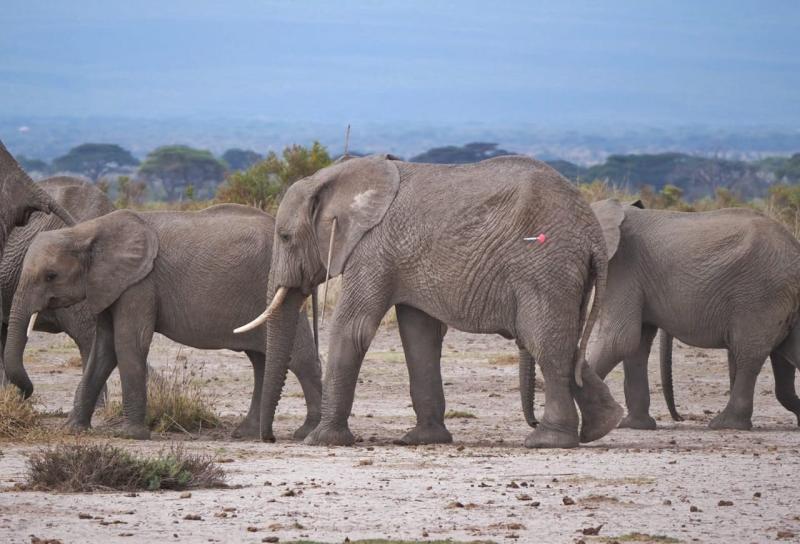
Four suspects have been arrested in connection with the deaths of 18 elephants within the Amboseli ecosystem.
Four suspects have been arrested in connection with the deaths of 18 elephants within the Amboseli ecosystem.
In a statement on Saturday, August 22, Tourism Cabinet Secretary Rebecca Miano said investigators are also pursuing an individual believed to hold information relevant to the case.
“The multi-agency investigation has recorded significant progress so far. Four suspects have been apprehended as persons of interest, and investigators are pursuing an additional individual believed to hold information relevant to the case,” read the statement in part.
CS Miano noted that a search conducted in Tikondo, Kimana, within Loitokitok Sub-County led to the recovery of assorted substances, including chemicals believed to have been sourced from a neighboring country.
“These potentially toxic and unlabeled materials have been secured for further scientific analysis,” she stated.
Read More

The Tourism CS said the investigative and judicial processes will proceed to their lawful conclusion, and any person found to have unlawfully killed, poisoned, or harmed the elephants will be prosecuted.
The deaths of the elephants were recorded between June 24 and July 24, 2026, prompting the Kenya Wildlife Service (KWS) to launch investigations.
Preliminary laboratory results indicated the probable involvement of a toxic substance, with earlier indications suggesting cyanide poisoning arising from the ingestion of pesticide-contaminated tomatoes sourced from farms adjacent to wildlife habitats.
CS Miano said the findings remain subject to further scientific verification before the investigation is deemed complete.
Further she said the government has strengthening measures to protect wildlife across these landscapes through intelligence-led operations, surveillance, scientific investigations, law enforcement and rapid response mechanisms.
The Tourism CS also said the government will enhance monitoring of risks associated with the misuse, illegal application, trafficking and careless handling of hazardous substances that could threaten wildlife, people and ecosystems.
“Meanwhile, inter-agency coordination, intelligence sharing and joint operations will be improved to ensure that threats are detected early, investigated professionally and contained without delay, while scientific evidence continues to guide management decisions,” she added.
This comes weeks after KWS ruled out an infectious or transmissible disease as the cause of the deaths of the 18 elephants in Amboseli.
In a statement on Friday, August 7, KWS said preliminary investigations pointed to cyanide poisoning.
According to KWS, the dead elephants mainly comprise adult females and calves that showed weakness and partial paralysis in their limbs.
“Importantly, findings to date do not indicate an infectious or transmissible disease,” the service stated.