Editor's Review
Ruto defended his government's record after a World Bank report highlighting supposed corruption.
President William Ruto has taken on the opposition over their claims of rampant corruption in his administration.
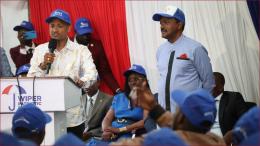
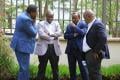
Opposition leaders, including Wiper leader Kalonzo Musyoka and Linda Mwananchi's Edwin Sifuna, gathered in Nyeri Saturday, November 14, at the burial of DCP leader Rigathi Gachagua's sister, where they cited the World Bank's findings as evidence of corruption under Ruto's government.
Speaking in a church service in Narok Sunday, November 15, Ruto suggested that the opposition figures were selective in their assessment of the World Bank report, noting that they were consuming it conveniently to advance their offensive against him.
The World Bank's 34th Kenya Economic Update, released earlier this month, highlighted an array of things, including an estimate that Kenya overpaid by up to Ksh117 billion on the Mombasa-Naivasha SGR line
Seeking to absolve himself, the president took credit for making the report public, arguing that such documents are normally submitted to governments alone and made confidential, but his deliberate intervention made it public.
Read More
"It was this Kenyan government, which I lead, that insisted on having an open report. Typically, such reports are provided exclusively to the government; I said no, let it be made public so that the citizens know what is happening," he said.
He accused his critics of reading the 52-page document selectively, arguing that the same report acknowledges progress made under his administration, including savings generated through the eCitizen digital platform and improvements in government procurement practices.

Ruto turned to the SGR section of the report and brought out his sharpest allegation.
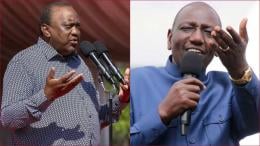
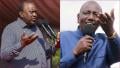
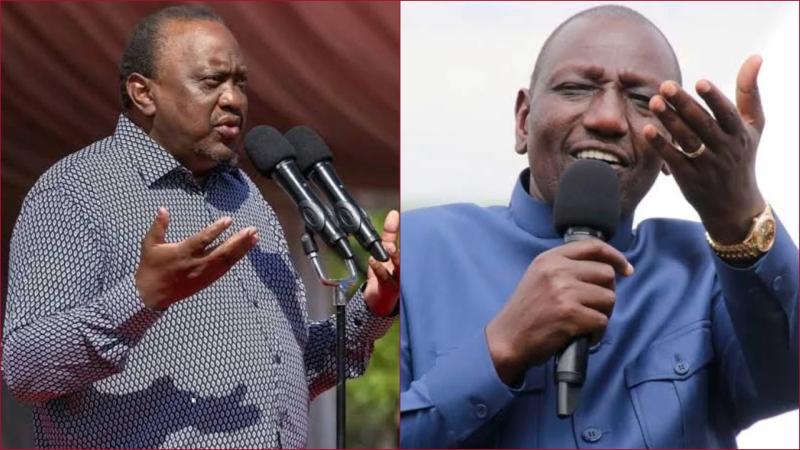
He noted that the opposition fighting him could be benefiting from funds connected to the Standard Gauge Railway (SGR), a project he attributed to the era of his predecessor, Uhuru Kenyatta, whom he has been accusing of sponsoring the opposition against him.
"The SGR project from Mombasa to Nairobi was initiated during a different period. You make many claims, perhaps funded by the very resources linked to the SGR that the World Bank highlights," he said.
The report attributes the excess to fraud in land compensation and an uncompetitive contracting process.
The report put the cost at US$7.6 million per kilometre, against US$5.7 million for Tanzania's electrified railway and US$5.3 million for the Djibouti–Addis Ababa line.
The Mombasa–Nairobi phase was completed in 2017 at KSh 327 billion (about US$2.5 billion), with Uhuru inaugurating it in May of that year.
The subsequent Nairobi–Naivasha section cost KSh 150 billion (about US$1.2 billion). The line stalled in September 2018 after China declined further lending, and it currently terminates at Suswa in Narok County.
Ruto has since revived the extension, breaking ground in Narok in March this year for a route planned through Bomet and Kisumu to Malaba at an estimated cost of Ksh502.9 billion (about US$3.9 billion).
Ruto was Uhuru's deputy president throughout the construction of the SGR, though he has consistently sought to distance himself from its controversies.
Meanwhile, the opposition has been pushing his sponsorship allegations back, with Kalonzo telling Ruto to engage his rivals directly rather than invoke Uhuru, who will not appear on the 2027 ballot.