
Editor's Review
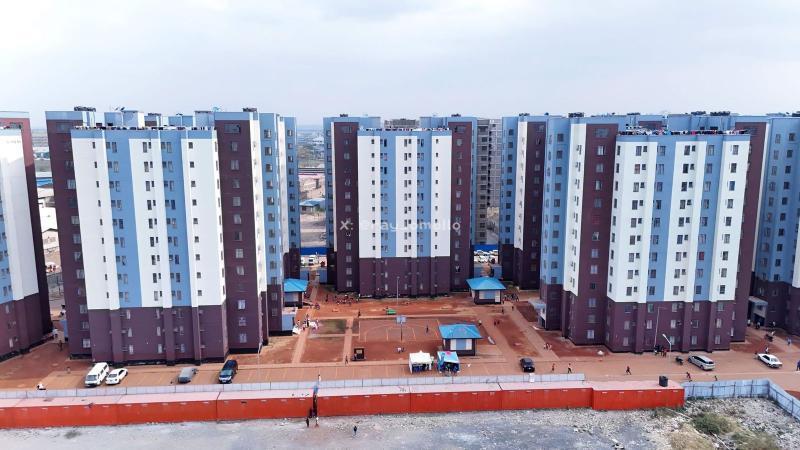
Nearly 4,500 families in Nairobi’s Mukuru area have received keys to new affordable homes under the Government’s Affordable Housing Programme (AHP).
Nearly 4,500 families in Nairobi’s Mukuru area have received keys to new affordable homes under the Government’s Affordable Housing Programme (AHP).
In a statement on Friday, August 28, Interior Principal Secretary Raymond Omollo said the Phase II of Boma Yangu Mukuru Estate was delivered under the government’s AHP and officially handed over by President William Ruto in December 2025.
He said the project had turned the aspirations of thousands of Mukuru residents into a lived reality, particularly for children who had grown up in difficult living conditions.
"Barely four years ago, thousands of families in Mukuru, especially children, went to sleep in crowded, dilapidated structures, dreaming of something better. Today, that deam is a lived reality," he wrote.

Read More
Omollo said the new residential area had been designed as an integrated community where residents could access essential services without having to travel far from their homes.
"The residential area and intergated community is complemented by a completed and operational New Mukuru Primary School and ECD Centre, alongside a Level IV Hospital, shopping mall, Fire Station, Police Station, 5-million-litre water tank and metered cooking gas supply, means families can now live, learn, work and access essential services within their neighbourhood," he added.

Omollo said the transformation in Mukuru also demonstrated the potential of the government’s long-term development agenda, particularly the Kenya Beyond Vision 2030 blueprint.
"This success also offers a glimpse of what Kenya Beyond Vision 2030 can become.
"If we sustain the same commitment, discipline and follow-through that turned this vision into reality, we can build the safe, dignified and prosperous city, and country, we imagine in the Kenya Beyond Vision 2030 blueprint," he concluded.

Elsewhere, Kibera is set to receive an additional 15,000 affordable housing units as the second phase of the Affordable Housing Programme (AHP) takes shape in Zones C and D.
In a statement on Tuesday, August 25, Interior Principal Secretary Raymond Omollo said the project was part of efforts to transform informal settlements.
"We cannot sustain the national conversation on Kenya Beyond Vision 2030 when parts of our Capital still take pride in descriptions such as 'the largest slum in Africa'," he wrote.
In Kibra's Soweto Zone B, Phase I is already taking shape, with 18 high-rise residential blocks delivering 4,054 modern housing units.
Phase II, covering Zones C and D, is also underway, with the contractor already on site and clearance activities ongoing.
The second phase is expected to add 15,000 housing units to the area.
Omollo said families that were relocated to create space for the development had already been issued identification cards and would be prioritised when the completed houses become available.
"Importantly, families relocated to create space for the development have already been issued identification cards and will be the first beneficiaries of the completed housing units.
"This ensures that the people who made way for the project are at the front of the transformation," he added.
Omollo said the project would also provide economic opportunities for residents, particularly young people and women living in Kibera, through employment and enterprise opportunities generated during its implementation.
"The project is a major engine of economic empowerment, creating employment and enterprise opportunities for young people and women living in Kibera," he further said.
The master plan for the development also provides for commercial and retail spaces alongside community facilities and essential infrastructure.
These include community halls, Early Childhood Development (ECD) centres, health clinics, water and electricity networks, waste management facilities, sewerage systems and stormwater drainage.


 (1)-1791450846-md.jpg)
-1791444589-md.jpg)



 (1)-1791450846-sm.jpg)
-1791444589-sm.jpg)