Editor's Review
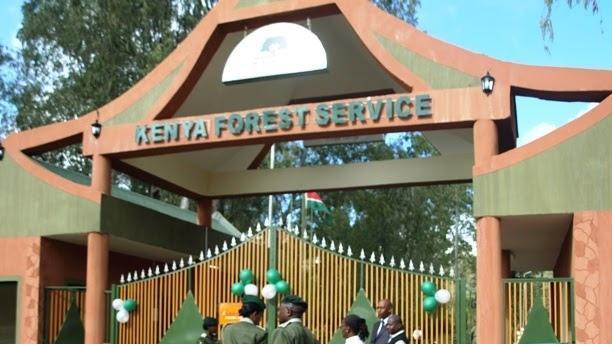
The Kenya Forest Service (KFS) has responded to allegations of illegal forest activities in several forest stations in Kericho County.
The Kenya Forest Service (KFS) has responded to allegations of illegal forest activities in several forest stations in Kericho County.
In a statement on Monday, November 16, the Service said it had noted allegations circulating on social media regarding purported illegal activities in several forest stations across the county.
Join our WhatsApp Channel for the latest news updates.
KFS maintained that the activities taking place in the affected stations were lawful and conducted in accordance with approved management plans.
"The Service wishes to categorically clarify that no illegal activities are taking place in the mentioned Forest Stations of Malagat, Tendeno, Londiani, Sorget, Kuresoi, Saburet and Makutano," the statement read.
Read More
KFS explained that the ongoing operations involved the harvesting of mature and over-mature forest plantations under approved Plantation Management Plans and Felling Plans for the respective stations.
"The activities currently underway involve the lawful harvesting of mature and over-mature forest plantations, in accordance with approved Plantation Management Plans and Felling Plans for the respective stations," the statement added.
KFS also addressed concerns about the restoration of harvested areas, saying replanting was already underway in collaboration with members of the respective Community Forest Associations (CFAs).
"The Service further wishes to inform the public that replanting of harvested sites is already underway in collaboration with members of the respective Community Forest Associations (CFAs).
"This is an established practice under the Service's Tree-First Policy, which prioritises prompt replanting of harvested areas while allowing CFAs to cultivate approved food crops as part of efforts to enhance community participation and livelihoods," the statement further read.

On allegations surrounding the removal of an indigenous tree, KFS clarified that the fig tree in question was within a plantation area and had been damaged during the felling of cypress trees.
The Service said the tree was subsequently removed during site clearing to allow the re-establishment of the plantation.
"Regarding allegations of the removal of an indigenous tree, the Service clarifies that the fig tree in question was located within a plantation area and was damaged during the felling of cypress trees. It was subsequently removed during site clearing to facilitate the re-establishment of the plantation," the statement explained.
KFS further explained that indigenous trees could naturally regenerate within plantation forests during their approximately 30-year rotation period, adding that such trees were assessed during harvesting operations.
"It is important to note that during the approximately 30-year rotation period of plantation forests, some indigenous trees may naturally regenerate within the plantations.
"Such trees are assessed and, where necessary, removed during harvesting operations and disposed of as fuelwood," the statement noted.
KFS also reminded Kenyans that forests were public assets and that citizens could access forest products provided they followed established laws, regulations and procedures.
"The Service wishes to remind Kenyans that forests are public assets and resources, and access to forest products is open to all citizens, subject to established laws, regulations and procedures.
"Members of the public are therefore advised to exercise caution and avoid engaging individuals purporting to act as brokers or intermediaries in the acquisition of public forest resources," the statement concluded.
This comes weeks after KFS announced that import and export permits for regulated forest products will be processed electronically from October 31, 2026.
In a public notice on Wednesday, October 28, KFS said all import and export processes will be onboarded onto the National Electronic Single Window System (NESWS) through the Trade Facilitation Platform (TFP) by October 31.
KFS said the onboarding is being undertaken in line with a Head of Public Service circular dated June 4, 2019 and is aimed at streamlining trade processes, enhancing transparency and improving service delivery efficiency.
“Effective 31 October 2026, the processing of KFS import and export permits for regulated forest products shall be undertaken electronically through TFP. The corresponding manual processes at KFS offices will no longer apply,” read the statement.
KFS noted that the onboarding covers the No Objection Letter (Master Permit), import of forest products, export of forest products, and the associated KFS permits and fees onto TFP.
The affected forest products include timber, plywood, sawdust, withies, charcoal, bamboo, veneer, resin, and myrrh (gum).
Others are tamarind, baobab, Gum Arabic, turpentine oils, rosin and resin acids, and other regulated wood products.
The service urged affected stakeholders to familiarize themselves with the new electronic procedures and ensure all relevant transactions are processed through the Trade Facilitation Platform from October 31.







-1768823097-sm.jpg)