Editor's Review
Families in different parts of the country have shared experiences of how SHA has helped them access medical services while reducing the amount they are required to pay from their own pockets.
Families in different parts of the country have shared experiences of how the Social Health Authority (SHA) has helped them access medical services while reducing the amount they are required to pay from their own pockets.
From maternity care and child clinic visits to hospital admissions, scans and medication, beneficiaries say SHA has eased some of the financial pressure associated with seeking treatment.
They have also called for continued investment in hospitals and medicines to ensure patients can access services closer to home.
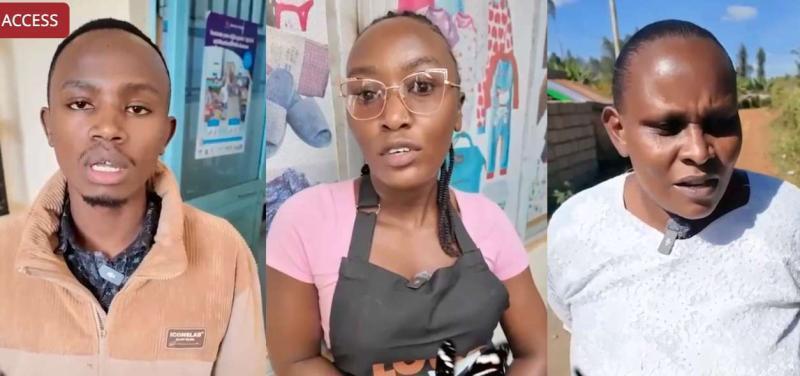
Kevin Nduguta, a resident of Embu and father of two, says SHA supported his family when his wife went to hospital to deliver their younger child.
He says the health cover paid about Ksh30,000 towards the cost of care, while he contributed Ksh10,000.
Read More
"SHA covered about Ksh30,000, while I added KSh 10,000. Both mother and baby are now home and doing well," he said.
Nduguta said SHA has continued supporting the family through the baby's clinic visits, making the period after delivery easier for them.
He also wants the government to continue constructing and expanding hospitals to improve access to healthcare services, including private maternity wards.
In Nyeri, Anne Wanjiru, a resident of Kieni, says SHA is supporting her family as her daughter receives treatment at Karatina District Hospital.
She says the cover has enabled her daughter to undergo scans, receive medicine and get assistance with the hospital bill.
"Through SHA, my daughter is being taken for scans, receiving medicine and getting support for the hospital bill," she stated.
Wanjiru said the experience has given her hope that access to healthcare is improving and that SHA can continue supporting families when they need treatment.
She hopes the programme will strengthen its support so that patients can receive care without their families having to shoulder the entire cost.
"The experience has given me hope that healthcare is improving, and I hope SHA will keep strengthening its support," she said.

Wanjiru says the support is particularly important for families dealing with expensive illnesses such as diabetes and cancer, noting that cancer medication can be costly while diabetes medicine is sometimes difficult to find.
Jacqueline Nyokabi, a resident of Embu, says SHA has also changed the way she accesses treatment by allowing her to receive medical services without making the payments she previously had to make.
She says the government should continue building more hospitals, particularly in remote areas where health facilities are limited.
According to Nyokabi, some patients are forced to travel long distances to seek treatment, while others resort to buying medicine from chemists or treating themselves.
“I hope the government will continue building more hospitals, especially in remote areas where there are not many health facilities," she noted.
Nyokabi says before SHA, seeking treatment often meant paying directly for services, leaving people without money with few options.
In Mathira, Joyce Wambui recalls a difficult period when her child fell sick and the family faced a large hospital bill. She says SHA helped significantly reduce the amount they had to pay.
"SHA helped reduce the burden by covering about Ksh115,000, while the family paid around Ksh3,000,” she stated.
Wambui says the experience demonstrated a change in how families can cope with medical emergencies, noting that before SHA, households often had to seek financial assistance from friends and relatives through harambees to meet hospital bills.
She also wants the government to address medicine shortages at hospitals such as Mandawa to ensure patients receive the drugs prescribed to them.
This comes amid changes in the public healthcare system under SHA.
According to SHA CEO Mercy Mwangangi, 32.3 million Kenyans had registered with SHA as of August 18, 2026, compared with a reported peak of 16.9 million members under the National Hospital Insurance Fund (NHIF).
The number of healthcare facilities accessible to SHA members has also risen from 8,667 under NHIF to 10,713 facilities.
Mwangangi said SHA has financed 501,839 surgeries, compared with 227,741 surgeries during a comparable two-year period under NHIF.
Renal-care beneficiaries have also increased to 20,952, while approximately 50,000 cancer patients have received coverage.
SHA further reported that it has financed intensive care unit treatment for 28,031 beneficiaries, while 9.3 million Kenyans have benefited from primary healthcare services.
The authority has also financed deliveries for approximately 1.3 million mothers at a reported cost of Ksh17 billion.
-1792071927-md.jpg)
-1792071927-sm.jpg)