Editor's Review
Amisi has sensationally claimed that the hacking of President William Ruto's official website was a conduit to loot Ksh1.89 billion from public coffers.
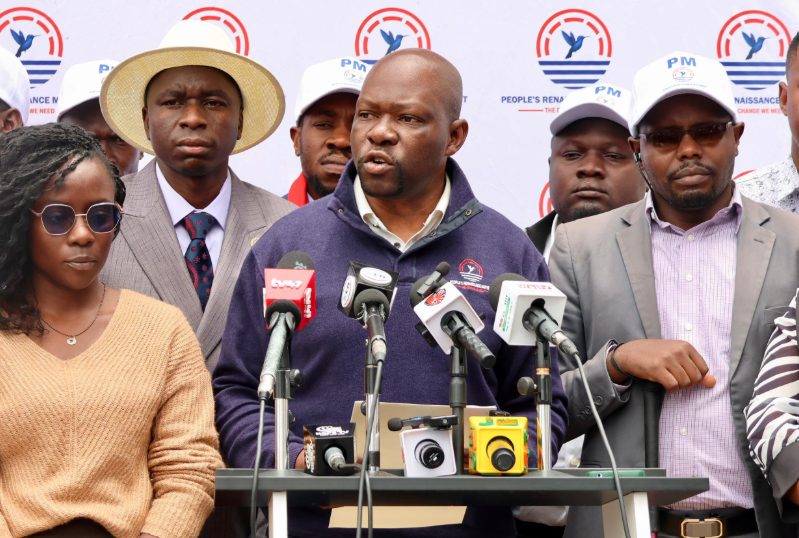
Saboti Member of Parliament (MP) Caleb Amisi has sensationally claimed that the hacking of President William Ruto's official website was a conduit to loot Ksh1.89 billion from public coffers.
In a statement issued on Tuesday, September 1, Amisi claimed that the hacking incident and illegal access to other government-owned websites paved the way for alleged fictitious cybersecurity maintenance costs.
He claimed that after the incident, all government agencies running a website were told to pay Ksh4.2 million each to secure them.
Amisi added that the fee charged was far above standard costs, which should not have exceeded Ksh5,000.
"The government has since issued a directive to government institutions to each pay Ksh4.7 million, totalling over sh. 1.89 billion, ostensibly for maintenance of the government's domain and email security. This is blatant theft of public money.
Read More

"The '.go.ke' domain is regulated and reserved for Kenyan government institutions. Yet, registration and annual maintenance of such domains are considerably cheaper than the figures currently being demanded from some institutions. Ordinary KE domains can cost as little as KES 1,350 to KES 1,500, depending on the provider and package," he argued.
The People Renaissance Movement (PM) Party Leader demanded that the government explain how it came up with the Ksh4.7 million figure.
He said the public deserves to know the services covered by the charge, their actual market value, who determined the cost, whether alternative providers were considered, and whether the procurement process fully complied with the law.
He sensationally claimed that while the money from the agencies was being remitted to the Communications Authority of Kenya, the agency only retained a minimal share, as the rest was wired into private accounts.
" I am reliably informed that although the CA is the recipient of these fees, they are only retaining 15% while the rest is being transferred to a private entity. The question is, was this private entity chosen after a competitive bid?" Amisi posed
The Saboti MP further questioned whether securing the website was a top priority, because some government institutions, such as universities, were struggling to pay their staff and suppliers and maintain their facilities.
He maintained that while State agencies adopting and securing the 'KE' domain is, in principle, legitimate and necessary, and Kenya faces increasing cyber threats, the government needed to do so, but with accountability.
President Ruto's official website went down after anonymous hackers gained access and deleted all the content. The hackers demanded a ransom to be paid in Bitcoin.
The state confirmed the website was down but managed to restore it within a few hours.
 (1)-1787475795.jpg)