Editor's Review
As Kenya prepares for the October-November-December (OND) 2026 rainfall season, the Kenya Defence Forces (KDF) is strengthening its emergency medical preparedness to support national response efforts.
As Kenya prepares for the October-November-December (OND) 2026 rainfall season, the Kenya Defence Forces (KDF) is strengthening its emergency medical preparedness to support national response efforts in the event of flooding, landslides and other weather-related emergencies.
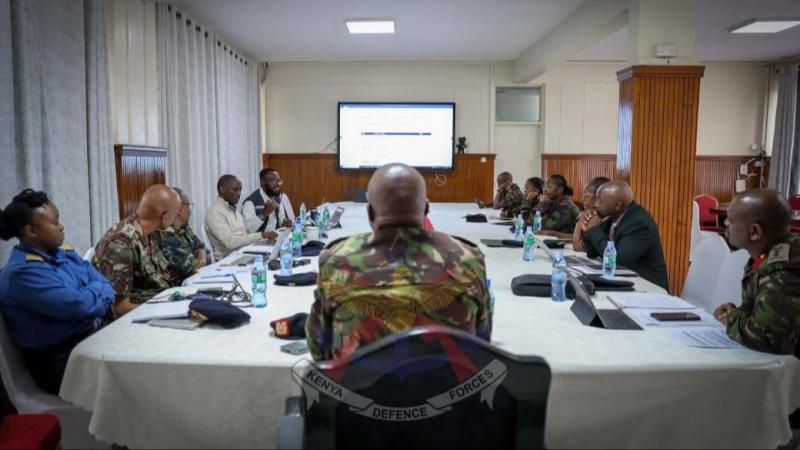
In a statement on Sunday, September 13, KDF said it recently conducted an Emergency Medical Team (EMT) preparedness exercise with technical support from the World Health Organization (WHO).
The force said the exercise is aimed at enhancing its readiness for rapid deployment during major emergencies.
"The exercise brought together strategic planning, specialised technical expertise and realistic operational scenarios to assess existing response arrangements and strengthen coordination among agencies involved in emergency medical response," the statement read.
KDF said the exercise also focused on determining whether KDF medical teams and their deployment systems were adequately prepared to respond to emergencies requiring rapid medical intervention.
Read More
"The exercise evaluated the readiness of medical teams, activation and deployment procedures, resource requirements and the availability of essential medical supplies," the statement added.
According to KDF, participants also assessed potential public health scenarios and developed practical pre-deployment frameworks intended to enable medical teams to transition rapidly and effectively from standby to field operations.
"The preparedness programme further provides an opportunity to strengthen civil-military coordination, identify potential operational gaps and ensure personnel, equipment and medical resources can be mobilised efficiently when required.
"These measures are critical to ensuring a timely, coordinated and effective response, particularly where emergencies place significant pressure on existing civilian health systems," the statement further read.
Speaking on behalf of the Director of Medical Services, Major General (Dr) Francis Kuria, the Chief of Clinical Support Services, Brigadier (Dr) David Kimeli Chepsiror, underscored KDF’s role in supporting national resilience during major emergencies.
He noted that KDF operates within the broader national emergency response architecture but remains prepared to provide critical capabilities when civilian response systems require additional support.
Chepsiror also emphasised that effective disaster response depends on close coordination among military, civilian and other government agencies, with protecting lives remaining the overriding priority.

WHO Kenya Team Lead for Emergency Preparedness and Response, Dr Livinus Martins Chibueze, highlighted the importance of building and testing response capacity before emergencies occur.
He noted that preparedness exercises allow teams to assess operational systems, work through complex scenarios, strengthen coordination and identify gaps that could affect response during an actual emergency.
"The joint exercise strengthens Kenya’s capacity to respond to health emergencies by ensuring that trained personnel, medical resources and deployment mechanisms are ready when required.
"It also reinforces the value of sustained civil-military and multi-agency cooperation in protecting lives, supporting affected communities and strengthening national disaster resilience," the statement concluded.
This comes days after the Ministry of Agriculture unveiled a Ksh2.1 billion National Livestock Sector El Niño Preparedness and Anticipatory Action Plan aimed at protecting livestock farmers and pastoral communities from the projected adverse effects of the forecast El Niño weather event.
The plan was launched on Thursday, September 10, by Agriculture and Livestock Development Cabinet Secretary Mutahi Kagwe following weather advisories warning of an increased likelihood of enhanced rainfall and flooding in several parts of the country.
"This follows advisories from the Kenya Meteorological Department indicating an increased likelihood of enhanced rainfall, flooding, flash floods, and localised inundation across several counties," the ministry said.
Kagwe said the government was prioritising early interventions instead of waiting to respond after disasters had occurred, with the plan targeting counties considered vulnerable to flooding and those with high livestock populations.
He said previous extreme weather events had demonstrated the need for the Government to prepare farmers and pastoralists in advance.
"The 2023 El Niño and the 2024 long rains floods caused devastating losses to our livestock farmers, destroyed critical infrastructure and triggered disease outbreaks that set back the sector significantly.
"We therefore need to learn from our experiences and this is the reason we are determined to ensure that, our farmers and pastoralists are not caught unprepared," he said.
According to the ministry, the plan is anchored on six priority intervention areas, with Ksh100 million allocated to early warning systems, climate risk mapping, emergency communication networks and inter-agency coordination.
The largest allocation, Ksh1.5 billion, will be used to procure and pre-position vaccines, veterinary medicines, laboratory reagents, personal protective equipment, mobile veterinary clinics and emergency response kits across the targeted counties.
The government said the investment would help contain diseases that could spread during prolonged flooding and other extreme weather conditions.
"This is designed to prevent and rapidly respond to climate-sensitive diseases, including Rift Valley Fever, and the increased vector burden that typically accompanies prolonged flooding," the ministry added.
Another Ksh250 million will be allocated to protecting critical livestock infrastructure, including cattle dips, livestock markets, slaughterhouses, milk cooling facilities, veterinary laboratories and feed stores.
The plan also provides Ksh100 million for livestock evacuation, welfare and logistics operations, while Ksh50 million will be used to establish strategic feed and fodder reserves, rehabilitate water points and support emergency water supply arrangements.
A further Ksh100 million will fund farmer awareness campaigns, promotion of biosecurity measures, livestock insurance sensitisation, commercial offtake operations and contingency planning.