
Editor's Review
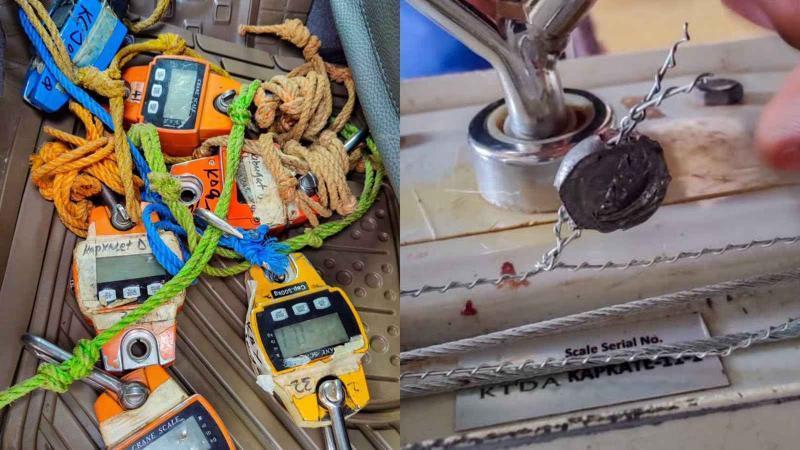
Five clerks from KTDA Holdings Limited and private tea factories have been arrested in Bureti, Kericho County, over alleged falsification of weighing scales used to measure tea delivered by farmers.
Five clerks from KTDA Holdings Limited and private tea factories have been arrested in Bureti, Kericho County, over alleged falsification of weighing scales used to measure tea delivered by farmers.
In a statement on Thursday, September 17, Agriculture Principal Secretary Paul Ronoh said the arrests were made during an impromptu operation conducted by a multi-agency team following complaints from tea farmers.
"We will not allow the weight of a farmer’s tea to be manipulated at the buying centre.
"Following complaints raised by tea farmers, I directed the Tea Board of Kenya, working with the Department of Weights and Measures and multi-agency teams, to intensify inspections of weighing equipment across tea-growing areas," he wrote.
Ronoh said the government’s directive was already being implemented, with the latest operation targeting tea-buying points in Bureti.
Read More
"The directive is being implemented. Today, five clerks from KTDA Holdings Limited and private tea factories in Bureti Sub-County, Kericho County, were arrested during an impromptu operation over alleged falsification of weighing scales," he added.
Ronoh said the latest operation was not an isolated incident, noting that authorities had also carried out a similar exercise in Bomet County in the previous month.
"A similar operation was conducted last month in Konoin, Bomet County, where several clerks were arrested following complaints from farmers," he further said.

Ronoh said the integrity of the weighing process remained critical to safeguarding tea farmers’ income and warned against practices that could result in farmers being underpaid.
"The integrity of the weighing process is fundamental to protecting farmers’ earnings. Every kilogramme delivered must be accurately recorded and paid for. There will be no shortcuts," he concluded.
This comes a month after Agriculture Cabinet Secretary Mutahi Kagwe directed tea factories to enforce strict quality controls by rejecting green leaf that fails to meet the recommended 'two leaves and a bud' standard.
Speaking during a visit to Kapsara Tea Factory on Friday, August 14, where he handed over Ksh44.6 million for the installation of a new withering plant, Kagwe demonstrated different tea plucks to show the distinction between acceptable green leaf and material that should be rejected.
He warned that allowing poor-quality leaves to be mixed with good plucks compromises the quality of the final product and can reduce the returns earned by farmers.
"If we have agreed that quality tea is two leaves and a bud, then that is what must come to the factory. We cannot have farmers who are doing the right thing being punished because a few others bring poor-quality leaf which is then processed together with theirs," he said.
Kagwe said the government's quality drive was not intended to punish farmers but to establish standards that would improve the international value of Kenyan tea and translate into better earnings and annual bonuses for growers.
He pointed to Momul Tea Factory as an example of how improved green-leaf quality can affect farmer returns, noting that the factory had raised the value of its tea from about US$2 to more than US$3 per kilogram.
Kagwe said the modernisation programme would involve replacing outdated machinery, improving energy efficiency, cutting processing expenses and enabling factories to produce higher-value orthodox and specialty teas.
-1791434890-md.jpg)





-1791434890-sm.jpg)