Editor's Review
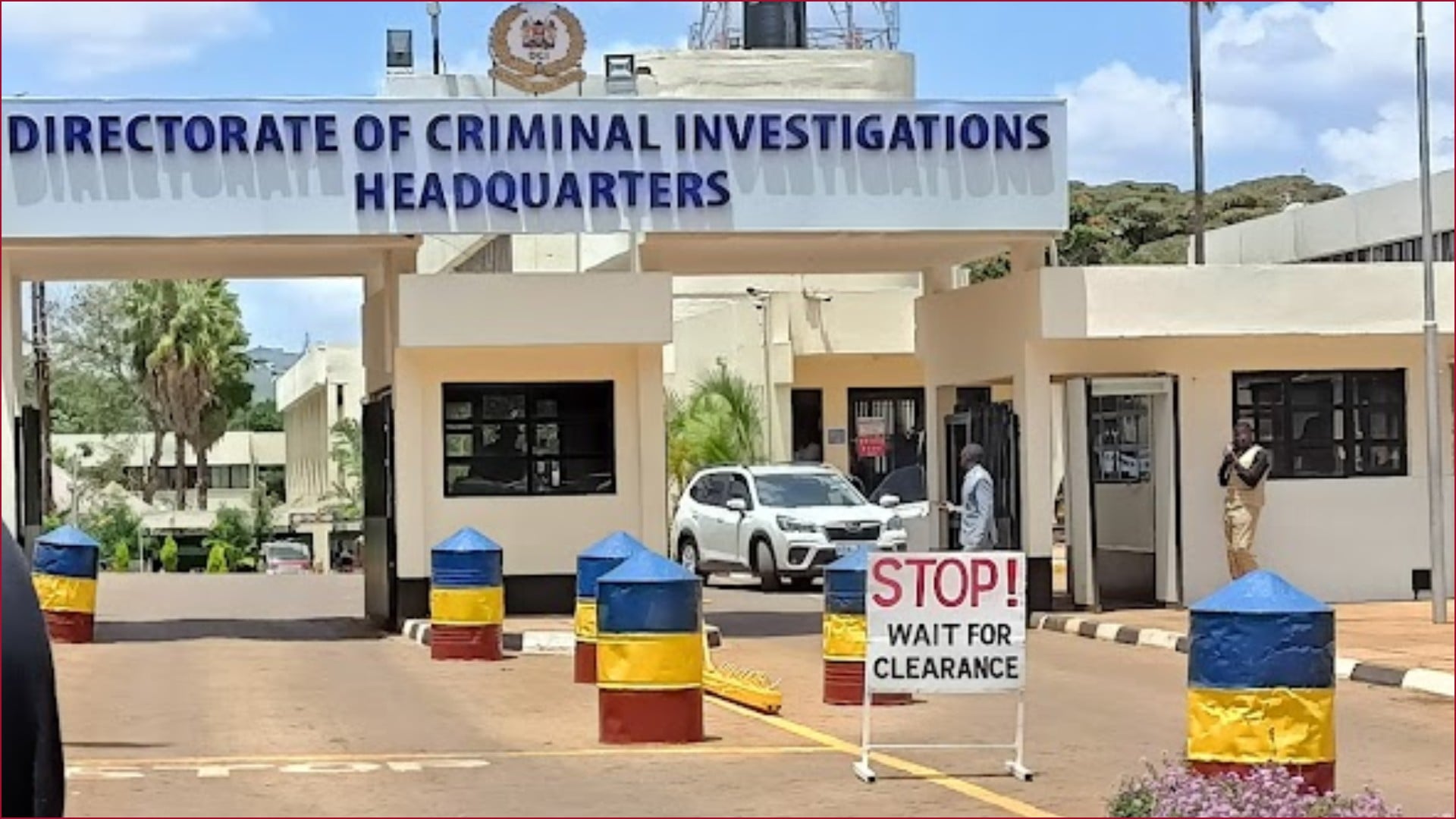
The DCI has warned members of the public against falling victim to fraudulent schemes involving forex trading, cryptocurrency, and other forms of digital financial scams.
The Directorate of Criminal Investigations (DCI) has warned members of the public against falling victim to fraudulent schemes involving forex trading, cryptocurrency, and other forms of digital financial scams.
In an update on Monday, September 28, the agency cautioned that some individuals use social media to display lavish lifestyles and purported profits as a way of attracting unsuspecting members of the public into fraudulent investment schemes.
"We are live with this story of Masharp Boys/Girls. These people live deep inside a world of Forex storms, Crypto shadows, Arbitrage games, sure-bet betting, Trading, Glowing Wallets, Telegram signals and the almighty USD that remains the real flex," the update read.
The DCI further raised concerns over the display of what appears to be large profits on online dashboards, noting that such displays can be used to create an impression of financial success and attract potential victims.
"Dashboards are usually blazing with phantom profit. Like really, who does show off? Even you, do you announce your salary online? Meanwhile, their lifestyle drips premium cognac, Belair Rosé showers, thick Shisha fog, cash stacks, luxury cars (mostly hired), nights out, and international trips on their profile," the update added.
Read More
According to the DCI, behind the apparent displays of wealth, some individuals are involved in criminal activities targeting people through digital platforms and deceptive financial schemes.
The agency warned that the schemes may involve fake investment platforms, phishing links, fabricated trading dashboards and wallets, identity fraud and deepfake technology.
"Yet the other side is heavy: trafficking, online scams, selling air, phishing links, fake dashboards, fake wallets, identity fraud, deepfakes and Washwash.
"They call it smart money or arbitrage, but behind some of that flex is social engineering, fake platforms and people being washed. Many fall. Others drag people down with them," the update further read.

This comes days after two women were charged over allegedly operating an unlicensed collective investment scheme linked to Quant Vest Stock Exchange Limited (QVSE).
In a statement on Wednesday, September 23, the Office of the Director of Public Prosecutions (ODPP) said the two suspects, Ruth Mueni Kimeu and Mary Katuma Mwangangi, appeared before Milimani Chief Magistrate Gethi Kibiru.
The duo was charged with carrying out the business of a collective investment scheme without a licence issued by the Capital Markets Authority (CMA).
The two were also charged with fraudulently inducing trading in securities by allegedly making deceptive statements and promises to members of the public.
"The Director of Public Prosecutions (DPP) has charged two women with allegedly operating an unlicensed collective investment scheme linked to Quant Vest Stock Exchange Limited (QVSE)/Global Investment Group.
"Ruth Mueni Kimeu and Mary Katuma Mwangangi today appeared before Milimani Chief Magistrate Gethi Kibiru, where they were charged with carrying out the business of a collective investment scheme without a licence issued by the Capital Markets Authority," the statement read.
According to the ODPP, the two suspects, jointly with others, committed the offence on diverse dates between January 1 and September 17, 2026, at an unknown location within Kenya.
The charges follow investigations into reports that QVSE was recruiting Kenyans to invest in the European stock market through the entity.
Investigations revealed that prospective investors were required to contribute a minimum of Ksh65,000 and obtain a referral from an existing member before joining the scheme.
They were then required to create Binance accounts, convert funds into virtual assets and transfer them to a wallet address linked to QVSE.
"The scheme was allegedly promoted through social media platforms, physical meetings and exhibitions, including the Kisumu and Mombasa ASK shows. Kimeu is alleged to have booked and paid for a QVSE exhibition stall at the Kisumu ASK show," the statement added.