Editor's Review
The National Assembly Sports and Culture Committee has raised fresh questions over Kenya’s preparedness to host the 2027 Africa Cup of Nations (AFCON).
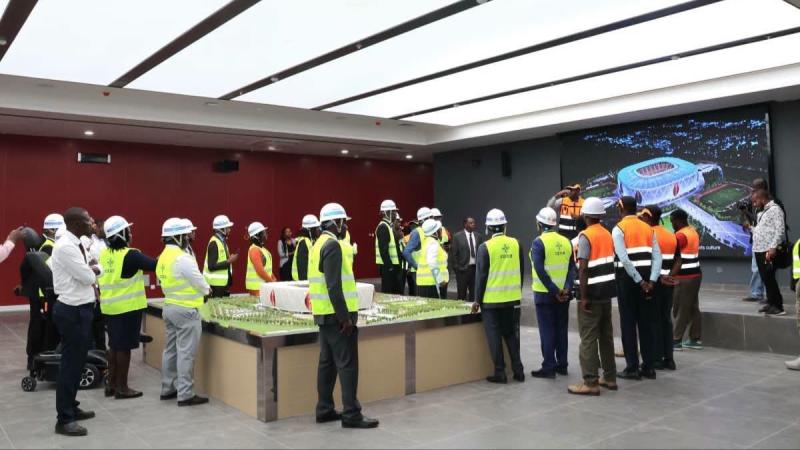
The National Assembly Sports and Culture Committee has raised fresh questions over Kenya’s preparedness to host the 2027 Africa Cup of Nations (AFCON) after inspecting the Raila Odinga Talanta Stadium.
The Committee, chaired by Webuye West MP Daniel Wanyama, visited the 60,000-seater facility on Thursday, October 1, to assess progress on the project and establish whether the country will meet requirements ahead of the tournament.
Members were informed that construction had reached 94 per cent overall completion.
The main stadium works were at 95%, while outdoor training facilities stood at 92% and external works at 93%.
The Ministry of Defence, which is implementing the project, told the Committee that construction remained on schedule to meet the December 31 deadline set by the Confederation of African Football (CAF).
Read More
However, the Committee was informed that the stadium would require about three months of testing and commissioning after construction to ensure its systems and facilities are fully operational before the tournament.
During the inspection, MPs questioned officials on several areas considered critical to AFCON preparations, including roads, transport, security, healthcare, water supply, hospitality, training venues and compliance with CAF standards.
Mwingi West MP Charles Nguna sought details on the accessibility of roads serving the stadium and how authorities planned to manage the movement of large numbers of fans entering and leaving the facility.
Nguna also raised concerns about protecting the playing surface from weeds and other environmental factors, while seeking information on the availability and proximity of hospitals to provide medical services to players, officials and spectators.
Turbo MP Janet Sitienei asked whether the stadium and supporting facilities were meeting CAF requirements and sought an update on the readiness of the designated training venues.
She further questioned whether the available water supply would be adequate for the large crowds expected during the tournament.
Sitienei also called for measures to promote sports tourism before, during and after AFCON 2027.
Suba South MP Caroli Omondi also raised concerns about leadership disputes within the Football Kenya Federation (FKF), asking how the Local Organising Committee was addressing possible governance issues that could interfere with preparations.
"Is there any potential threat from FKF that could undermine this great event that we have planned?" he posed.

MPs also questioned the potential effects of the anticipated El Niño rains on infrastructure around the stadium and sought information on measures being put in place to improve security for fans.
Responding to the concerns, Sports Kenya Director General Timothy Kilimo said the Kenya Urban Roads Authority (KeRRA) had already started improving roads serving the stadium, with the works expected to be completed by April.
Kilimo added that internal access roads were also being constructed as part of efforts to improve movement around the facility.
He said authorities had developed plans for managing pedestrian and vehicular traffic, including seven designated drop-off points.
On medical preparedness, the Committee was informed that CAF had inspected and approved hospitals located near the stadium to serve the tournament.
Members were further informed that 210 hotels had applied to accommodate teams, officials and visitors, with all the establishments meeting the required qualification standards.
Water supply was another area addressed during the inspection, with Major Engineer Victor King’e, the lead Project Architect, revealing that the stadium had an auxiliary one-million-litre tank supplied by Nairobi City Water and Sewerage Company.
The facility is also supported by two 60,000-litre backup tanks and two boreholes to strengthen its water supply capacity.
On electricity, officials told the Committee that the stadium had eight generators capable of providing the 16 kilovolt supply required when operating at full capacity.
Solar power has also been incorporated into the project to support external infrastructure, including street lighting.
Kilimo further disclosed that Sports Kenya was finalising a commercialisation policy that would guide the use of the stadium for revenue-generating activities.
This comes days after Kenya Railways unveiled plans to establish a dedicated railway connection linking Nairobi Central Business District (CBD), Nyayo Stadium and Talanta Sports City.
In a brief statement on Wednesday, September 30, Kenya Railways said the proposed connection would improve movement during major events while providing an alternative to road transport.
"The proposed connection will support seamless movement to and from major sporting venues, help ease road congestion during major events and improve accessibility for local and international visitors," the statement read.
According to Kenya Railways, the proposed railway connection will involve upgrading 13.3 kilometres of the existing railway track between Nairobi Central Station and Satellite.
The Corporation also plans to construct a 1.3-kilometre second line between Kibera and Satellite to serve the proposed Talanta Stadium Train Station.
Kenya Railways said the project will further include the construction of two new commuter stations at Talanta Stadium and Laini Saba, expanding rail access to areas serving major sporting facilities.
To improve pedestrian safety and access to railway services, the Corporation has proposed the construction of pedestrian overpasses and underpasses at Kibera, Laini Saba, Gatwekera and Kambi Muru.