Editor's Review
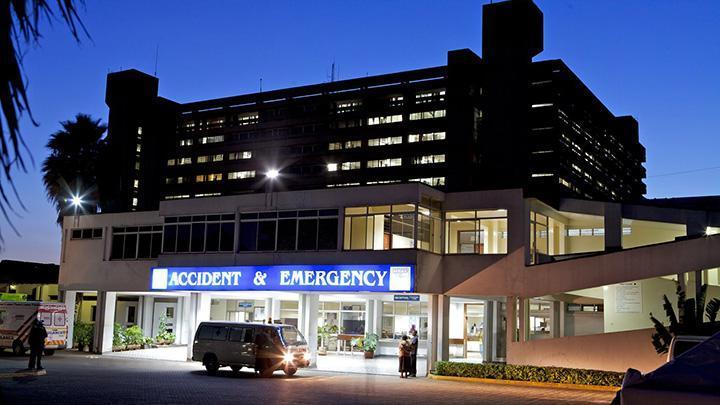
Kenyatta National Hospital (KNH) has released a list of unclaimed bodies currently being held at its Farewell Home and given families and members of the public seven days to identify and collect them.
Kenyatta National Hospital (KNH) has released a list of unclaimed bodies currently being held at its Farewell Home and given families and members of the public seven days to identify and collect them.
In a notice on Tuesday, October 6, KNH said the bodies are being held at the hospital’s Farewell Home and urged interested members of the public to come forward and assist in identifying and collecting them.
KNH warned that failure to identify and collect the bodies within seven days would result in the hospital seeking authority from the courts to dispose of them.
"Kenyatta National Hospital is in possession of a number of unclaimed bodies at its Farewell Home. Pursuant to Public Health Act Cap 242, interested members of the public are therefore requested to identify and collect the bodies within 7 days, failure to which the hospital will seek authority from the courts to dispose them," the notice read.
The notice lists 85 bodies, comprising both identified and untraced bodies.
Read More
Among the identified bodies are Dorothy Muthoki, Richard Ochieng, Asenath Nangila, Michael Kanyi Nyambura, Erick Mugambi Njine, Amos Kaberi, Sammy Kangethe, Miriam Mienusi Satima, Maria Daudi, Paul Kithura James, Joseph Kibe Mwangi and Josphat Njogu Mburu.
The list also includes David Oigoro Ombati, Nicholas Mutua, Rosalia Aswani, Joseph Gitonga, Daniel Maina, Benson Wandabwa, Kamau Njoroge, Mohamed Ali Wanja, Peter Murangiri, Blessings Mulei Munandi, Peter Mwaura and Gilbert Njunge Ujiau.

Other names listed are Leonard Kiruki Nganga, Tracy Wadida Tikollo, Rodah Wanjiku, Rebecca Kamanje Kathiori, Raphael Musee Tito, Esther Muthoni, Musa Makara Sikong, Kamau Njoroge, Florence Munjona, Juma Baraka Hassan, Boniface Omollo, Anthony Wanyonyi, Charles Kyalo Mukumbi, Jeff Mawira, John Omondi, Paul Ghethuka, Omar Nabir, Millicent Wambui and Denis Njenga.
Christofor Munene Kirimi is also included among the identified bodies.
The remaining 41 bodies are listed as untraced, with the hospital identifying them using tags and descriptions such as Unknown African Man (U.A.M), Unknown African Woman (U.A.W), and other unidentified mortuary references.
Elsewhere, the Defence Forces Memorial Hospital (DFMH) has recorded a major medical milestone after conducting its first-ever red blood cell exchange procedure.
In a statement on Monday, October 5, the Kenya Defence Forces (KDF) said the procedure was performed at the hospital’s Renal Unit on Friday, October 2, using the newly acquired Spectra Optia® apheresis system.
According to the Force, the procedure involved a 15-year-old female patient living with sickle cell disease.
KDF said the successful procedure marked an important development in the hospital’s provision of specialised, technology-enabled medical care.
"Defence Forces Memorial Hospital (DFMH) has achieved a major medical milestone after successfully conducting its first red blood cell exchange using the newly acquired Spectra Optia® apheresis system," the statement read.
According to KDF, the red blood cell exchange was made possible through the hospital’s new apheresis capability, which allows clinicians to process blood selectively and carry out specialised therapeutic procedures.
Apheresis is an advanced blood-processing procedure that separates specific components of a patient’s blood while returning the remaining components to the body.
The technology can therefore be used to tailor treatment to particular medical conditions.
In a red blood cell exchange, abnormal or sickled red blood cells are removed from a patient’s circulation and replaced with compatible donor red blood cells.
The procedure reduces the proportion of sickled cells in the bloodstream and can form part of specialised management for patients with sickle cell disease.