Editor's Review
The Ministry of Education is developing a multi-agency system to improve the collection and sharing of data on student pregnancies and the perpetrators of sexual offences against learners.
The Ministry of Education is developing a multi-agency system to improve the collection and sharing of data on student pregnancies and the perpetrators of sexual offences against learners.
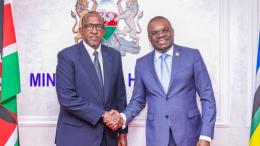
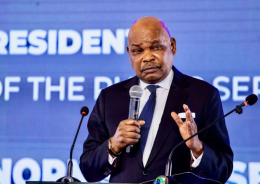
Speaking on Wednesday, October 7, Education Cabinet Secretary Julius Ogamba said the ministry currently lacks a comprehensive framework and information management system capable of aggregating data on reported pregnancies among learners and those accused of being responsible.
"At present, the Ministry of Education does not have a comprehensive framework and information management system for the aggregation of data on reported pregnancies among learners and perpetrators," he said.
Ogamba said existing mechanisms for monitoring pregnancies among learners rely heavily on school heads and teachers.
"The existing mechanisms for monitoring are largely dependent on Heads of Institutions and teachers, and are not watertight," he added.
Read More
Ogamba said establishing reliable data on perpetrators would require the involvement of several government agencies responsible for disciplinary and criminal justice processes.
"Compilation of data on perpetrators also requires a comprehensive framework that involves, in addition to the Ministry of Education, other government agencies charged with discipline, in this case, the Teachers Service Commission, and the criminal justice system, including the National Police Service, the Director of Public Prosecutions and the Judiciary," he further said.

Ogamba explained that a person can only be formally designated as a perpetrator after the relevant disciplinary or criminal justice process has been completed and a finding made against the suspect.
"Designation as a perpetrator necessarily implies that a disciplinary and or criminal justice process has been concluded with a finding against the suspect. In the context of ongoing reforms, we are working on a system that brings together all these agencies for purposes of sharing data," he noted.
Elsewhere, the Kenya National Examinations Council (KNEC) will administer national examinations and assessments to more than 3.6 million candidates between October and November 2026.
Speaking on Monday, October 5, KNEC CEO David Njengere said the examinations and assessments will involve a total of 3,634,846 candidates during the period running from October 16 to November 20, 2026.
The large-scale exercise will require thousands of professionals to oversee the administration and management of the examinations and assessments across the country.
"KNEC will engage a total of 342,005 contracted professionals to facilitate the conduct and management of the field administration process," he said.
At the same time, Ogamba warned candidates, centre managers, supervisors and invigilators against engaging in examination malpractice, saying those found violating the regulations would face legal consequences.
"Let me affirm today that we will have no mercy on anyone who will be found engaging in any form of malpractice. All candidates, centre managers, supervisors and invigilators must comply with examination regulations, failing which they will be subjected to the full force of the law," he said.
Ogamba also raised concerns over the expected heavy rains and called for measures to ensure the weather does not disrupt the examination and assessment process.
"As we are all aware, the weatherman has warned us of impending El Nino rains. We must, therefore, put in place all appropriate measures to avert disruptions to the examination and assessment processes on account of the heavy rains anticipated.
"We will face this challenge through a Whole-of-Government approach, that also involves all stakeholders as relevant. Field officers from all the relevant Ministries and agencies shall be on standby to provide whatever support that will be required to ensure that our processes run seamlessly and that none of our candidates are unnecessarily disadvantaged," he added.