
Editor's Review
President Ruto recently questioned the accuracy of the El Niño forecast given earlier warnings.
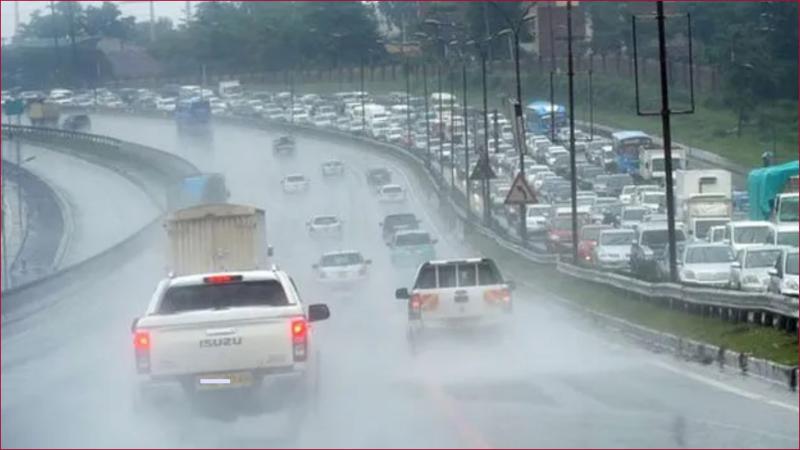
The Kenya Meteorological Services Authority (KMSA) has come out to clarify that El Niño does not automatically bring heavy rainfall, as questions continue over when the long-awaited rains will arrive.
In its explainer published on its channels, the authority set out to correct what it described as a common assumption that El Niño simply means more rain in Kenya.
At first, KMSA charged itself with explaining the phenomenon.
"El Niño refers to unusually warm ocean temperatures in the tropical Pacific Ocean," it said.
In other words, El Niño describes the state of the ocean thousands of kilometres away. It is not a measure of the rain that falls in Kenya.
Read More
The authority further addressed the belief that a stronger event means heavier rain locally.
"The strength of an El Niño event doesn't directly determine how much rain we receive in Kenya," it said.
According to the authority, El Niño is only one of several factors that shape the country's rainfall.
"It can work with, or against, other factors (such as the Indian Ocean, winds and weather patterns). Sometimes they reinforce each other, and other times they reduce the impact," it said.
It listed those other drivers as the Indian Ocean, winds, weather systems and local factors. When El Niño combines with them, KMSA said, more rain is likely in some cases, while in others less rain is possible.

For the foregoing reason, the authority said it is closely monitoring how the different drivers are evolving and interacting. It stressed the importance of continuous monitoring.
KMSA also said rain is already being recorded in some areas.
"Our latest monitoring indicates that parts of the country are already receiving rainfall, and more is expected as the season progresses," it said.
It summed up its message in a single line.
"El Niño is one piece of the puzzle, not a guarantee of rain," it said.
The agency urged the public to understand the difference, look at the bigger picture, trust the science and stay informed.
The clarification comes amid uncertainty over when the much-anticipated El Niño rains will start.
President William Ruto recently questioned when they would occur. He cited the prolonged uncertainty over their arrival as a key reason why the country must shift to more controlled farming methods.
Ruto questioned the value of basing agricultural decisions on weather forecasts that have repeatedly failed to materialise on schedule.
As of October 10, El Niño rains had yet to be witnessed across the country, despite forecasts that had initially pointed to an August onset.
His remarks came against a backdrop of increasingly urgent warnings from meteorological authorities.
In June, the Kenya Meteorological Department said El Niño conditions carried a 90 to 96 per cent probability of lasting through the end of the year.
The department said most global climate models pointed to an event of at least moderate strength, with a chance of turning strong.
It put the likelihood of El Niño developing between June and August 2026 at 80 to 82%, rising sharply for the rest of the year.
For the October-November-December season, the phenomenon has historically been associated with enhanced rainfall across the entire country.
A potentially positive Indian Ocean Dipole could amplify the effect further.
By September, KMSA had identified three categories of flood risk: urban flooding, river flooding and flash flooding.
A preliminary government assessment estimated that about 1.5 million people across all 47 counties could be affected.
A joint mapping exercise identified 246 potentially vulnerable locations within the capital. Other high-risk areas flagged included Nyali in Mombasa, Kisumu, the lower Tana River basin and Narok. Northern counties, including Turkana, Wajir, Mandera, Marsabit and Garissa, were also named.
The World Meteorological Organisation put the probability of El Niño persisting through to February 2027 at close to 100%.
 (1)-1791708588-md.jpg)
 (1)-1791175033-md.jpg)
-1791699761-md.jpg)
-1791696120-md.jpg)

 (1)-1791708588-sm.jpg)
 (1)-1791175033-sm.jpg)

-1791699761-sm.jpg)