
Editor's Review
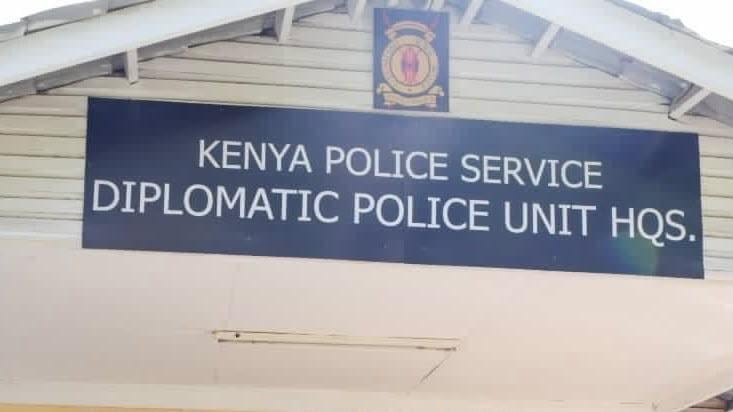
The Directorate of Criminal Investigations (DCI) has launched the Multi-Biometric Identification System (MBIS) at the Diplomatic Police Unit (DPU) Headquarters.
The Directorate of Criminal Investigations (DCI) has launched the Multi-Biometric Identification System (MBIS) at the Diplomatic Police Unit (DPU) Headquarters, allowing diplomats, foreign nationals and staff of international missions to apply for Police Clearance Certificates (PCCs) locally.
In a statement on Wednesday, October 14, the agency said the new system enables applicants to obtain police clearance without travelling to DCI Headquarters or Huduma Centres.
The DCI said the latest launch was part of its ongoing nationwide rollout aimed at making the application process more accessible and efficient.
"The launch extends access to the digital service to the diplomatic community as part of the ongoing nationwide rollout, which is aimed at improving the efficiency and accessibility of PCC processing," the statement read.
According to the DCI, the MBIS was first launched at DCI Headquarters on July 23, 2026, by Interior Cabinet Secretary Kipchumba Murkomen.
Read More
The second phase of the rollout followed in September 2026, extending the service to 20 additional centres, primarily serving the Central Region and neighbouring areas.
The expansion brought the total number of connected police clearance application centres to 26 out of the 63 planned nationwide centres. The network includes six centres in Nairobi that had been connected previously.
The second phase covered Kajiado Central, Kajiado West-Kisamis, Machakos, Thika, Kamwangi, Murang’a, Nyeri, Nyandarua-Ol Kalou, Nanyuki, Laikipia East-Makutano, Samburu-Maralal, Kerugoya, Mwea, Embu, Chuka, Marimanti, Maara, Kathwana, Meru and Isiolo.
The system is expected to improve the speed and capacity of processing Police Clearance Certificates by modernising how biometric information is captured, stored and searched.
"The MBIS has reduced PCC processing time from 14 days to same-day issuance, increased record-handling capacity from 2 million to 10 million records, and raised daily search capacity from 4,500 to 20,000," the statement added.

The technology integrates fingerprint, palm print and facial recognition capabilities to improve identification accuracy and strengthen forensic investigations.
It also replaces traditional ink-based fingerprinting and paper-based procedures with live digital biometric capture, reducing reliance on manual processes in the handling of applicants' identification records.
This comes months after the Ministry of Education announced plans to introduce a digital tracking system that will monitor the distribution of school textbooks in real time.
Speaking on Tuesday, May 6, former Education Principal Secretary Julius Bitok said the new system is intended to address longstanding challenges in the movement of books from suppliers to schools.
"We are streamlining this space of book distribution, we are bringing in technology, and we are saying, going forward, we shall have a new system that is going to be able to monitor book distribution in real time," he said.
He added: "I admit that there are challenges of book distribution, but we are working on a digital system that is going to ensure that we monitor in real time how books are able to move to schools."
Meanwhile, Bitok acknowledged that some schools are facing shortages in newly introduced specialised learning areas under the new curriculum.
"We have a small challenge on the new highly specialized areas which were not part of the previous curriculum. CBE is a new curriculum that has just been 5 months into Senior school.
"We are doing everything possible to ensure that books for these areas are availed to the schools that offer them," he further said.
Bitok also said the government is pursuing a policy aimed at expanding capacity in high-demand schools so that more learners can access institutions with strong academic records.
"The government policy now is that we need to increase capacity in the popular schools, and the reason we are doing that is because these large schools have strong traditions of excellence, and we feel it is important to give more students an opportunity to learn in these institutions," he stated.


 (1)-1791959267-md.jpg)

-1790920987-md.jpg)



 (1)-1791959267-sm.jpg)