Editor's Review
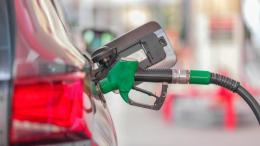
EPRA has announced an increase in fuel prices, with Super Petrol rising by Ksh12.93 per litre, Diesel by Ksh9.90 and Kerosene by Ksh28.49 for the period starting October 15 to November 14.
The Energy and Petroleum Regulatory Authority (EPRA) has announced an increase in fuel prices, with Super Petrol rising by Ksh12.93 per litre, Diesel by Ksh9.90 and Kerosene by Ksh28.49 for the period starting Thursday, October 15, to Saturday, November 14.
In its latest monthly review, EPRA said the adjustments were based on the weighted average cost of imported refined petroleum products during the period under review.
"Taking into account the weighted average cost of imported refined petroleum products in the period under review, the maximum allowed retail petroleum pump prices for Super Petrol, Diesel and Kerosene increases by KShs.12.93/litre, KShs.9.90/litre and KShs.28.49/litre respectively," the statement read.
EPRA noted that the prices included Value Added Tax (VAT) at 8 per cent, in line with the government's policy on fuel taxation.
"The prices are inclusive of the Value Added Tax (VAT) at 8%, in line with Government policy to cushion consumers from the negative effects of high international prices," the statement added.
Read More
EPRA attributed the latest increases to higher international landed costs of imported petroleum products, with Super Petrol recording the largest percentage increase among the three products.
"The average landed cost of imported Super Petrol increased by 11.81% from US977.55 per cubic metre in September 2026; Diesel increased by 11.32% from US1065.38 per cubic metre while Kerosene increased by 9.41% from US1,098.31 per cubic metre over the same period," the statement further read.
According to EPRA, the landed-cost of Super Petrol increased from US$874.26 per cubic metre in August 2026 to US$977.55 in September, representing an 11.81 per cent rise.
Diesel costs rose from US$957.05 to US$1,065.38 per cubic metre, while kerosene increased from US$1,003.87 to US$1,098.31 over the same period.
EPRA explained that Kenya relies entirely on imported refined petroleum products, whose prices are determined using international market benchmarks.
"Currently, Kenya imports all its petroleum product requirements in refined form, and the products are traded in international markets based on a pricing benchmark. Table 2 indicates the trend of petroleum prices in the international markets," the statement noted.
As such, Nairobi will record maximum wholesale prices of Ksh211.89 per litre for Super Petrol, Ksh212.68 for Automotive Diesel and Ksh204.79 for Kerosene.
In Mombasa, the maximum wholesale prices will stand at Ksh208.73 per litre for Super Petrol, Ksh209.53 for Diesel and Ksh201.64 for Kerosene.
Consumers in Nakuru will pay maximum wholesale prices of Ksh210.65 per litre for Super Petrol, Ksh211.85 for Diesel and Ksh203.98 for Kerosene.
In Eldoret and Kisumu, Super Petrol will retail at a maximum wholesale price of Ksh211.43 per litre, while Diesel will cost Ksh212.63 and Kerosene Ksh204.76.