
Editor's Review
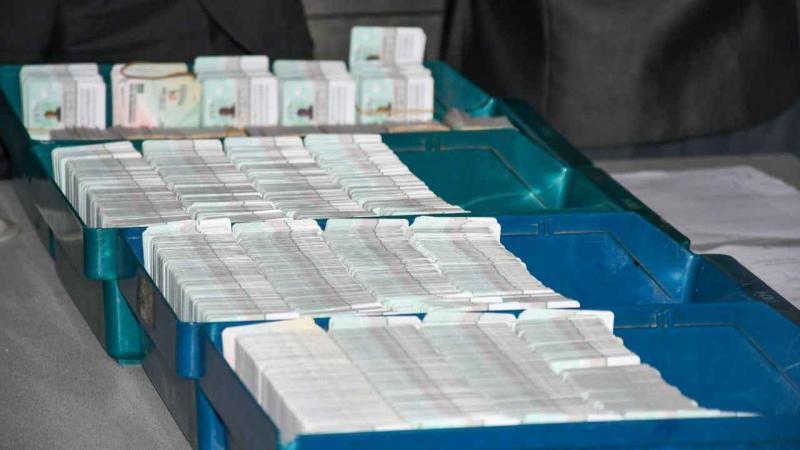
The government has simplified the process of acquiring national identity cards, easing delays that previously made it difficult for eligible Kenyans to obtain the identification document.
The government has simplified the process of acquiring national identity cards, easing delays that previously made it difficult for eligible Kenyans to obtain the identification document.
Alexander Kang’ethe, a Senior Assistant Chief in Isinya Sub-County, said the removal of the vetting process had made it easier for residents to acquire national identity cards.
"Regarding the issuance of ID cards, years ago, we used to conduct vetting. The vetting process took a long time, making it difficult for people to obtain ID cards.
"Since the President abolished vetting, you now only need to go to the chief, and if they recognise you, they sign the documents," he said.
The simplified process has reduced the back-and-forth previously associated with obtaining identification documents, allowing applicants to complete the process in a shorter period.
Read More
One beneficiary said the experience was much faster than anticipated, contrasting the current process with the previous system, which often required applicants to return to their rural homes to obtain documentation from local administrators.
"In the past, to get an ID card, you had to be sent back to your rural home for the chief to give you the necessary documents. When I applied for my ID, I thought it would take about a month or a month and a half, but the process was faster than expected," he stated.
The government has also taken steps to reduce the financial barriers associated with obtaining identification documents.
In March 2025, it removed application and replacement fees for national identity cards, making the service more accessible to people who might otherwise struggle to meet the costs.
Grassroots registration initiatives have also been aimed at bringing services closer to residents, particularly those living in remote and historically underserved communities.
Chiefs, assistant chiefs and other local administrators play a key role in helping applicants prepare their documents, complete registration and collect their identification cards.

On the importance of a national identity card, in healthcare, it helps eligible Kenyans meet identification requirements for enrolment in the Social Health Authority (SHA) system and access covered services.
The document also supports registration with the National Social Security Fund (NSSF), applications for affordable housing through the Boma Yangu programme, and access to student financing through the Higher Education Loans Board (HELB).
It can also help eligible students meet identification requirements for technical and vocational education and training (TVET) opportunities.
In agriculture, identification supports farmer registration through the Kenya Integrated Agriculture Management Information System (KIAMIS), which is used in agricultural programmes, including subsidised fertiliser initiatives.
For young people, a national identity card helps meet eligibility and verification requirements for employment, training and enterprise support programmes, including the National Youth Opportunities Towards Advancement (NYOTA) programme.
It is also important for payroll registration and identity verification when seeking employment.
The document is similarly required for many financial and commercial transactions, including opening bank accounts, joining savings and credit cooperative societies (SACCOs), registering businesses, applying for county permits and accessing formal financing.
Other areas where identification is important include adult SIM card registration, passport applications, overseas employment processes and property transactions.
It also supports identity verification for land registration, inheritance and property transfers, subject to applicable legal requirements.
National identity cards also play a role in social protection programmes, including Inua Jamii, where identification helps verify eligible beneficiaries seeking government assistance and cash transfers.
Beyond individual benefits, wider access to identification can help the national government improve planning and service delivery.
More complete registration and enrolment records can inform healthcare coverage assessments, agricultural input distribution, affordable housing plans and social protection programmes.
Improved records can also help authorities identify underserved populations, reduce duplicate beneficiary entries and allocate public resources more effectively.
At the county and community levels, better access to identification can support agricultural extension services, healthcare planning and the coordination of infrastructure development.
It can also help young people, traders and organised groups meet the requirements for employment programmes, business registration, financial services and eligible funding opportunities.