
Editor's Review
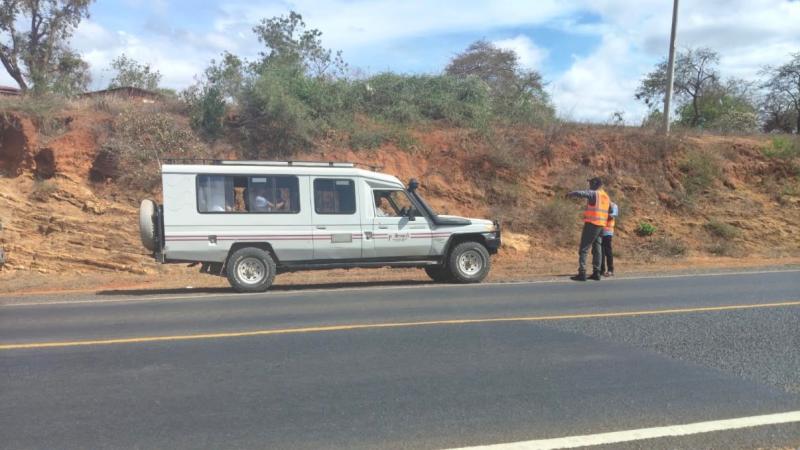
The National Transport and Safety Authority (NTSA) has outlined offences and safety requirements targeted in a new day and night crackdown on motorists.
The National Transport and Safety Authority (NTSA) has outlined offences and safety requirements targeted in a new day and night crackdown on motorists.
In a notice on Tuesday, October 27, the authority said the campaign, dubbed Msimu bila ajali, Usalama Barabarani, involves sensitisation of drivers and passengers, alongside safety checks conducted along major transport corridors.
Join our WhatsApp Channel for the latest updates; The WhatsApp channel link: https://whatsapp.com/channel/0029VagnpQA4CrfdWKD1zb35
"As part of ongoing proactive measures to disrupt risky behaviours and prevent loss of lives on our roads, the Authority, in collaboration with law enforcement, has launched the Msimu bila ajali, Usalama Barabarani campaign," the notice read.
NTSA said the operation would focus on identifying motorists who violate traffic regulations and addressing risky behaviour that contributes to road crashes.
Read More
The authority also explained why the operation places particular emphasis on night safety checks, citing the increased danger associated with evening and late-night travel.
"Night safety checks have been prioritised because evening and late-night hours are statistically the deadliest periods on our roads. By allocating additional resources during these high-risk hours, we can maximise efforts to disrupt the critical risk factors that cause preventable road traffic crashes," the notice added.
Among the offences and safety violations targeted in the crackdown are speeding, failure to comply with speed limiter requirements, missing or invalid transport documents, overloading, driving without valid documentation, failure to wear seatbelts and drink-driving.
Speed violation detection is one of the key areas of focus, with authorities monitoring vehicle speeds in real time to identify motorists who exceed the prescribed limits.
NTSA has warned motorists that official speed violation notifications are issued exclusively through SMS messages bearing the sender ID NTSA.
Drivers have been advised against responding to suspicious messages from numbers claiming to represent the authority and urged to report such messages promptly.
The crackdown will also examine the functionality of speed limiters fitted in vehicles and whether the devices continuously transmit information to the Intelligent Road Safety Management System (IRSMS).
Motorists are required to log in to their accounts through the upgraded IRSMS portal at https://irsmonwers.ntsa.go.ke to link their vehicles to a licensed speed limiter vendor.
The authority has also provided a user guide at https://ntsa.go.ke/irsms and a support email, [email protected], for motorists seeking assistance.

Long-distance public transport operators will also be subjected to documentation checks to establish whether they comply with the requirements governing passenger transport services.
The documents being checked include passenger manifests, driver logs used to monitor driving hours, compliance with licensed routes, valid Road Service Licences (RSLs) and inspection stickers.
Authorities will further enforce vehicle capacity requirements to ensure motorists do not carry passengers beyond the authorised limit or transport loads exceeding the permitted weight.
Drivers will also be required to present valid driving licences, while public service vehicle operators and drivers will face checks on the validity of their PSV badges.
Passenger safety is another priority in the operation, with NTSA urging travellers to wear seatbelts throughout their journeys.
The authority warned that failure to use seatbelts increases the risk of serious injuries or death in the event of a crash.
The checks will also include breathalyser screening to identify motorists driving under the influence of alcohol.
NTSA said officers conducting the operation would follow established procedures to ensure the safety of motorists and law enforcement personnel while maintaining orderly traffic movement.
"Both day and night safety checks are governed by strict operational protocols designed to protect motorists, manage traffic flow, and ensure officer safety," the notice further read.
NTSA has urged motorists to cooperate with officers at designated checkpoints and follow instructions to avoid putting themselves and other road users at risk.
"Observe checkpoint safety protocols by slowing down upon approaching designated areas and cooperating fully with law enforcement officers," the notice read.
This comes days after NTSA proposed that road traffic crashes be declared a national disaster to trigger urgent government action.
In a statement on Sunday, October 25, the authority said road crashes had reached an emergency level, citing the thousands of lives lost annually and the impact of accidents on families, healthcare services and the economy.
"Declare road safety a national disaster. Road crashes have reached a national emergency level, with about 20,000 crashes claiming over 5,000 lives annually, destroying families, overwhelming our health system and eroding economic productivity," the statement read.
NTSA argued that recognising road crashes as a national disaster would help mobilise resources and support a coordinated response to the growing number of accidents across the country.
"As an Authority, we propose that road traffic crashes be declared a national disaster to mobilise urgent government action, secure adequate funding and ensure coordinated enforcement," the statement added.
NTSA said the approach would involve road agencies, the National Police Service, the health sector and county governments in a coordinated effort to address road crashes and strengthen accountability.
"Such a declaration would enable whole-of-government coordination under clear accountability, and enforce measurable targets across road agencies, the National Police Service, the health sector and county governments," the statement further read.
 (1)-1793091298-md.jpg)

 (1)-1793084645-md.jpg)

 (1)-1793091298-sm.jpg)

 (1)-1793084645-sm.jpg)