Editor's Review
The Ministry of Health has responded after Saudi Arabia announced a series of travel restrictions against Kenya over the Ebola.
The Ministry of Health has responded after Saudi Arabia announced a series of travel restrictions against Kenya over the Ebola.
Saudi Arabia announced the suspension of travel by its citizens to Kenya, alongside a halt to all visa issuance to travellers from the country.
Join our WhatsApp Channel for the latest news updates.
The Kingdom also imposed a ban on entry for travellers arriving from Kenya, including those who had transited through other countries but had resided in Kenya or Ebola-affected countries within the previous 21 days.
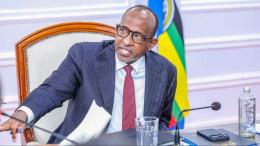
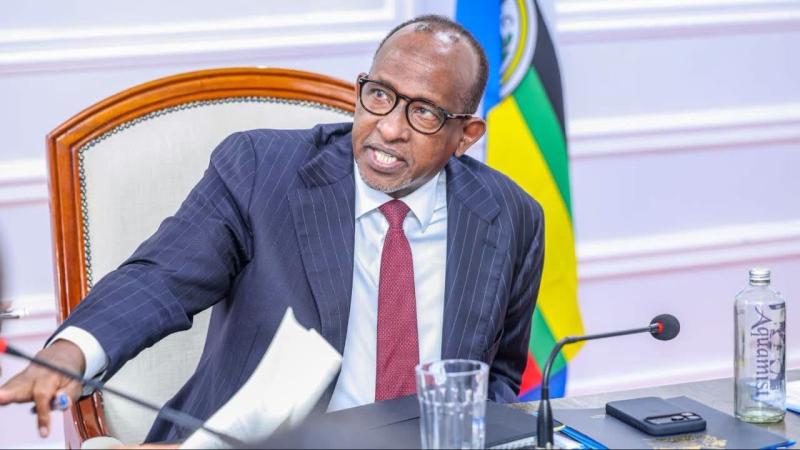
In a statement on Saturday, October 31, Health Cabinet Secretary Aden Duale expressed concern over the restrictions, arguing that the country had made significant progress in containing the outbreak.
Read More
"The Ministry of Health-Kenya has noted with concern the extreme measures taken by the Kingdom of Saudi Arabia regarding the Ebola situation in the country. We reiterate that the measures taken are not only excessive but not backed by the current epidemiological situation in the country," the CS said in a statement.
The Ministry explained that Kenya's index case was imported and that health authorities had immediately identified and traced all 135 contacts linked to the patient.
It added that 118 contacts had subsequently been placed under quarantine as part of efforts to prevent further transmission of the disease.
According to the Ministry, all eight confirmed cases were linked to the initial patient, with four involving healthcare workers and the other four involving close family members.
Duale maintained that there had been no transmission outside the identified cluster and that the country had no evidence of community transmission.
The Ministry further revealed that Kenya had not recorded a new Ebola case since October 19, 2026, indicating that the outbreak response was yielding positive results.

On fatalities, the Ministry disclosed that the country had lost two patients, including the index case.
It added that the seven remaining patients under care were progressing well, with five having returned their first negative Ebola test results after completing treatment.
According to Duale, the five patients were awaiting a second test scheduled for Monday, November 2, which would determine whether they could be discharged.
The Ministry expressed optimism that the five patients would be discharged on Tuesday, November 3, alongside 46 additional contacts who had remained under quarantine without developing symptoms.
The expected release would come in addition to 20 contacts who had already completed their quarantine period and been released earlier.
Duale said the developments demonstrated that Kenya's containment measures were working and expressed confidence that the outbreak would soon be brought under control.
"This clearly demonstrates that our response is holding and will soon deliver spectacular results. The Ministry of Foreign and Diaspora Affairs will continue to engage the Kingdom of Saudi Arabia on this matter," the statement added.
This comes days after the United Nations (UN) allocated more than $2 million (Ksh259 million) to strengthen Ebola preparedness and response efforts in Kenya.
In a statement on Wednesday, October 28, the United Nations Office for the Coordination of Humanitarian Affairs (OCHA) said the funding has been allocated through the Kenya Humanitarian Fund, which it manages.
OCHA said the funding will support humanitarian partners working alongside the government to contain the Ebola disease in Kenya.
According to the office, the funding will finance enhanced disease surveillance at border crossing points, as well as training for rapid response teams and frontline responders.
"The Kenya Humanitarian Fund, managed by OCHA, has allocated more than $2 million to strengthen Ebola preparedness and response efforts.
"The funding will enable humanitarian partners to support Government-led efforts, including enhanced surveillance at border crossing points and training for rapid response teams and front-line responders," read the statement in part.
OCHA also mentioned that part of the funding will be used to support preparedness along high-risk refugee and travel routes linked to the Kakuma refugee complex in north-western Kenya.
"They will also fund emergency health and infection prevention kits, as well as public information campaigns on Ebola prevention and early detection," the office added.