Editor's Review
The government has stepped up efforts to promote climate-smart farming practices in a model aimed at boosting food security and creating jobs.
The government has stepped up efforts to promote climate-smart farming practices that integrate poultry, fish and vegetable production in a model aimed at boosting food security and creating jobs.
Through the Lake Basin Development Authority (LBDA) and the Wezesha Agribusiness Programme, the government is encouraging farmers to adopt integrated farming methods that maximise available resources, minimise waste and support multiple sources of income.
Join our WhatsApp Channel for the latest news updates.
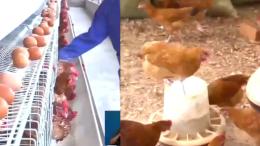
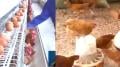
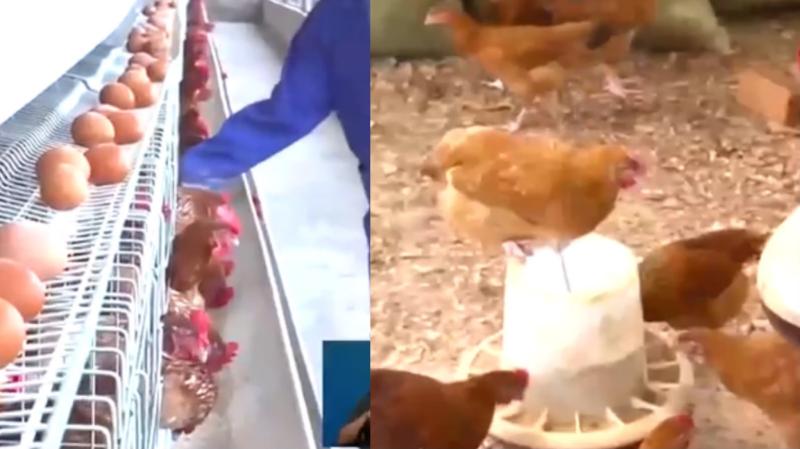
In Busia County, farmers Miriam Ojakol and Rebecca Odalo have embraced modern poultry housing and improved biosecurity practices to reduce losses and expand their agribusinesses.
Their experiences demonstrate how targeted training and better farming techniques can improve productivity among small-scale farmers.
Read More
Ojakol explained that keeping chickens in properly constructed poultry houses helped reduce their exposure to diseases compared to allowing them to roam freely.
She noted that poultry raised outside could encounter infections spread by other chickens and animals.
"The risk of diseases is lower when chickens are kept inside their poultry house compared to when they roam freely outside. This is because they are exposed to many diseases from other sources, including neighbours’ chickens and other animals that can spread infections," she said.
On her part, Odalo shared how addressing weaknesses in her poultry housing helped her overcome losses after rats gained access to the structure.
She explained that installing wire mesh and sealing openings enabled her to resume farming.
"The chickens died because a rat had been getting into the poultry house. After installing wire mesh and sealing the openings, I continued with poultry farming," she stated.

The integrated farming model promoted by the government involves using poultry manure to enrich fish ponds, while nutrient-rich water from the ponds is recycled to irrigate vegetable gardens.
The approach reduces agricultural waste while allowing farmers to generate income from three different production streams.
It is also designed to help farmers maximise limited farming space and make better use of available resources.
Through the Wezesha Agribusiness Programme, at least 5,000 young people have received training in climate-smart farming practices over the past two years.
The programme has also focused on improving young farmers’ access to financing and markets to enable them to establish and expand sustainable agribusiness enterprises.
The government has also established a poultry technology transfer centre in Kisumu, which produces 300 trays of eggs daily for the local market.
This comes a month after President William Ruto launched cocoa as a scheduled cash crop in Kenya, urging farmers in areas earmarked for its cultivation to start growing it as part of the country's tree-planting drive.
Speaking in Endebess, Trans Nzoia County, on Saturday, October 10, the president distributed cocoa seedlings to farmers, marking the start of growing the crop in the country.
He said the aim is to plant trees that protect the environment while earning farmers an income, saying cocoa is more than a cash crop.
"Start preparing yourselves. From cocoa, we can produce beverage mixes, food items, chocolate, and many other products. For that reason, I urge Kenyans in areas mapped out for cocoa cultivation to take up farming it, because it is also a tree. As we reforest our country, we can simultaneously boost our incomes," he said.
He said the crop serves two purposes; it can feed a range of processed products, and, because cocoa is a tree, it supports Kenya's reforestation efforts while putting money in farmers' pockets.
Cocoa is the seed of a tropical tree. The seeds are fermented, dried and ground to form the base of chocolate.
Africa grows about 70% of the world's supply, with Côte d'Ivoire leading at roughly 40 per cent of global beans. Ghana follows closely, then Cameroon and Nigeria.
Ruto spelt out how the government intends to get the crop to farmers.
"We are launching cocoa as a scheduled cash crop, and we are distributing seedlings immediately. Our teams at KALRO have conducted research and already have seedlings available, and we will now form a partnership between KEPHIS and KALRO to produce a sufficient supply of cocoa seedlings for everyone," he said.
Ruto said the Kenya Agricultural and Livestock Research Organisation (KALRO) has already done the research and has seedlings available.
A partnership with the Kenya Plant Health Inspectorate Service (KEPHIS) will now be formed to produce enough seedlings for all interested farmers.