
Editor's Review
Kenya has achieved 100 per cent coverage in tracing all identified Ebola contacts, bringing the country closer to an anticipated declaration of being Ebola-free.
Kenya has achieved 100 per cent coverage in tracing all identified Ebola contacts, bringing the country closer to an anticipated declaration of being Ebola-free on December 23.
In a statement on Tuesday, November 17, the Ministry of Health said all 135 identified contacts had been successfully traced, exceeding the World Health Organisation's global benchmark of 85 per cent.
Join our WhatsApp Channel for the latest news updates.
The country also reported no new Ebola cases since October 19 with no evidence of community transmission.
"Kenya has achieved 100% Ebola contact tracing coverage, surpassing the 85% global benchmark, with all 135 contacts successfully traced. No new cases have been reported since 19 October 2026, and there is no evidence of community transmission. The final batch of contacts was released on 11 November following completion of monitoring," the statement read.
Read More
Additionally, the Ministry said the country has entered the sixth day of the mandatory 42-day countdown towards an anticipated Ebola-free declaration, which was expected on December 23, 2026, provided no new confirmed infections were reported.
It said surveillance and screening measures would remain in place during the countdown period to guard against further infections.
"The country is on day six of the mandatory 42-day countdown towards an anticipated Ebola-free declaration on 23 December 2026, subject to no new confirmed cases. Surveillance, traveller screening and other response measures remain heightened," the statement added.

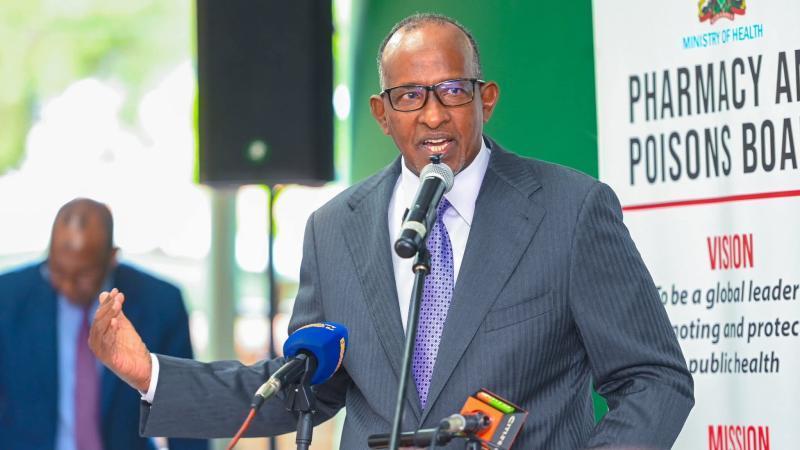
Health Cabinet Secretary Aden Duale highlighted the progress on Tuesday, November 17, when he appeared before the Senate Standing Committee on Delegated Legislation at Bunge Towers in Nairobi.
At the same time, he explained the legal provisions supporting surveillance, testing, isolation, contact tracing, quarantine and infection prevention measures.
Duale further addressed the circumstances surrounding the publication of the regulations, noting that the urgency of the outbreak required their issuance without prior public participation.
"The CS outlined the legal framework underpinning the response, including provisions for surveillance, testing, isolation, contact tracing, quarantine and infection prevention.
"He explained that the urgency of the outbreak necessitated the instruments’ publication without prior public participation, in accordance with Section 5A(2) of the Statutory Instruments Act," the statement further read.
The government had also maintained heightened preparedness at the country's entry points and health facilities, supported by thousands of personnel and specialised response teams.
The Ministry reported that more than 810,000 travellers had been screened across 26 points of entry, while nearly 5,000 response personnel remained on standby.
The preparedness arrangements also included more than 4,900 trained healthcare workers, 349 rapid response teams and five designated testing laboratories to support detection, testing and emergency response.
"The CS explained that the urgency of the outbreak necessitated the instruments’ publication without prior public participation, in accordance with Section 5A(2) of the Statutory Instruments Act.
"More than 810,000 travellers have been screened across 26 points of entry, with nearly 5,000 response personnel on standby, over 4,900 trained healthcare workers, 349 rapid response teams and five designated testing laboratories supporting preparedness," the statement concluded.




 (1)-1775808429-md.jpg)




 (1)-1775808429-sm.jpg)