Editor's Review
President William Ruto has highlighted the growth in health insurance registration under SHA, saying the new system has registered more Kenyans than NHIF.
President William Ruto has highlighted the growth in health insurance registration under the Social Health Authority (SHA), saying the new system has registered significantly more Kenyans than the defunct National Hospital Insurance Fund (NHIF).
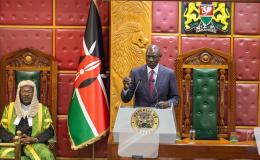
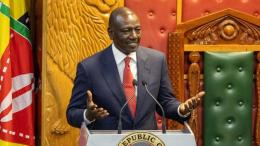
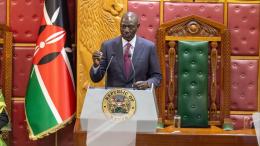
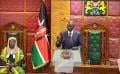
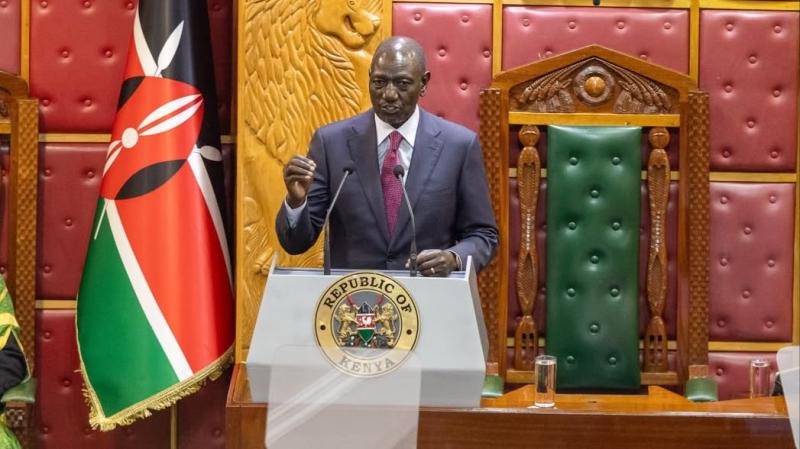
Speaking in Parliament on Wednesday, November 18, he said the expansion was intended to protect families from the financial burden of serious illnesses.
Join our WhatsApp Channel for the latest news updates.
"A serious illness can wipe out years of savings and productive effort. For too many Kenyans and their families, falling ill has meant borrowing from friends, selling their livestock, disposing of land, or abandoning treatment altogether. A medical emergency could turn a family that was getting ahead into one struggling to survive," he said.
Ruto said the healthcare reforms were designed to ensure that medical expenses were increasingly covered through shared financing arrangements instead of placing the entire burden on individuals and their families.
Read More
"That is the burden we set out to lift through our healthcare reforms: to ensure that the cost of treatment is increasingly met through a system of shared health financing, rather than falling entirely on individuals and families," he added.
Ruto said 33.7 million Kenyans had registered with SHA, compared with approximately 8 million people who were registered under NHIF.
"Today, 33.7 million Kenyans are registered with the Social Health Authority, compared with approximately 8 million registered under the National Hospital Insurance Fund in 2022," he further said.

Ruto, however, maintained that the impact of the reforms should not only be measured by the number of registered members but also by the medical services patients were accessing and the financial relief provided to households.
"But the significance of this reform goes beyond numbers in registration. It lies in the treatment families can access and the medical bills they no longer have to bear alone," he noted.
Ruto further pointed to cancer treatment, dialysis and kidney transplants as examples of expensive medical services being accessed by patients under SHA.
He said thousands of patients were receiving cancer treatment and dialysis through the scheme, while dozens had already undergone kidney transplants.
"Across the country, 53,465 patients are receiving cancer treatment, 24,468 are receiving dialysis, and 89 have already undergone kidney transplants, all under SHA. These are among the most expensive forms of medical care, often beyond the financial reach of ordinary households," he stated.
At the same time, Ruto revealed that the 2026 KCSE, KJSEA and KPSEA national exam papers were printed in Kenya, breaking away from a 65-year tradition of overseas printing.
He revealed that Kenya saved Ksh1.5 billion by printing the papaers locally, explaining that the decision was made after the Ministry of Education deliberated on a suggestion he had put forward.
Ruto said he convinced the officials that if the country could print its own currency locally, the same can be done for the examination papers.
"I asked our Ministry officials why we could not print national exams locally if we are already printing currency in Kenya. In this single undertaking, we have saved Ksh1.5 billion that could have been wasted.
"For the first time in 65 Years, examination papers were printed here in Kenya," he said.
Ruto disclosed that the 2026 national exams were done in a calm environment, following the decision to withdraw police deployment in examination centres.
He added that police deployment only created anxiety among candidates. Ruto declared that exams should not be feared, but be taken as a transition process by learners.
"The examinations have been conducted in a calm and orderly atmosphere, free from anxiety, tension and intimidating security deployment of the past. We have undertaken the exams without the presence of a single police officer.
"Examinations are a normal part of learning, not a security operation or a matter of life and death. They should assess our children's progress, not instil fear about their future," he stated.