Editor's Review
President William Ruto has announced plans to expand the NYOTA programme to benefit an additional 200,000 young entrepreneurs through start-up grants worth Ksh50,000 each.
President William Ruto has announced plans to expand the National Youth Opportunities Towards Advancement (NYOTA) programme to benefit an additional 200,000 young entrepreneurs through start-up grants worth Ksh50,000 each.
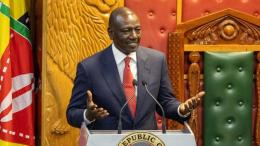
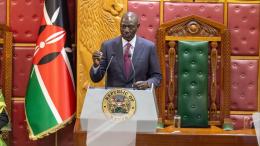
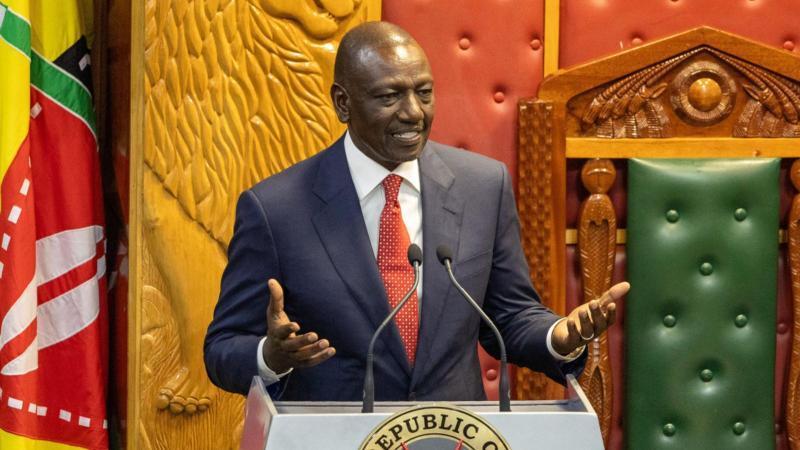
Speaking in Parliament on Wednesday, November 18, Ruto said more than 133,000 young entrepreneurs had already benefited from training, mentorship and start-up funding.
Join our WhatsApp Channel for the latest news updates.
"For young Kenyans with skills and ideas but insufficient capital, NYOTA provides an opportunity to begin. More than 133,000 young entrepreneurs have received training, mentorship and Ksh50,000 each in start-up capital," he said.
While announcing the expansion plan, Ruto highlighted the experience of Javan Simiyu from Bungoma County, who used his NYOTA grant to purchase welding equipment and establish an income-generating venture.
Read More
"Javan Simiyu from Bungoma county used his grant to acquire welding equipment and now earns more than KSh30,000 a month. His story demonstrates the difference between possessing a skill and having the means to turn that skill into an income.
"To expand opportunity for more entrepreneurs in Nyota business support, we are working with partners to support another 200,000 beneficiaries with Ksh50,000 each," he added.
Ruto said the government was also working to ensure young entrepreneurs moved beyond receiving start-up capital to building sustainable businesses capable of creating employment and accessing wider markets.

He noted that the government had introduced the NYOTA-AGPO Digital Training Programme to connect beneficiaries with government procurement opportunities through training and certification.
"But our ambition cannot end with start-up grants. We must enable these young enterprises to grow, secure markets, employ others and become sustainable businesses.
"That is why we are now linking NYOTA beneficiaries to government procurement opportunities through the NYOTA-AGPO Digital Training Programme, a free 10-week initiative that equips young entrepreneurs, women and persons with disabilities with digital and business skills, awards proficiency certificates, and facilitates business registration and AGPO certification. This will enable 600,000 Kenyans to qualify for government contracts, grow their enterprises and have an income," he further said.
At the same time, Ruto highlighted the growth in health insurance registration under the Social Health Authority (SHA), saying the new system has registered significantly more Kenyans than the defunct National Hospital Insurance Fund (NHIF).
He said the expansion was intended to protect families from the financial burden of serious illnesses.
"A serious illness can wipe out years of savings and productive effort. For too many Kenyans and their families, falling ill has meant borrowing from friends, selling their livestock, disposing of land, or abandoning treatment altogether. A medical emergency could turn a family that was getting ahead into one struggling to survive," he said.
Ruto said the healthcare reforms were designed to ensure that medical expenses were increasingly covered through shared financing arrangements instead of placing the entire burden on individuals and their families.
"That is the burden we set out to lift through our healthcare reforms: to ensure that the cost of treatment is increasingly met through a system of shared health financing, rather than falling entirely on individuals and families," he added.
Ruto said 33.7 million Kenyans had registered with SHA, compared with approximately 8 million people who were registered under NHIF.
"Today, 33.7 million Kenyans are registered with the Social Health Authority, compared with approximately 8 million registered under the National Hospital Insurance Fund in 2022," he further said.
Ruto further pointed to cancer treatment, dialysis and kidney transplants as examples of expensive medical services being accessed by patients under SHA.
He said thousands of patients were receiving cancer treatment and dialysis through the scheme, while dozens had already undergone kidney transplants.
"Across the country, 53,465 patients are receiving cancer treatment, 24,468 are receiving dialysis, and 89 have already undergone kidney transplants, all under SHA. These are among the most expensive forms of medical care, often beyond the financial reach of ordinary households," he stated.