Editor's Review
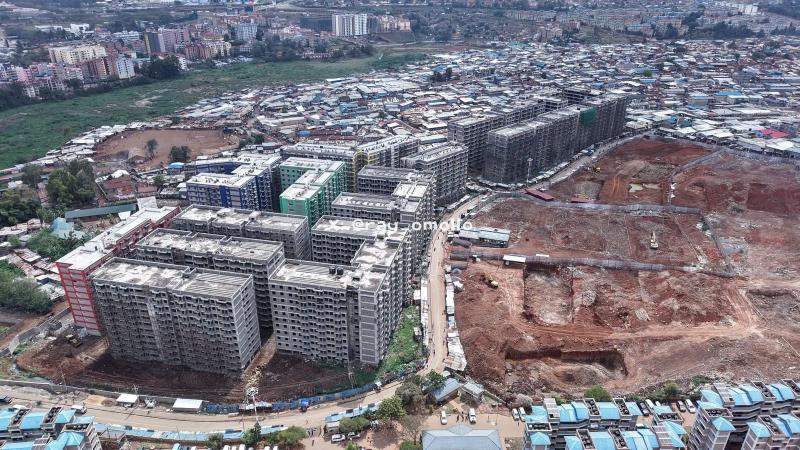
The government is constructing an additional 15,000 affordable housing units in Kibera as part of the ongoing redevelopment of Soweto East.
The government is constructing an additional 15,000 affordable housing units in Kibera as part of the ongoing redevelopment of Soweto East.
In a statement on Friday, November 20, the Ministry of Interior said the transformation of Kibera had gained momentum over the past four years under the Bottom-Up Economic Transformation Agenda (BETA).
Join our WhatsApp Channel for the latest news updates.
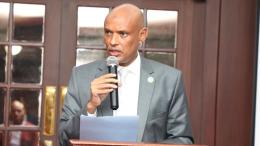
Interior Principal Secretary Raymond Omollo said the redevelopment was being implemented in phases to improve living conditions and expand access to decent housing for residents.
"Through the phased redevelopment of Soweto East, the Government is extending the promise of Usawa ni Sawa, ensuring that every city dweller has an opportunity to live with dignity while contributing to the country's progress," he wrote.
Read More

The project began with Zone A, which delivered 822 apartments spread across 21 blocks. The second phase, Zone B, subsequently delivered 4,054 social housing units housed in 18 high-rise blocks.
Zone B also incorporated supporting social amenities, including a primary school, a health centre and commercial facilities to serve the growing residential community.
With Zone B nearing completion, the Government was preparing to embark on Phase II, which will cover Zones C and D.
Construction preparations were underway on an 8.1-hectare parcel of land, where the planned development was expected to accommodate 15,000 additional housing units.
"The new development will also incorporate retail centres, ECD facilities, health clinics and upgraded sewer infrastructure," he added.

Omollo noted that the project went beyond providing residential units, with the planned facilities expected to improve access to essential services and support the development of a more organised urban settlement.
It also linked the affordable housing programme to the Government's broader security agenda, arguing that improved living conditions could help address some of the vulnerabilities associated with informal settlements.
"Decent housing is also a foundation for lasting security. The State Department for Internal Security and National Administration recognises that safer communities begin with dignified living conditions, where families have secure homes, children have better environments to grow and residents are less exposed to the vulnerabilities associated with overcrowded informal settlements," he further said.

According to Omollo, the redevelopment was gradually reshaping Kibera into a modern residential community as the Government advanced its affordable housing programme.
"As the transformation gathers pace, the Kibera of old is steadily giving way to a new vision of inclusive urban living. Mbele Pamoja," he stated.

Elsewhere, the construction of the Kenyatta Avenue - Upper Hill Viaduct in Nairobi has entered a new phase, marking progress on an infrastructure project expected to improve connectivity between Nairobi's CBD and Upper Hill.
In a statement on Thursday, November 19, Omollo highlighted the importance of modern infrastructure in supporting Nairobi's transformation into a more efficient and accessible city.
"The development of a futuristic Nairobi demands modern infrastructure that delivers exceptional efficiency in transport, mobility and public services," he wrote.
Omollo explained that the project is being implemented by the Kenya Urban Roads Authority (KURA) and would bypass several busy intersections along major roads connecting the two areas.
"Implemented by the Kenya Urban Roads Authority (KURA), the approximately one-kilometre viaduct will bypass congested intersections along Kenyatta Avenue, Valley Road and Haile Selassie Avenue, easing traffic movement towards Upper Hill and Ngong Road," he added.
According to Omollo, construction has now entered the superstructure phase, with precast concrete girders and retaining walls taking shape as work progresses on the elevated connection.
The project also incorporates improvements to existing infrastructure at ground level, targeting pedestrians, cyclists and other road users who rely on the corridor.
"Complementary ground-level improvements include upgraded drainage, wider pedestrian walkways and dedicated cycling lanes, creating a safer and more accessible urban corridor," he further wrote.
 (1)-1795159668-md.jpg)
-1795157854-md.jpg)



 (1)-1795159668-sm.jpg)
-1795157854-sm.jpg)