Editor's Review
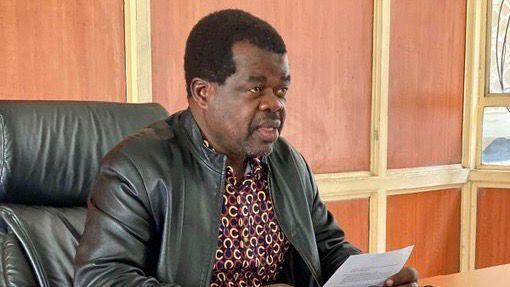
Busia Senator Okiya Omtatah has called on Kenyans to look beyond President William Ruto’s removal from office, arguing that meaningful political change must involve transforming the governance system.
Busia Senator Okiya Omtatah has called on Kenyans to look beyond President William Ruto’s removal from office, arguing that meaningful political change must involve transforming the country’s governance system.
In a statement on Monday, November 23, he argued that changing the person occupying State House would not necessarily translate into meaningful change if the existing political and governance structures remained intact.
Join our WhatsApp Channel for the latest news updates.
"Kenya must avoid the trap of replacing one president with another while retaining the same system of impunity, corruption, economic exclusion and institutional capture," he wrote.
Omatatah maintained that the focus of political change should be on establishing accountable leadership and ensuring that government operates within the principles and provisions of the Constitution.
Read More
"The real objective should be to replace bad leadership with good leadership, bad governance with constitutional governance, and a predatory political order with a government that serves the people," he added.
Omtatah further distinguished between changing the country's leadership and undertaking broader reforms that would fundamentally transform how Kenya was governed.
He argued that Kenyans should demand accountability and a presidency that serves the public interest rather than concentrating solely on securing a change of leadership.
"That is the difference between merely changing a president and changing a country. A country should not merely demand a different president. It should demand a better presidency," he further said.

Omatatah also cautioned against the possibility of a new political leadership reproducing the same practices associated with the administration it replaced.
He warned that without institutional reforms, a change of government could simply create an opportunity for a different group of political leaders to benefit from State capture.
"Otherwise, we risk replacing one clique of looters that is benefitting from State capture with a new one that equally wants to benefit from the same vice. Kenya deserves better leadership, better institutions and a better political order," he concluded.
Elsewhere, Linda Mwananchi Head of Communications Pauline Njoroge has highlighted a growing sense of public ownership of the movement's campaign, contrasting it with previous political campaigns that relied on substantial financial resources and well-established campaign structures.
In a statement on Sunday, November 22, Njoroge recalled her experience working on a 2013 presidential campaign where significant resources were available to coordinate activities, mobilise supporters and create nationwide political visibility.
"I have been part of campaigns where nothing was left to chance. We had the resources to build a formidable campaign machine and create a blitz. I still remember the energy of the 2013 presidential campaign. It was quite the vibe and we even had TNA branded choppers," she wrote.
Njoroge argued that the Linda Mwananchi Movement campaign had taken a different approach, with supporters playing an active role in organising activities and mobilising resources rather than relying entirely on a central campaign structure.
She said the movement had attracted contributions from individuals and grassroots groups, including Dada Za Sifuna and Sifuna Mashinani, which she said were independently raising funds and organising campaign activities in different parts of the country.
"But there is something especially moving about Edwin Sifuna and the Linda Mwananchi Movement campaign. The naysayers said limited resources would be our biggest weakness.
"What I am seeing though across the country is people taking ownership of the campaign. Supporters are giving what they can, and groups like Dada Za Sifuna and Sifuna Mashinani are raising their own funds and organising campaign activities across the country," she added.