Editor's Review
National Treasury Principal Secretary Chris Kiptoo said the debt stock increased from Ksh11.81 trillion recorded in the previous financial year, putting additional pressure on government finances.
Kenya's public and publicly guaranteed debt rose by Ksh1.2 trillion in the 2025/26 financial year, reaching Ksh13.01 trillion by June 2026.
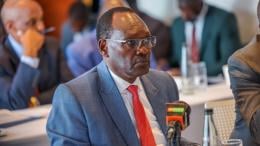
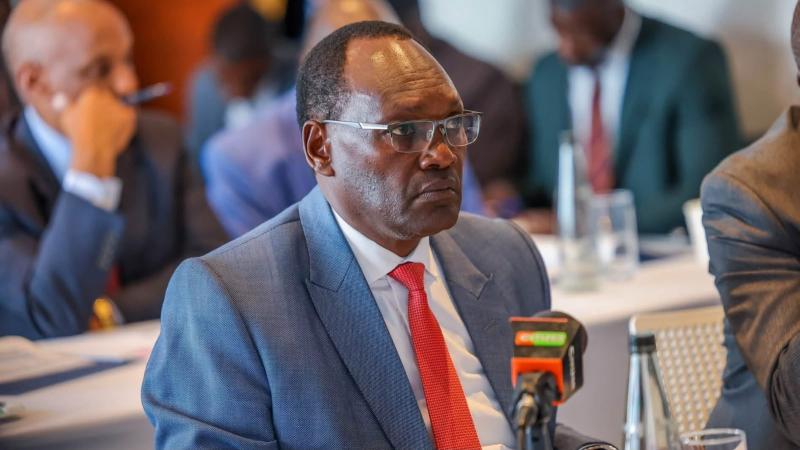
Appearing before the Departmental Committee on Finance and National Planning on Tuesday, October 27, National Treasury Principal Secretary Chris Kiptoo said the debt stock increased from Ksh11.81 trillion recorded in the previous financial year, putting additional pressure on government finances as the Treasury grappled with debt servicing obligations, outstanding bills and borrowing costs.
Join our WhatsApp Channel for the latest news updates.
"Total public and publicly guaranteed debt stock rose to Kshs. 13.01 trillion by June 2026, up from Kshs. 11.81 trillion the previous year," he said.
Kiptoo said the increase came as the government continued to allocate substantial resources to repaying loans, with external debt servicing alone requiring Ksh716.1 billion during the financial year.
Read More
"Consequently, external debt service obligations required substantial outflows amounting to Kshs. 716.1 billion, split between Kshs. 504.3 billion in principal repayments and Kshs. 211.8 billion in interest payments," he added.
Despite the growing debt burden, Kiptoo reported that the National Treasury had met 100 per cent of its public debt service obligations and published an exhaustive External Public Debt Register.
However, he acknowledged that ballooning public debt and outstanding financial obligations had constrained the government's fiscal space, limiting its capacity to finance other priorities.
"The FY 2025/26 performance reflects the continued resilience of the Kenyan economy, maintenance of macroeconomic stability, strengthening of domestic resource mobilization, and sustained efforts to manage public debt and fiscal pressures,"he further said.
Beyond the debt figures, the National Treasury reported an overall budget absorption rate of 93.3 per cent during the 2025/26 financial year, indicating that most of its approved budget had been spent by the end of the period.
Kiptoo told the committee that the State Department had an approved budget of Ksh127.1 billion, against which actual expenditure reached Ksh118.6 billion by June 30, 2026.
"Recurrent expenditure demonstrated strong performance with an absorption rate of 95.2 percent, totaling Ksh85.5 billion against an approved estimate of Ksh89.9 billion," he stated.

The Treasury also reported improved economic performance during the first quarter of 2026, with growth supported by several sectors.
"Kenya’s real GDP growth improved to 5.3 percent in the first quarter of 2026, up from 4.9 percent during the corresponding period in 2025, supported by broad-based expansions in agriculture, manufacturing, real estate, and financial services," he noted.
Other achievements included enrolling 1,495,865 informal sector workers into the voluntary pension scheme and onboarding 22,042 government services onto the e-Citizen portal.
The State Department also facilitated antiretroviral therapy for 1.36 million adults and children under the Global Fund Programme, alongside 100 per cent HIV testing and treatment coverage for tuberculosis patients.
Meanwhile, the Committee raised concerns over unsettled pending bills and increased domestic financing of the budget, which they argued was crowding out credit for the private sector.
"We have pending bills amounting to 475bn. What is the fate of those businesses that supplied goods and services to the government and when are they going to be paid?" Kuria asked.
Butula lawmaker Joseph Oyula called for a reduction in domestic borrowing and urged the government to prioritise the settlement of pending bills.
"Domestic financing is rising every year. I thought we should be working to bring this figure down. I understand that it is better to borrow externally, especially if it is concessional. Something should be done to settle these pending bills," he stated.
Kesses MP Julius Rutto also sought clarification on the amount of pending bills accumulated by county governments, questioning why the liabilities remained unsettled despite counties receiving government disbursements.
"What is the status of pending Bills in County Governments so that we know what is the status of our pending bill as a country. After all, this is an obligation that we have to meet. If counties are still receiving disbursements on time, why not settle their pending bills?" he asked.
In response, Kiptoo noted that the accrual accounting system adopted by the government a year earlier had helped curb the accumulation of new pending bills.
He added that the National Treasury had issued strict instructions requiring pending bills to be treated as a first charge on the budget.
Kiptoo told the Committee that the State Department was in the process of paying Ksh255 billion recommended for settlement after verification.
He noted that Ksh80 billion had already been settled through securitisation, with the remaining amount expected to be cleared by the end of the year.
Kiptoo further revealed that county governments had accumulated Ksh 173 billion in pending bills, with Nairobi County accounting for 50 per cent of the total.