
Editor's Review
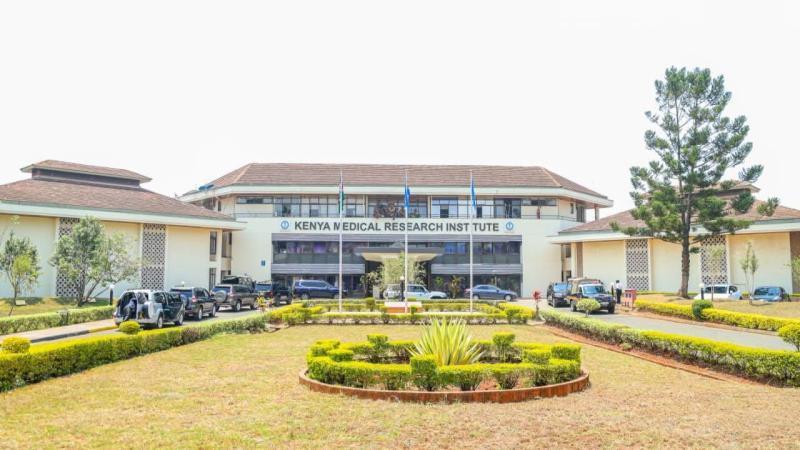
The Kenya Medical Research Institute (KEMRI) Graduate School has opened applications for its May 2026 postgraduate intake.
The Kenya Medical Research Institute (KEMRI) Graduate School has opened applications for its May 2026 postgraduate intake.
In a notice on Wednesday, April 15, the institution invited qualified candidates to apply for available Master of Science (M.Sc.) and Doctor of Philosophy (Ph.D.) programmes.
The institute is offering the courses in collaboration with Jomo Kenyatta University of Agriculture and Technology under its postgraduate training framework.
The programmes are targeted at self-sponsored students seeking advanced training in health and biomedical fields, with MSc programmes running for 2 to 3 years and PhD programmes taking between 3 and 4 years.
According to the announcement, the Master of Science programmes are grouped into three main areas.
Read More
Under the Public Health Programme, applicants can choose from MSc Public Health, MSc Epidemiology and Biostatistics, and MSc Global Health.
The Biomedical Sciences Programme offers MSc Medical Microbiology, MSc Medical Virology, MSc Medical Mycology, MSc Medical Parasitology and Entomology, and MSc Molecular Medicine.
In the Pharmacy Programme, courses available include MSc Medicinal Chemistry and MSc Medicinal Phytochemistry.
Candidates interested in doctoral studies can enroll in PhD programmes within the same areas of specialization.
In terms of entry requirements, applicants seeking admission into the Graduate School must meet the general regulations governing all master’s degrees at JKUAT.
Eligible candidates include those with a Bachelor’s degree with Second Class (Upper Division) in a relevant field from JKUAT or another institution recognized by the JKUAT Senate.
Alternatively, applicants with a Second Class (Lower Division) may qualify if they have at least two years of relevant post-qualification work or research experience.
Those holding a Bachelor’s degree with a Pass and a relevant postgraduate diploma may also be considered. For PhD programmes, applicants must meet the minimum entry requirements set by JKUAT for doctoral studies.

Interested candidates are required to download and complete application forms from the KEMRI Graduate School website.
Applicants must attach certified copies of their academic certificates and transcripts, along with copies of their national ID or passport and KCSE certificate.
The application fee is set at Ksh2,500 for MSc programmes and Ksh3,500 for PhD programmes, payable via JKUAT cash offices located at the main campus, Juja, or the JKUAT Towers in Nairobi.
After payment, applicants are required to attach the original payment slip to one application form and copies of the slip to additional forms before submission.
All completed application documents should be submitted to the KEMRI Graduate School Administration Office at KEMRI Headquarters in Nairobi.
The institute has set April 24, 2026, as the application deadline.
Elsewhere, the Ministry of Agriculture and Livestock Development has invited applications for diploma, certificate and artisan courses for the 2026 academic year.
In a notice on Tuesday, April 14, the ministry said the programmes will be offered in various training institutions under the State Department for Agriculture, with applications open until April 24, 2026.
The ministry said interested applicants must submit their applications to the principal of their preferred institute, accompanied by a non-refundable application fee and relevant academic and identification documents.
According to the ministry, diploma courses include Animal Health and Production, Animal Health and Range Management, Leather Technology, and Dairy Production and Processing.
Most diploma programmes require a minimum KCSE mean grade of C, with specific subject requirements such as Biology or Biological Sciences, Chemistry or Physical Sciences, and Mathematics or Agriculture.
Applicants may also qualify using relevant certificates or diplomas in related fields such as animal health, dairy science, or agriculture.
Programme duration is typically 2½ years (5 semesters), with fees ranging between Ksh203,550 and Ksh211,400 depending on the course.
An upgrading course to a diploma in Animal Health and Production is also available for certificate holders, taking one year at a cost of Ksh111,300.
The ministry also listed multiple certificate programmes across institutions such as AHITI Kabete, AHITI Ndomba, AHITI Nyahururu, and Dairy Training Institute Naivasha.
Certificate courses include Animal Health and Production, Animal Health and Range Management, Dairy Production and Management, Dairy Technology, Range Management, Footwear Design and Technology, and Apiculture.
Minimum entry requirements generally include a KCSE mean grade of C- or D+, depending on the course, with some requiring specific subjects like Biology or Chemistry.
Some programmes also accept applicants with artisan qualifications or prior certificates. The course duration is mainly 1 to 2 years, with fees ranging from Ksh76,300 to Ksh136,700.
Specialised courses such as Meat Inspection (6 months, Ksh77,500), Abattoir Instructors (10 weeks, Ksh45,000), and Meat Grading (20 weeks, Ksh45,000) are also offered.
For artisan-level training, the ministry is offering courses in Dairy Farm Management and Dairy Plant Management at the Dairy Training Institute Naivasha.
These courses require a KCSE or KCE certificate and run for six months, each costing Ksh47,800.
The ministry noted that deadlines vary, with most courses closing in May 2026, while artisan courses at DTI Naivasha close earlier on April 24, 2026.
Applicants interested in the meat inspection course can apply at any time of the year.