Editor's Review
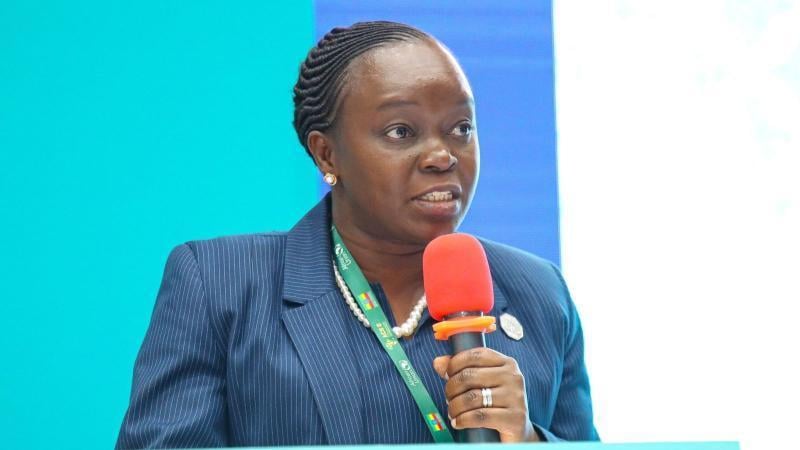
Environment Cabinet Secretary Deborah Barasa has congratulated stakeholders involved in the mangrove restoration efforts after the country restored 91.6 million mangroves in three years.
Environment Cabinet Secretary Deborah Barasa has congratulated stakeholders involved in the mangrove restoration efforts after the country restored 91.6 million mangroves in three years.
In a statement on Sunday, July 26, Barasa said the achievement marked significant progress towards the country’s ten-year target of restoring 140 million mangroves under the 15 Billion Tree Growing Programme.
"I extend my heartfelt congratulations to all stakeholders for the remarkable milestone achieved in Kenya's mangrove restoration efforts.
"Under the visionary leadership of H.E. President William Ruto and the Kenya Kwanza Administration, our country has successfully restored 91.6 million mangroves within just three years," she wrote.
Barasa said the figure represented more than 65 percent of the country’s ambitious ten-year target of 140 million mangroves.
Read More
"This represents over 65 percent of our ambitious ten-year target of 140 million mangroves under the 15 Billion Tree Growing Programme, marking a significant step forward in our national climate action agenda," she added.
Barasa highlighted the importance of mangrove ecosystems, saying they provide critical environmental and economic benefits.
"Mangrove ecosystems remain critical national assets. They play a vital role in protecting our coastlines from erosion, enhancing fisheries productivity, sequestering carbon, conserving biodiversity, and sustaining livelihoods for our coastal communities," she further said.

Barasa also commended the Kenya Forest Service, the Kenya Forestry Research Institute, Community Forest Associations, development partners, other stakeholders and coastal communities for their contribution to the restoration programme.
"I commend the Kenya Forest Service (KFS), the Kenya Forestry Research Institute (KEFRI), Community Forest Associations, development partners, stakeholders, and all coastal communities for their dedication, resilience, and unwavering commitment to this trans-formative initiative," she noted.
Barasa said the milestone demonstrated the impact of shared responsibility, noting that coordinated efforts could deliver significant results in environmental conservation.
"This milestone is a testament to the power of collective action and shared responsibility. It demonstrates what we can achieve when we work together with unity of purpose and determination," she concluded.
This comes months after Canadian Antoine Moses, who previously held the record for the most trees planted under 24 hours, has set a new world record.
In a statement on Friday, May 1, KFS said Moses set a new global record by planting 47,460 mangrove trees within 24 hours.
The record was set after he planted the mangrove propagules at Mirarani, Tudor Creek in Mombasa County.
"The historic feat was sealed at exactly 0801 hours, after a relentless 24-hour stretch of physical endurance and mental grit.
"As the final tally was confirmed, the site erupted in celebration, transforming the moment into more than just a record, but a powerful symbol of commitment to environmental restoration," the statement read in part.
KFS noted that the achievement put Kenya on the map after Hillary Kibiwott successfully attempted to break Moses' record of planting 23,336 trees in 24 hours.
"The effort has shone a global spotlight on mangrove ecosystems, critical coastal buffers that remain among the most threatened in the world," the statement continued.
The fete was witnessed by Foresty Principal Secretary Gitonga Mugambi, senior officials from the Ministry of Environment, the Earthlungs Foundation and the Kenya Forests Research Institute (KEFRI).
KFS noted that with his latest achievement, Moses not only defended his global standing but elevated it, delivering a defining moment of resilience, purpose, and environmental leadership on the world stage.

-1780684637-md.jpg)




-1780684637-sm.jpg)