
Editor's Review
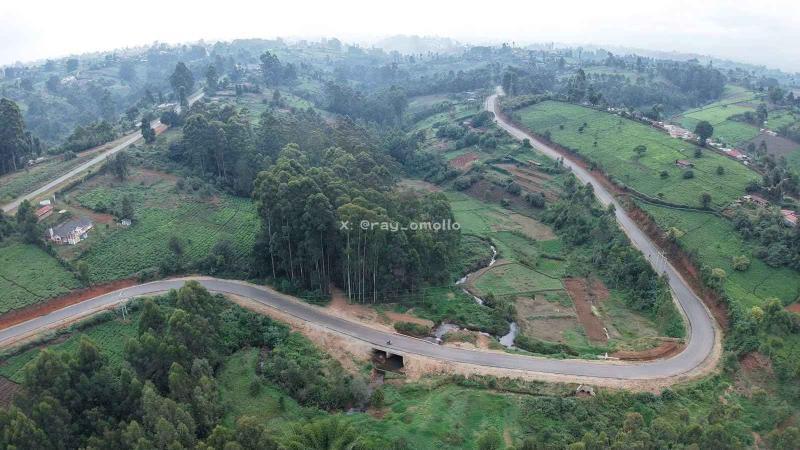
The government is upgrading the historic Mau Mau Road Lot 2 corridor, transforming routes that were once used by Mau Mau freedom fighters into modern roads.
The government is upgrading the historic Mau Mau Road Lot 2 corridor, transforming routes that were once used by Mau Mau freedom fighters into modern roads.
In a statement on Tuesday, August 11, Interior Principal Secretary Raymond Omollo said the 154-kilometre project is being implemented by the Kenya National Highways Authority (KeNHA).
The Ministry of Interior stated that the project is upgrading the corridor to modern road standards and opening up previously difficult-to-access areas.
"Implemented by the Kenya National Highways Authority (KeNHA), the 154-kilometre project upgrades the entire corridor to heavy-duty bitumen standards, opening up the rugged Aberdare foothills while preserving the historical significance of the region," he wrote.

Read More
According to Omollo, the route covers several communities in Murang’a County before extending northwards towards the Nyeri County border.
"Beginning at Mairi near the Kiambu–Murang'a border, the route passes through Kinyona, Karinga and Mununga before extending northwards through Ichichi, Thuthu, Wanjerere, Kagongo, Mioro and Kiamuturi, terminating at Kairo on the Nyeri County border," he added.
Omollo added that the upgraded road network will also strengthen connectivity between Murang’a and Nyandarua counties through an important inter-county link.
"The upgraded corridor also provides a strategic inter-county link through the Kinyona-Gatare-Njabini road, improving connectivity between Murang'a and Nyandarua counties," he further said.

The government said construction works are advancing across several sections of the project, with significant portions already reaching the top upgrade layer.
"Construction is progressing well, with a combined 38 kilometres across the Ichichi, Kiruri, Wanjerere and Mioro sections at the top upgrade layer.
"Works are now advancing to the cement-stabilised gravel sub-base, followed by graded crushed stone before the final Asphalt Concrete (AC) surfacing," Omollo noted.

Omollo said the improved road is expected to support economic activity in the region, particularly in areas where tea farming is a major source of income.
The government further noted that farmers involved in dairy and horticulture will benefit from improved access to major highways and markets, creating opportunities for increased trade and investment.
"The project is unlocking the economic potential of one of Kenya's premier tea-growing regions. Reliable all-weather access now enables green leaf collection vehicles serving KTDA factories such as Mununga and Ikumbi to move efficiently, reducing post-harvest losses and lowering transport costs.
"Dairy and horticultural farmers are equally benefiting from faster, safer access to the Thika–Kenol–Marua Highway and other key markets, stimulating trade, increasing household incomes and attracting new investment into the region," Omollo stated.

Omollo noted that given the steep terrain and high rainfall experienced along the Aberdare slopes, the project incorporates drainage infrastructure intended to protect the road from weather-related damage.
"Built to withstand the harsh terrain and high rainfall along the Aberdare slopes, the road incorporates extensive drainage infrastructure, including reinforced box culverts, pipe culverts and engineered roadside drainage systems that minimise flooding, landslides and erosion, ensuring year-round reliability," he noted.
Beyond transport and economic benefits, Omollo said the upgraded corridor is also expected to improve security and access to essential public services in remote areas.
"The project is also strengthening security and public safety. Better road access enhances emergency response, supports more effective security patrols and brings remote communities closer to essential government services," he concluded.

Elsewhere, the construction of the new Kihunguro Footbridge along the Thika Superhighway is progressing, with the project expected to enhance pedestrian safety and improve traffic flow once completed.
In a statement on Monday, August 10, Omollo said the ongoing project, being implemented by KeNHA, is designed to provide pedestrians with a safer alternative to crossing the busy highway at street level while addressing congestion and accident risks in the Ruiru area.
"The busy road is routinely crossed on foot by pedestrians, despite the risks involved, making the area particularly dangerous and contributing to significant traffic congestion in Ruiru," the statement read.
According to Omollo, the new infrastructure is expected to replace the existing street-level crossing, which has been identified as an accident-prone section along the busy highway.
"The modern overhead footbridge replaces a busy street-level zebra crossing, eliminating a long-standing accident blackspot and improving the safe, uninterrupted movement of pedestrians and motorists along this busy corridor," the statement added.
The footbridge has also been designed to accommodate different categories of users, including persons with disabilities and pedestrians carrying goods.
"The bridge features a conventional staircase on one side and a gentle access ramp on the other, ensuring safe and convenient use by persons with disabilities, wheelchair users and those transporting goods," the statement further read.
Upon completion, Omollo the project is expected to improve safety for pedestrians while reducing disruptions to motorists caused by people crossing the highway.
"Once complete, it will significantly reduce pedestrian-related accidents while easing congestion caused by frequent road crossings, which currently disrupt the smooth flow of traffic along this busy section of Thika Road," the statement concluded.



 (1)-1791708588-md.jpg)
 (1)-1791175033-md.jpg)
-1791699761-md.jpg)



 (1)-1791708588-sm.jpg)
 (1)-1791175033-sm.jpg)