
Editor's Review
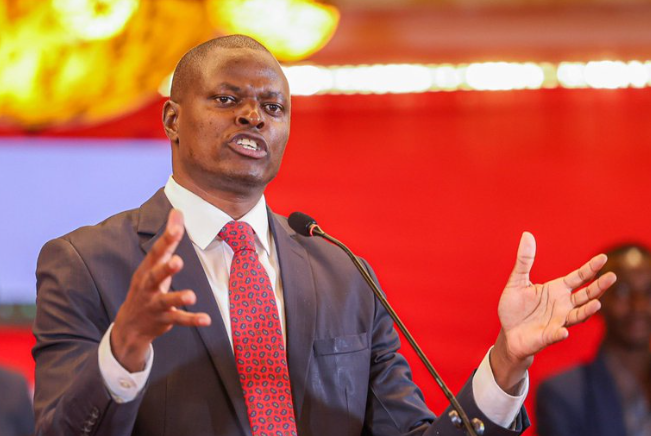
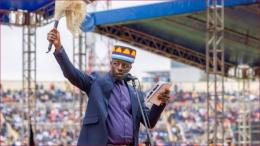
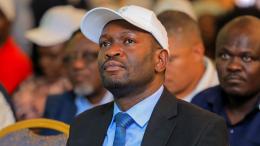
Ndindi Nyoro announced his first political tour after ditching UDA for the People's Party of Kenya.
On Tuesday, August 18, Kiharu Member of Parliament Ndindi Nyoro announced his first political tour after ditching UDA for the People's Party of Kenya.
Nyoro revealed that his first political engagement would be in Makuyu in his home county of Murang'a.
He disclosed that the rally would take place on Wednesday, August 19, from 11 a.m, and invited all his supporters to join him for the people's tour.
"Tomorrow, we will be in Mukuyu; all are welcome. We are African, and Africa is our business," the lawmaker wrote in the statement.
The announcement came just a day after he announced that he had officially joined the Opposition. However, his new political move has raised suspicion over his motive.
Read More

While Jubilee Party candidate Fred Matiang'i congratulated him and declared that he was ready to work with him, he received a lot of scepticism from leaders allied to the Democracy for the Citizens Party (DCP).
Earlier, Nyandarua Senator John Methu claimed that the People's Party of Kenya was an extension of President William Ruto's United Democratic Alliance (UDA).
Methu claimed that Ruto had deployed Nyoro to scuttle the Mount Kenya vote and to undermine DCP Leader Rigathi Gachagua's influence in the region.
"We saw one that was launched yesterday, and we were waiting for it because we had been told that there was a wheelbarrow from Murang'a; it does not come to us as a surprise," Methu stated.
The DCP Secretary General-designate intimated that additional 'wheelbarrows' would be deployed in Laikipia and Nakuru. Nonetheless, he told President Ruto that his plan would not work.
He stated that just as in Ol Kalou, voters from the region would easily weed out the so-called UDA-annexed parties and that they would unite behind Gachagua as their leader.
Meanwhile, he maintained that the Head of State's support in Mount Kenya had plummeted to below five percent, and would go lower by the time the country goes to the ballot.
 (1)-1792314340-md.jpg)
 (1)-1792314340-sm.jpg)