
Editor's Review
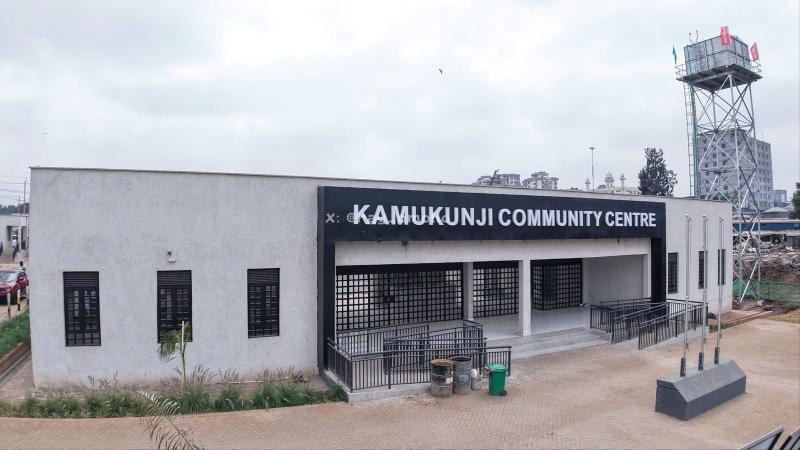
Kamukunji Historical Grounds in Nairobi have been transformed into a modern public space featuring sports, recreational, environmental and community facilities.
Kamukunji Historical Grounds in Nairobi have been transformed into a modern public space featuring sports, recreational, environmental and community facilities.
In a statement on Wednesday, August 26, Interior Principal Secretary Raymond Omollo said the redevelopment preserves the historical significance of the grounds while creating a facility that can serve the community.
"History shapes the future by preserving the lessons, struggles and aspirations that define a nation.
"Few places embody our democratic journey more profoundly than the Kamukunji Historical Grounds in Nairobi, the birthplace of the 1990 Saba Saba movement that helped propel the country towards multiparty democracy and wider civil liberties," he wrote.

Read More
Omollo said the restoration of the grounds would ensure that their historical importance remains relevant as Kenya looks towards its future beyond Vision 2030.
"As we stride on towards our future, Beyond Vision 2030, the restoration of this landmark ensures that the memories that shaped the nation remain part of the conversations shaping its tomorrow," he added.

Omollo said the historic grounds had undergone a complete transformation under the Nairobi Rivers Regeneration Project, creating a public space that brings together heritage, recreation, environmental restoration and community life.
"The historic grounds have now been completely transformed through the Nairobi Rivers Regeneration Project into a vibrant public space where heritage, recreation, environmental restoration and community life converge," he further said.

The upgraded facility features an 11-a-side football pitch, seven-a-side and multipurpose fields, basketball courts and a boxing ring.
It also includes children's play areas, safe walkways, improved sanitation facilities and a mental health corner.
According to Omollo, the redevelopment has also incorporated facilities intended to support learning, social interaction and indoor recreation, expanding the grounds beyond their traditional role as a sporting and historical site.
"The transformation extends beyond sport and recreation. A resource centre with a library, social hall and digital museum now complements an indoor gym, changing rooms and an amphitheatre equipped with an outdoor gym, gazebos and a tree nursery," he concluded.

Elsewhere, Kibera is set to receive an additional 15,000 affordable housing units as the second phase of the Government's Affordable Housing Programme (AHP) takes shape in Zones C and D.
In a statement on Tuesday, August 25, Omollo said the project was part of efforts to transform informal settlements.
"We cannot sustain the national conversation on Kenya Beyond Vision 2030 when parts of our Capital still take pride in descriptions such as 'the largest slum in Africa'.
"The Government's Affordable Housing Programme (AHP), a key pillar of the Bottom-Up Economic Transformation Agenda (BETA), is changing that narrative by taking development to the lowest rungs of the socio-economic ladder and transforming informal settlements into dignified and inclusive communities," he wrote.
In Kibra's Soweto Zone B, Phase I is already taking shape, with 18 high-rise residential blocks delivering 4,054 modern housing units.
Phase II, covering Zones C and D, is also underway, with the contractor already on site and clearance activities ongoing.
The second phase is expected to add 15,000 housing units to the area.
Omollo said families that were relocated to create space for the development had already been issued identification cards and would be prioritised when the completed houses become available.
"Importantly, families relocated to create space for the development have already been issued identification cards and will be the first beneficiaries of the completed housing units.
"This ensures that the people who made way for the project are at the front of the transformation," he added.
Omollo said the project would also provide economic opportunities for residents, particularly young people and women living in Kibera, through employment and enterprise opportunities generated during its implementation.
"The project is a major engine of economic empowerment, creating employment and enterprise opportunities for young people and women living in Kibera," he further said.
The master plan for the development also provides for commercial and retail spaces alongside community facilities and essential infrastructure.
These include community halls, Early Childhood Development (ECD) centres, health clinics, water and electricity networks, waste management facilities, sewerage systems and stormwater drainage.