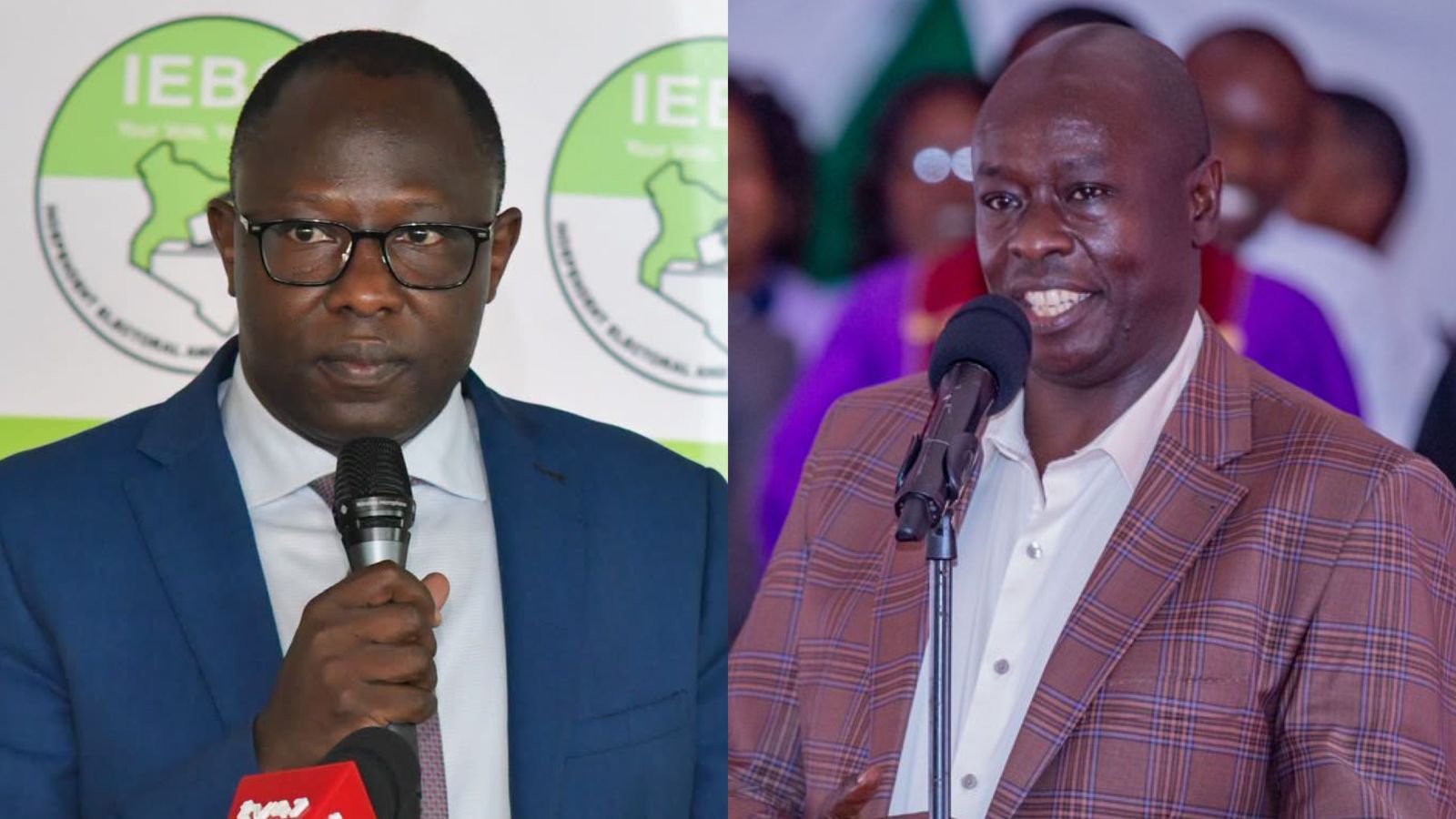
The Independent Electoral and Boundaries Commission (IEBC) has dismissed allegations by Democracy for Citizens Party (DCP) leader Rigathi Gachagua regarding the procurement of electoral technology for the 2027 General Election.
In a statement on Thursday, August 27, the commission accused Gachagua of spreading misinformation about the electoral body and its officials.
The IEBC said all its procurement processes were conducted in accordance with the Constitution, the Public Procurement and Asset Disposal Act and other applicable regulations.
The commission confirmed that the procurement of the Integrated Elections Management System (IEMS), hardware equipment and accessories, as well as ballot papers and other election materials, had been temporarily halted following a request for review filed at the Public Procurement Administrative Review Board.
However, the IEBC insisted that the technology tender process remained open and transparent, noting that tender documents were uploaded to the IEBC website and the Public Procurement Information Portal on August 11, 2026.
Read More
"The Commission informs the public that the procurement process for technology commenced with the advertisement of the tender and it is still at its initial stages.
"No award has been made to any company since the Commission is not aware of those companies that would be competing in this tender," the statement read.

IEBC said the technical specifications were generic and performance-based and were open to any qualified supplier.
It said the specifications had been informed by Supreme Court directives, lessons from previous elections and feedback from field officers.
The IEBC assured the public and interested bidders that the process would be conducted on merit and in compliance with Article 227 of the Constitution and procurement laws.
It also warned bidders against engaging in political commentary or associating with politicians in an attempt to influence the procurement process.
"No amount of politically instigated allegations, intimidation, threats and malicious propaganda whatsoever will determine how we execute our mandate. Our actions shall be based solely on our interpretation and application of the relevant laws and processes," the statement added.
Speaking to journalists on Wednesday, August 26, Gachagua claimed that the 2027 General Election could be rigged, alleging that South Korean firm Miru Systems Co. Ltd is at the heart of an alleged predetermined procurement process.
He accused IEBC Chairman Erastus Edung Ethekon and Vice Chairperson Fahima Abdallah of overseeing what he termed a sham tender process aimed at awarding the Integrated Election Management System (IEMS) contract to Miru.
"The tender process and result have already been preconceived and is awaiting rubber stamping," he alleged.
Gachagua further alleged that IEBC commissioners dismissed the procurement manager and replaced the official, claiming that Ethekon and Abdallah had been paid commissions in advance to influence the outcome of the tender.
He also alleged that Interior Principal Secretary Raymond Omolo and Immigration PS Belio Kipsang had met Miru officials to facilitate access to Kenya’s voter registration database for integration purposes.
Gachagua claimed that Miru Systems had faced challenges linked to its involvement in electoral processes in several countries.
He cited the Democratic Republic of Congo’s 2023 elections, saying election observers reported equipment failures at up to 45 per cent of polling stations, potentially affecting about 17 million voters.
Gachagua further said that after the disputed 2018 and 2023 elections, the US Treasury Department imposed sanctions on the then-president of the DRC’s electoral commission and two of his deputies over allegations of undermining democratic processes.
He also raised concerns about the Philippines’ 2024 mock elections, where Miru technology was used.


 (1)-1787893803.jpg)